


Spain will go to the polls this Sunday with an energy challenge that is unlikely to find an immediate solution in the election results: restoring the economic viability of photovoltaic projects conceived under market conditions that have changed substantially.
While the debate among the main political forces focuses on expanding networks, storage, and nuclear continuity, developers face a discussion of a different nature: how to recover the profitability of investments already committed.
In an interview with Energía Estratégica , Álvaro Simón, founder of ASB Renewables , warns:
“The sector’s caution stems primarily from the economics of the projects, not the political calendar: captured low prices for photovoltaics, hours of negative prices, and energy spills at certain nodes.”
The diagnosis comes on the eve of a general election in which the integration of renewable energy has taken center stage on the energy agenda. While the PSOE maintains its target of achieving 81% renewable electricity generation by 2030 , the People's Party proposes an 18-month emergency plan to unblock grid connections and review energy planning.
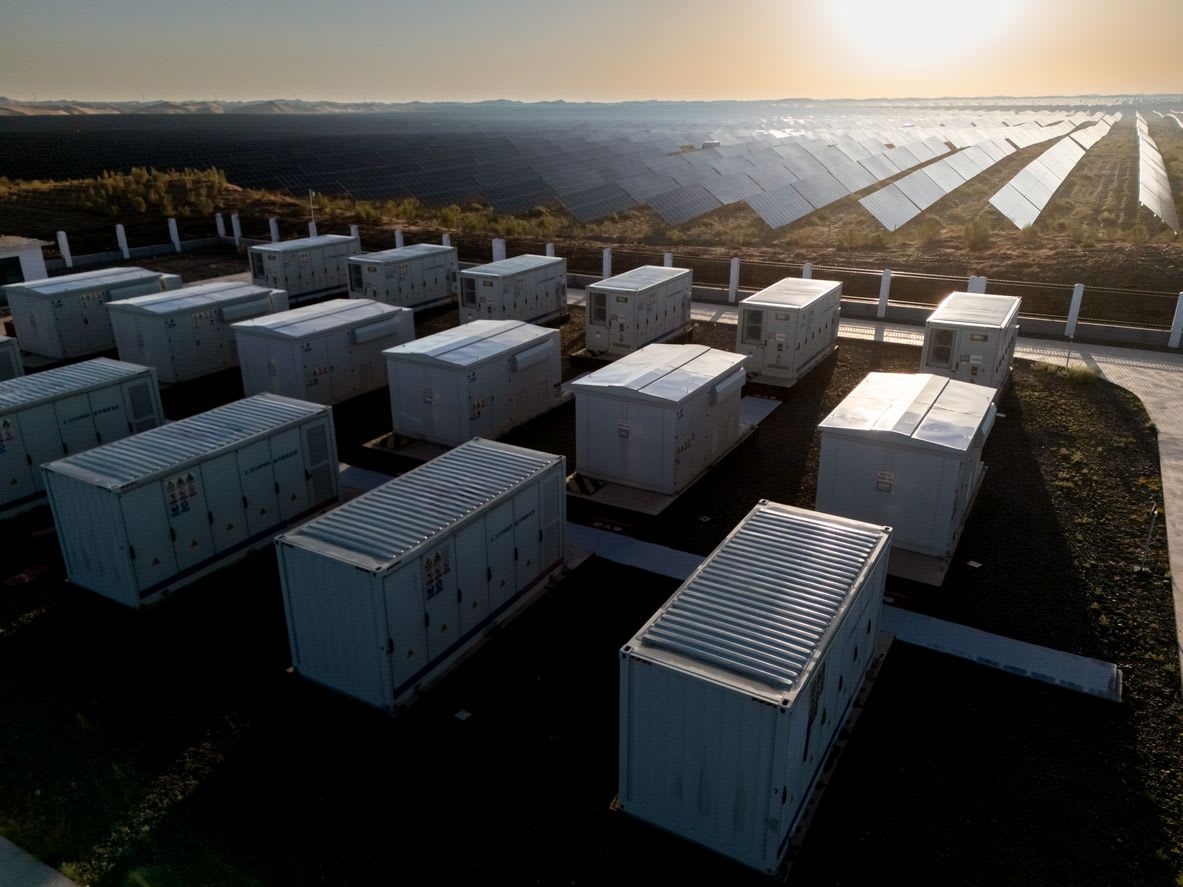
However, administrative activity reflects a market transformation that precedes the elections. According to the latest survey by Energía Estratégica on the Official State Gazette (BOE), approximately 930 MW of battery storage projects advanced in processing during October, while around 700 MW of renewable energy projects were left out of the portfolio.
The contrast highlights a shift in development priorities, with a growing prominence of technologies capable of improving the use and marketing of electricity.
“Investors aren’t leaving, but they are asking for more regulatory clarity and more protection against risk before committing new capital,” says Simón.
Thus, beyond the installed capacity targets that the next Executive will advocate, 2027 could become a year of reconversion for photovoltaic portfolios , in which developers will have to review both the technological configuration of their facilities and the financial and commercial conditions under which they were conceived.
Refinancing and renegotiation: the future of projects conceived under different expectations
The evolution of the Spanish electricity market is forcing a review of the revenue forecasts that underpinned numerous business decisions in recent years.
Concentrating photovoltaic production in certain time slots reduces the value of electricity precisely when these installations have the greatest generation capacity.
According to sector analyses, Spain registers around 7% of trading hours with negative prices . Signals from the futures market also reflect this trend: contracts for the second quarter of 2027 and 2028 show lower values than those for the winter periods.
This evolution particularly affects power plants with high exposure to the wholesale market and forces a reconsideration of the economic assumptions used during their development.
In that regard, Simón issues a warning:
“The pure solar model as we have been doing it is exhausted, and there are many projects that will not reach the date of commercial operation with the expectation with which they were born.”
According to the specialist, the business response should move in three directions: refinancing operations, incorporating storage, and reviewing trade agreements that no longer fit the consumer profile.
This means that, even when a facility has permissions and access rights, its original technical and contractual configuration may prove insufficient to guarantee the expected return.
Continue reading
The transformation also extends to existing assets, where hybridization possibilities will need to be assessed based on available infrastructure, additional costs, and the revenue they can generate.
Hybrid PPAs and tolling: the new signals from funds and banks
Long-term energy contracts do not, in themselves, constitute a guarantee of viability.
“The underlying problem is that at current prices, many hedges do not make the project profitable,” recalls the founder of ASB Renewables, reiterating a problem he had already raised with this publication in the spring.
Faced with this scenario, the market is beginning to explore alternatives that allow it to reduce exposure to volatility and improve financing conditions.
“The signs we see point to structures with limited merchant exposure, hybrid PPAs with storage, and an openness to financing storage with tolling schemes,” he explains.
The incorporation of batteries allows for modification of the electricity delivery profile, shifting part of the production towards times of greater economic value and facilitating its adaptation to the needs of buyers.
For their part, tolling contracts can provide greater predictability to the owner of the storage system by paying a fee for making the asset available to a counterparty, who assumes certain risks associated with its commercial operation.
Both structures reflect an evolution in the way risks are distributed among developers, financiers, and energy buyers.
What room for maneuver will the next government have to restore the profitability of renewable energy?
With the 2030 Electricity Plan already approved and an investment of over 17 billion euros in the transmission network , the next government will have to face the challenge of converting the expansion of infrastructure into new industrial connections and effective demand, two necessary conditions to improve the use of renewable generation.
In parallel, the regulatory agenda has several open cases with a direct impact on asset profitability.
Simón places among the priorities the definition of the economic and operational parameters of the capacity market auctions , the application of measures aimed at preventing the blocking of access capacity through very low power requests and the development of adjustment and flexibility services, which are still poorly integrated into industrial operations.
From their perspective, policies linked to the technical needs of the system and industrial competitiveness present greater possibilities of continuity, regardless of the composition of the next Executive.
“The main risk is not a change of course, but a slowdown,” he says.
For developers, this time difference has economic consequences: the delay of a call for proposals can modify investment schedules and force a review of planned financial structures.
Looking ahead to 2027, the specialist also recommends monitoring the evolution of industrial electrification and large consumers, whose demand will be crucial for long-term energy contracting conditions.
The election result may accelerate or delay some solutions, but the transformation of the photovoltaic business is already underway.
“We need to be positive but also creative: we can’t keep basing the project on what we’ve been doing,” concludes Simón.
 By Emilia Lardizabal
 By Matías Medinilla

 By Ailén Pedrotti

 By Energía Estratégica