

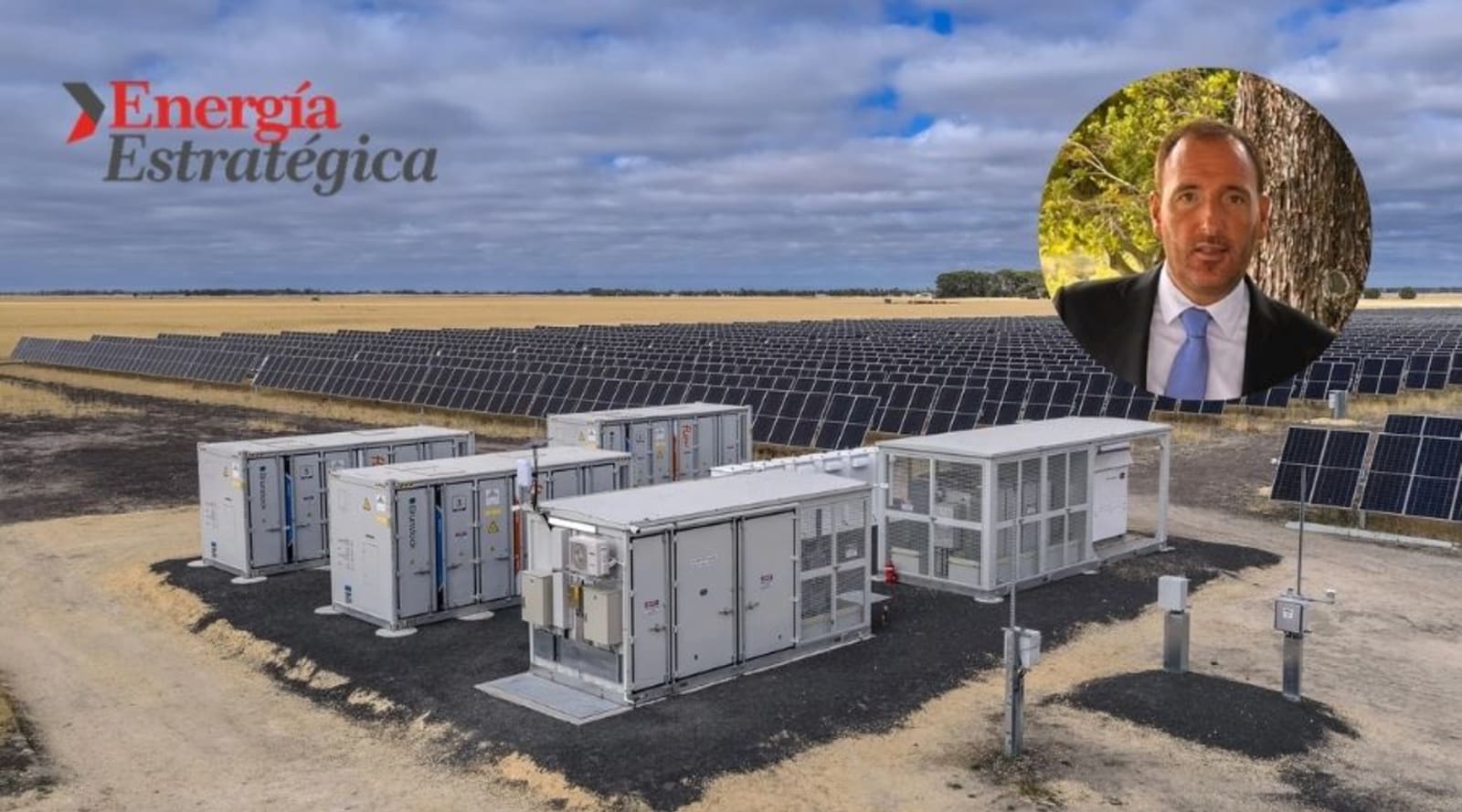
The political calendar and investment timelines in the Spanish energy sector began to advance at different speeds. While storage developers needed greater predictability to structure financing and commit capital, energy retailers faced unforeseen cost overruns, and large industrial consumers demanded more competitive conditions. The calling of elections added a new layer of uncertainty to this scenario.
What leeway will the authorities have to resolve the outstanding issues, and how long can the market wait before uncertainty begins to affect new investments?
In a dialogue with Energía Estratégica , Xavier López, from RMM Energy Advisors, distinguished the impact that the electoral process could have on mechanisms already in operation and those that still need to complete their development.
“The problem with having a new government or not is the decisions about what to implement. What's already in place is in place,” he explained.
His warning came just over a month before the November 29 general election , which will pit Pedro Sánchez's PSOE against Alberto Núñez Feijóo's PP, Santiago Abascal's Vox, and other parties such as the Broad Front and Podemos. The political landscape remained open: while many private polls placed the PP ahead of the PSOE, the CIS (Center for Sociological Research) presented an estimate favorable to the Socialists.
The dispute coincided with a renewable energy market undergoing significant administrative expansion. A survey by this publication identified 5,044.4 MW in selected projects with activity in the Official Gazette of the State (BOE) between January and September 7, 2026 , of which 1,429.5 MW correspond to battery storage . These were initiatives at various stages of development, not necessarily ready for construction, reflecting the size of the portfolio exposed to upcoming regulatory definitions.
In this context, López distinguished between mechanisms that were already operational, such as the active demand response service (SRAD) , whose continuity he did not consider threatened, and those that still required development. Among the latter, he highlighted the capacity market, approved in September but pending the economic and operational rules that will allow the first auctions to be held.
Capacity market: the 2027 auctions face a new political unknown
Order TED/966/2026 , in effect since September 18, authorized contracts of up to 15 years for new investments in generation and storage , but left undefined firmness coefficients, contracted capacity, and auction prices. Without these parameters, BESS developers have not yet been able to determine their revenue from contributing capacity to the system.
Although the sector indicated the first half of 2027 for the initial calls for applications, no official date was published. López praised the approval of the mechanism, whose announcement he described as "impeccable," but considered it unlikely that the details would be finalized before the November 29 elections.
The concern had already been raised by Raúl García Posada, director of ASEALEN , who warned Energía Estratégica that investment decisions were being made without knowing the future returns. For his part, Álvaro Fuentes Postigo, representative of RD-ES , called for independent aggregators to be authorized before the first auctions to prevent demand from being put at a disadvantage.
Continue reading
Meanwhile, the applications continued to move forward: during September, Energía Estratégica identified 334.8 MW of BESS in ten administrative procedures . However, López distinguished this growth from actual deployment and acknowledged some caution among investors.
“Much more has been said about what was going to be done than what is actually being implemented,” he stated. The expert pointed out that Spain still lags far behind the gigawatt-scale investments seen in Saudi Arabia and North America.
Adjustment services: up to €24/MWh extra and a pending decision
Following the blackout of April 28, 2025, Red Eléctrica reinforced the operation of the system, resulting in higher costs for ancillary services and technical restrictions. According to Xavier López , these costs rose from historical values of between €2 and €15/MWh to an average of around €22/MWh, with peaks near €24/MWh recorded in October .
The pressure coincided with an increase in electricity futures for 2027, which, according to the consultant, rose from €88/MWh on September 25 to €113/MWh at the time of the interview. However, the main problem for energy retailers was the inability to cover ancillary services in advance through PPAs or financial instruments, which forced them to incorporate risk premiums that ultimately were passed on to consumers.
“The government has very important decisions to make about what to do regarding adjustment services,” said López, who pointed to the possibility of regulating these costs to improve predictability and reduce competitive differences between independent retailers and large integrated electricity companies.
The expert also addressed the potential reinstatement of the Iberian exception , demanded by the sector to limit the price of gas used in combined cycle power plants. However, he ruled out the possibility of such a measure being implemented before the elections: "I don't think that kind of decision will be made with elections in the middle of the day."
Nuclear: Almaraz until 2030 and possible new extensions
The authorization to extend the operation of the two Almaraz reactors until June 8, 2030 , instead of the planned closures for 2027 and 2028, opened a new chapter for Spanish nuclear policy. Although the measure did not alter the overall schedule for decommissioning the nuclear fleet, set to run until 2035, López considered that other plants could follow the same path.
“Nuclear power plants are going to be extended. It’s certain, it’s 100%, you simply can’t not extend them,” he asserted, linking his prediction to the need to maintain manageable generation, guarantee supply, and contain electricity costs.
The consultant argued that Spain had limited room to influence international gas prices, given its dependence on suppliers such as Algeria and the United States. However, he believed that the authorities had greater tools at their disposal to manage the electricity market and its planning.
"The area where the government can have an impact is electricity," he stated, warning that current energy costs were jeopardizing Spanish industrial competitiveness and placing decisions on generation and regulation among the challenges for the next government.
 By Florencia Guglielmetti

 By Energía Estratégica

 By Matías Medinilla