
The future of Spain's electricity system has pitted the main political parties against each other less than two weeks before the November 29 elections. The deployment of renewables, the integration of energy storage, grid saturation, and the continued operation of nuclear power plants have become the main points of contention between the People's Party (PP), the Socialist Party (PSOE), Vox, and the Broad Front.
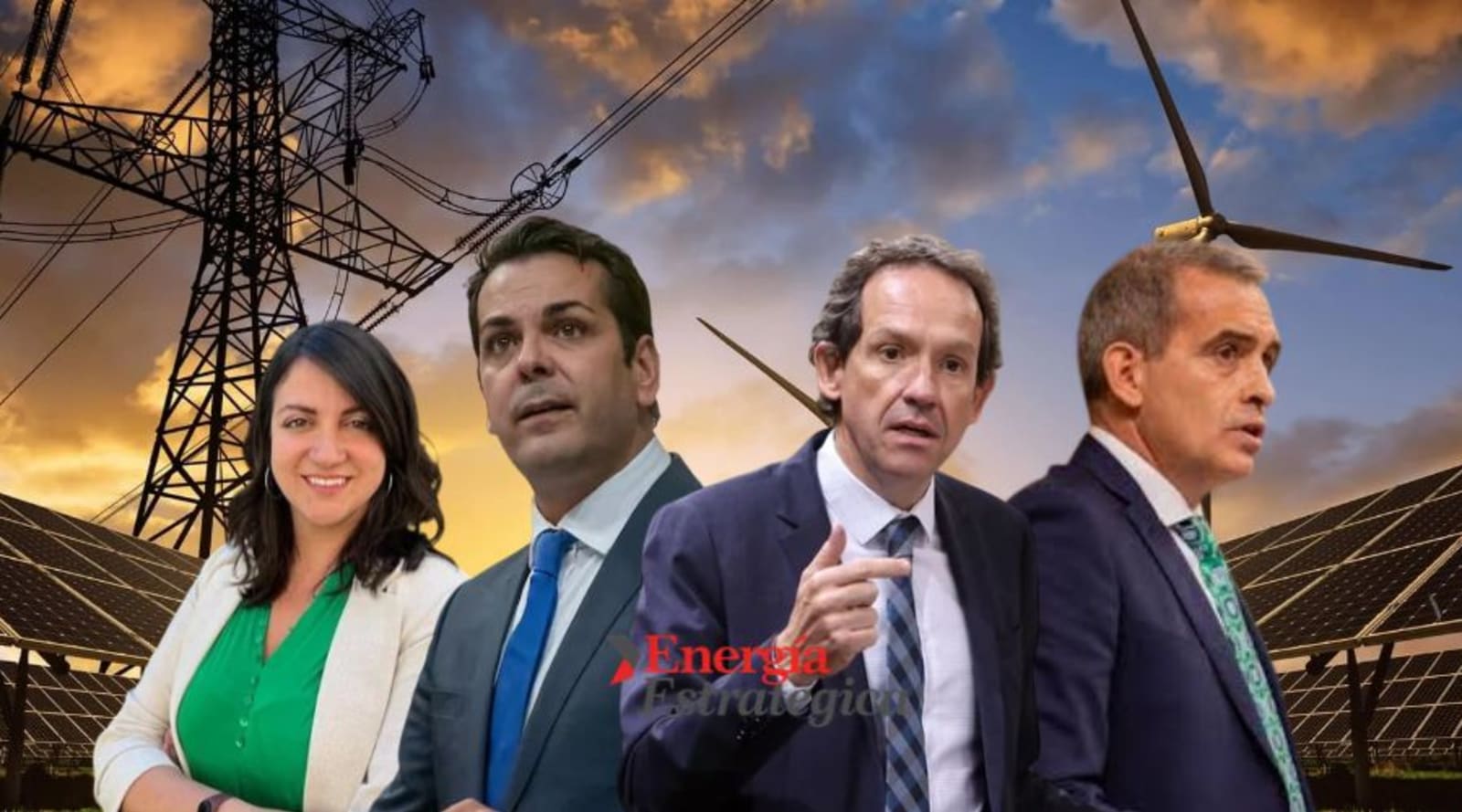
Juan Diego Requena (PP), Marc Pons (PSOE), Julio Utrilla (Vox) and Mar González (Frente Amplio) confronted their diagnoses on the results of the energy transition and proposed different strategies to guarantee security of supply and industrial competitiveness.
What did the discussion reveal? The PP proposed a 12- to 18-month emergency plan to unblock access to the electricity grid; the PSOE reaffirmed the goal of reaching 22 GW of storage by 2030; Vox suggested that the State finance the infrastructure that electricity companies do not build, while the Broad Front advocated using surplus solar energy to offer three hours of free electricity per day to households.
The first clash arose when evaluating the results of the renewable energy expansion. Juan Diego Requena questioned whether the increase in installed capacity had been accompanied by a proportional growth in electricity demand and warned about its economic consequences.

“The objective reality of our electricity system is that there are times of the day when energy costs zero and other times of the day when it costs 180 or 200 euros,” the representative stated.
According to their figures, the system incorporated approximately 51 GW of photovoltaic and 10 GW of wind power, while difficulties persisted in utilizing the production. As an example, they pointed out that in certain grid nodes in Extremadura, the amount of energy sold back into the grid reached up to 70%, a percentage they attributed to consumption and integration limitations.
Furthermore, it estimated the cost of adjustment services in 2026 at 5.6 billion euros , linking it to the need to use backup technologies to ensure the stability of the system.
Marc Pons rejected the assessment presented by the PP and argued that the incorporation of renewable energy allowed Spain to reduce its exposure to energy imports.
“Spain has saved 23 billion euros on gas purchases thanks to renewables,” he said, attributing the calculation to the International Energy Agency (IEA).
The socialist leader linked this evolution to a greater capacity to attract industrial investment and reiterated the goals of achieving 81% renewable electricity generation and 22 GW of storage by 2030.
Regarding this last goal, Pons specified that Spain has about 7.6 GW of hydroelectric storage and another 7.5 GW corresponding to projects benefiting from aid from the Recovery, Transformation and Resilience Plan (PRTR) or ERDF funds.
The administrative activity reflects the growing interest in battery energy storage systems (BESS), although a considerable gap remains between announced projects and operational capacity. According to the National Integrated Energy and Climate Plan (PNIEC) Observatory prepared by Fedea, more than 11 GW of battery storage capacity had access and connection permits , while the actual installed capacity barely reached 135 MW in March 2026.
Activity continued during the second half of the year. In the third quarter alone, 99 storage projects, totaling 1,925.3 MW, were released for public comment , while another 996.3 MW received construction authorization. In addition, during October, administrative progress was made on at least 928.81 MW of BESS (Basic Energy Storage System) projects, of which 566.55 MW received preliminary authorizations, construction authorizations, or both.
This dynamism also extends to public funding. The ERDF funding call for storage mobilized approximately €840 million in aid for projects that, according to the provisional selection announced by the Government, would add up to 2.4 GW of power and 8.9 GWh of capacity.
This scenario explains the expectations for the next phase of deployment, although obtaining permits and subsidies does not guarantee that the facilities will become operational . The transition to construction, effective connectivity, and economic viability continue to determine the pace of new capacity additions.
“There is investor appetite to continue increasing storage and that will be one of the big leaps we will see starting in 2027,” Pons predicted.
For its part, Vox questioned the commitment to chemical batteries due to their costs and a lifespan it considers limited compared to the durability of hydroelectric infrastructure. Utrilla advocated prioritizing pumped-storage hydroelectric plants as a technology to utilize surplus renewable energy and provide backup power.
The Broad Front linked the deployment of batteries to a direct reduction in electricity costs for consumers. González proposed incorporating storage into photovoltaic parks to take advantage of surplus production and pass on the benefits to households through three hours of free electricity per day.
“There are times when the sun produces a huge amount of energy, and that's not reflected in families' bills. This should translate into a benefit for families,” he argued. The party also advocated for an automatic social tariff, a guaranteed minimum energy allowance, and specific measures for vulnerable consumers.
Despite differences regarding the technologies that should guarantee the stability of the system, the capacity market was left without concrete proposals.
Instead, the discussion focused on the costs of ancillary services and the maintenance of backup generation. The People's Party (PP) questioned the decline in cogeneration and demanded that its contribution to security of supply not be relegated in favor of combined cycle gas turbines.
Vox also advocated preserving conventional technologies and proposed reviving the exploration of domestic energy resources. Utrilla suggested repealing the restrictions introduced by the 2021 Climate Change Law on the exploration and exploitation of hydrocarbons, including gas, and also mentioned the potential of uranium in Spain's subsoil.
Power grids: access blockade pits two investment models against each other
Infrastructure projects were the focus of some of the most concrete proposals at the meeting. Requena denounced delays in the 2021-2026 planning and stated that only 548 of the 1,803 kilometers of planned 400 kV lines and 367 of the 1,045 kilometers of 220 kV lines had been completed.
The PP representative also pointed out that only between 6% and 9% of access requests receive a favorable response, according to the references he presented, and proposed a 12- to 18-month emergency plan to address the bottlenecks that block new industrial consumption .
Continue reading
“We will change Article 4 of the Electricity Sector Law and the electricity planning system. We are going to make it more dynamic, with planning that will be indicative in the long term, but with immediate resolution and reviewable year after year,” he announced.
Pons defended the new planning with a 2030 horizon, for which he mentioned 17.9 billion euros, and highlighted the change of orientation towards consumption needs.
“For the first time, they are approaching planning not only from the perspective of generation capacity, but are especially focused on the ability to respond to demand,” he stated.
As he explained, the program includes 20 GW for industry, 6 GW for new urban developments, and nearly 2 GW for infrastructure, especially the decarbonization of 21 ports. He also highlighted 51 projects related to synchronous compensation systems to strengthen electrical stability.
Vox introduced an alternative financing option: that the State assume the investments when the electricity companies cannot or do not want to carry them out.
“We at Vox believe that this should be a national project, and that these infrastructures should be financed by the State,” Utrilla stated.
The representative also warned about the connection difficulties affecting housing developments and called for a resolution to the delays that force some constructions to rely on temporary supplies.
For his part, González questioned whether project approval guarantees their completion. “A plan on paper doesn’t connect a factory,” he warned, before demanding greater transparency regarding reserved capacity, denied applications, and developments that hold access rights but remain unexecuted.
Interconnections were also part of the discussion . The PSOE defended the progress of the electrical link across the Bay of Biscay with France and future hydrogen connections to Europe, while the PP and Vox insisted on overcoming the peninsula's energy isolation and leveraging generation capacity to strengthen Spanish industry.
Data centers or reindustrialization: who will have priority on the network
The expansion of data centers in Spain has sparked a confrontation between the PP and PSOE parties over the allocation of available electricity capacity. According to data published by Red Eléctrica on October 1st, these facilities account for 6,329 MW of granted access to the transmission grid, representing 34.2% of the national total, compared to 5,838 MW allocated to industrial supplies . None of the 6,329 MW linked to data centers were yet operational.
Investor interest accompanies this demand. Amazon Web Services increased its investment program in Aragon to €33.7 billion through 2035, while MERLIN-EDGED announced in July the development of Zaragoza-WIND , a €1.225 billion complex with 144 MW of computing power, designed to achieve 87% renewable self-consumption through wind and solar generation.
In this context, Juan Diego Requena championed the attraction of digital infrastructure and artificial intelligence projects as economic drivers, and questioned the restrictions that could hinder their implementation. The People's Party (PP) announced its rejection of the draft royal decree on the sustainability of data centers and demanded a framework aligned with European requirements for energy efficiency and water use.
Marc Pons challenged that position by questioning which activities should be given priority in the face of limitations in access to electricity.
“Do we want an industrialized country with a powerful industry or a country of data centers?” the socialist representative asked.
Their warning comes as the government processes regulations that condition the connection of these facilities on criteria of sustainability, renewable additionality, and water efficiency . The draft includes obligations for centers with an access capacity equal to or greater than 1 MW, precisely to prevent their expansion from jeopardizing the electrification of other sectors.
Pons argued that data centers should be able to meet 80% of their energy needs and ensure their environmental viability, especially regarding water resources. The proposal aims to limit pressure on the grid and preserve capacity for new manufacturing investments.
Frente Amplio also questioned whether attracting technological capital should automatically translate into priority connectivity.
“What does a data center produce? What jobs does it create? How much water and electricity will it consume? Who pays for its connection? And what return does the territory receive?” asked Mar González.
Nuclear power and taxation: extensions, closure in 2035 and proposals to reduce the bill
The continued operation of nuclear power plants divided the political parties. The People's Party (PP) proposed eliminating the plant closure schedule , while Vox defended maintaining the reactors to guarantee reliable power generation and avoid the industrial effects it attributes to Germany's abandonment of nuclear power.
“We don’t just need an energy mix that includes nuclear power. It’s perhaps a matter of discussing the percentage, but I would certainly maintain the current nuclear fleet,” stated Julio Utrilla.
Marc Pons reaffirmed the PSOE's position: "We maintain in our electoral program the closure of nuclear power plants by 2035 with the schedule established at this time, because our strategy is to invest in renewables and storage."
The Broad Front questioned the costs of extending the life of the power plants and warned about the operational restrictions that extreme temperatures and a lack of cooling water could cause, citing the French case.
In fiscal matters, the PP proposed eliminating the 7% tax on electricity production , subsidizing 80% of industrial tolls and allocating 25% of CO₂ revenues to compensate for indirect industry costs.
The PSOE proposed shifting taxation towards polluting emissions and removing costs unrelated to supply from energy bills. Vox advocated reducing energy taxes and funding certain social policies through the General State Budget, while the Broad Front proposed a 0% VAT rate for basic consumption and progressive taxation for higher consumption levels.

 By Emilia Lardizabal
 By Energía Estratégica
 By Matías Medinilla

 By Florencia Guglielmetti