


Spain will go to the polls this Sunday, November 29, with an energy agenda that no longer revolves exclusively around how much renewable capacity to install, but about how to integrate them, market their production and guarantee the profitability of investments.
During November, Energía Estratégica analyzed the electoral programs, the positions of the four parties in the energy debate and the perspectives of Xavier López, from RMM Energy Advisors; José Luis Bernal Albendín, energy expert and communicator; and Álvaro Simon, founder of ASB Renewables.
This coverage raises six issues that will shape business decisions during 2027.
Capacity market: the issue that no party can seem to resolve
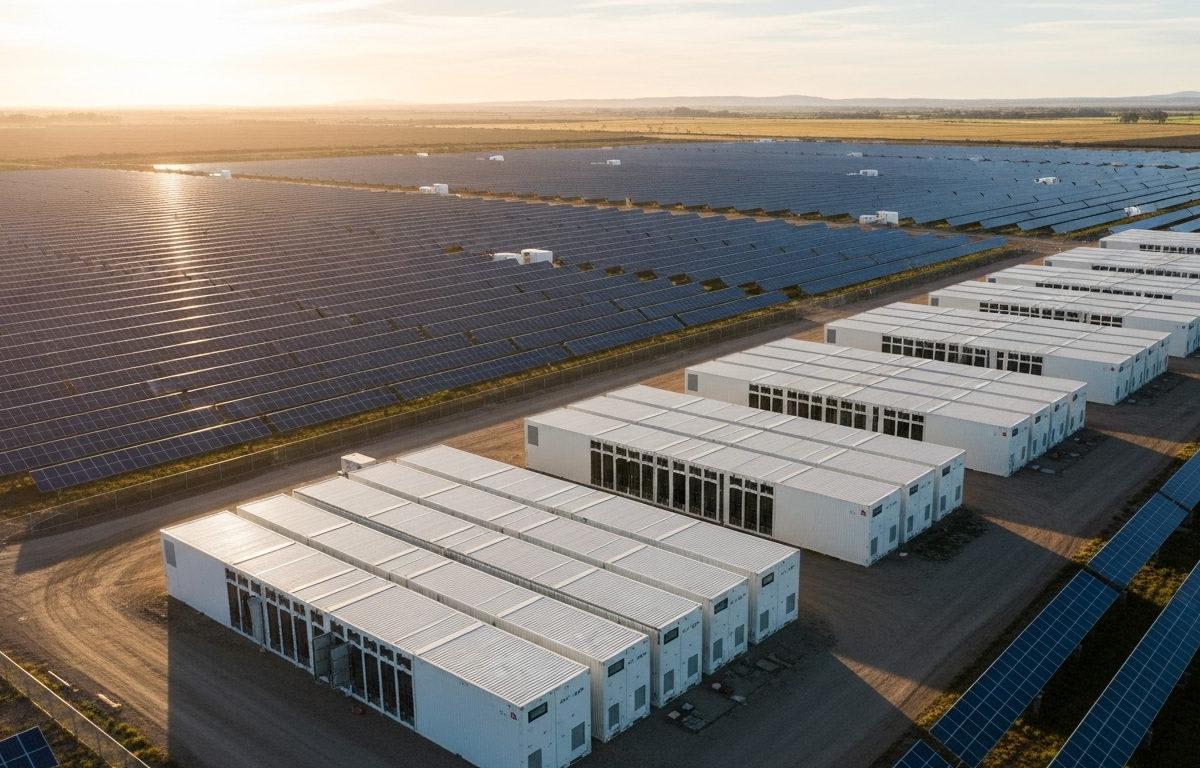
The PSOE reaffirms its goal of reaching 22 GW of storage capacity by 2030 , while the PP is considering strengthening the system with batteries, pumped storage, and other competitive technologies. Vox prioritizes hydroelectric storage, and the Frente Amplio proposes using surplus solar energy to provide three hours of free electricity per day to households.
During the energy debate, Marc Pons (PSOE) highlighted the 7.6 GW of hydroelectric storage and another 7.5 GW corresponding to projects benefiting from European aid.
However, none of the four formations specified the economic conditions of the capacity market auctions , created by Order TED/966/2026.
Xavier López identifies its implementation among the most relevant decisions for the next Executive, while José Luis Bernal Albendín considers a first call possible in 2027, although not guaranteed.
Álvaro Simon agrees that the main uncertainty lies in the deadlines, rather than in the disappearance of the mechanism, which contemplates service provision periods of up to fifteen years for certain new investments.
Data centers: an approved regulation that the PP promises to repeal
Competition for available power pits two economic development strategies against each other.
According to Red Eléctrica, as of October 1, data centers accounted for 6,329 MW of access granted to the transmission network, compared to 5,838 MW corresponding to industrial supplies .
During the debate, Juan Diego Requena (PP) defended the attraction of technological investments, while Pons questioned which activities should receive priority and suggested that data centers could obtain 80% of their energy demand.
The differences deepened on November 20, following the approval of the royal decree on sustainability and digital sovereignty.
Alberto Nadal, Deputy Secretary of Economy and Sustainable Development for the PP, announced that he will repeal the regulations and approve alternative legislation that will allow the sector to grow, according to his social media post.
Frente Amplio, for its part, proposes stricter water restrictions and a tax on digital services.
Electrical networks: more than 17 billion euros pending execution
With the 2030 Electricity Plan approved, the next legislature will be marked by the execution of the infrastructures.
Continue reading
The People's Party (PP) proposes unblocking the connections within 18 months and planning the delivery of certain strategic investments that will generate at least one hundred jobs within six months. The Socialist Party (PSOE) advocates for competitive bidding for priority activities and greater digitization of the networks.
During the debate, Julio Utrilla (Vox) suggested that the State should finance the infrastructure that the electricity companies do not carry out, while Mar González (Frente Amplio) demanded greater transparency regarding reserved capacity.
Bernal Albendín applies this problem to the business field: mature projects will be able to maintain their schedules, but those without a defined connection or predictable income will find it more difficult to finance themselves.
Nuclear power, balancing services and taxation: the battle over electricity costs
The PP promises to process the extensions of the useful life of the nuclear plants during its first hundred days of Government, while Vox defends maintaining the park and the PSOE ratifies its progressive closure until 2035.
López believes it is likely that other power plants will follow the path of Almaraz, whose operation was authorized until June 2030. Bernal Albendín points out that a modification of the schedule would alter the needs for new firm power.
The discussion also extends to operating costs: López places adjustment services at around 22 euros/MWh, with values reaching 24 euros/MWh in October.
On tax matters, the PP proposes eliminating the 7% tax on electricity production and offering an 80% discount on industrial tolls. The PSOE suggests shifting taxation towards polluting emissions, Vox advocates reducing energy taxes, and the Broad Front proposes progressive taxation based on consumption.
Photovoltaics: the reconversion of assets that transcends the ballot box
The Strategic Energy survey of the Official Gazette of the State (BOE) for October identified administrative progress on almost 930 MW of storage, while around 700 MW of renewable projects were left out of the portfolio.
In this scenario, Álvaro Simon proposes a business transformation:
“The pure solar model as we have been doing it is exhausted, and there are many projects that will not reach the date of commercial operation with the expectation with which they were born.”
Refinancings, contract renegotiations, hybrid PPAs, and tolling schemes are among the alternatives being explored by developers and financiers.
Simon also identifies opportunities to convert solar projects of between 2 and 5 MW towards collective self-consumption, taking advantage of the extension of the maximum distance to five kilometers.
Where will the investment opportunities be in 2027?
Bernal Albendín anticipates opportunities in wind power repowering, industrial self-consumption, energy storage and flexible demand management.
Simon, however, introduces an additional variable: the simultaneous entry of numerous BESS projects could compress price differentials and reduce arbitrage revenues.
For his part, López had pointed out that electricity futures for 2027 went from 88 to 113 euros/MWh, a sign of the tensions the market is going through.
The three diagnoses converge on one issue: the competitiveness of assets will depend less and less on advertised power and more on their ability to generate sustainable income.
 By Matías Medinilla

 By Ailén Pedrotti
 By Energía Estratégica

 By Emilia Lardizabal