


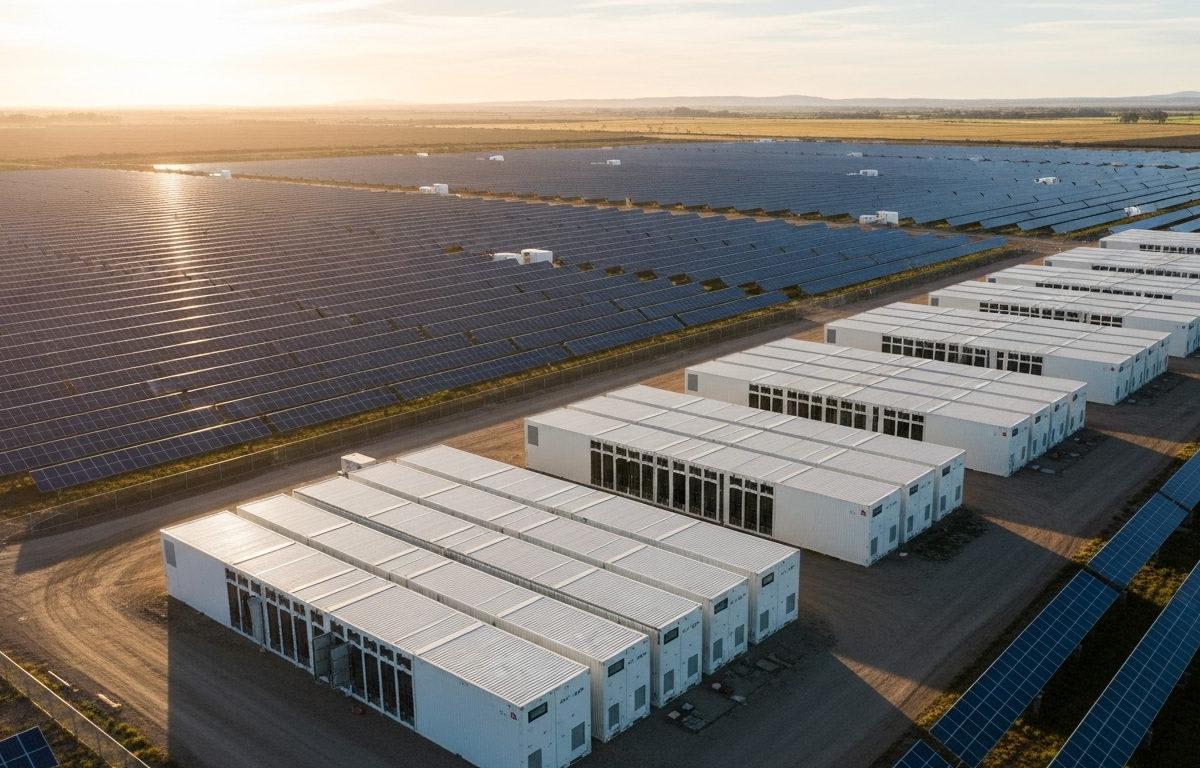
Grupo Elecnor is looking to expand its presence in the Peruvian electricity market, moving beyond its traditional role as an EPC contractor to become a developer and investor in renewable energy generation. The company is currently developing three greenfield solar photovoltaic projects in different regions of the country, while also exploring opportunities to participate in upcoming electricity tenders.
“There is one that is quite advanced that we expect to reach a Ready to Build stage by the end of next year, and we are evaluating the possibility of making a direct investment in that asset so that it has a 100% Elecnor seal and the intrinsic value to sign a PPA,” revealed Juan Enrique Fernández Delgado, Country Manager Peru of Grupo Elecnor , in an exclusive interview during Future Energy Summit (FES) Peru 2026, and confirmed that the project is located in Cajamarca.
“We are about to go to market to see if we can get a PPA to finalize the financing or, failing that, to sell it on a cash-on-delivery basis. These are different alternatives,” added Fernández Delgado.
The decision represents a change from the company's traditional positioning, which currently executes three generation projects for third parties and maintains an active participation in transmission infrastructure.
The strategy gains relevance in a market where the lack of long-term contracts continues to be one of the main obstacles to transforming development portfolios into operational power plants .
According to figures presented by Cesar Butrón, president of the Economic Operation Committee of the National Interconnected System (COES) during FES Peru 2026, the country has approximately 25,000 MW of electrical projects in different stages, but only between 3,000 and 3,500 MW correspond to initiatives considered concrete , either because they are under construction or about to start.
The president of COES also warned that less than 10% of initial initiatives manage to present operational studies, a difference that highlights the difficulties in moving from development to effective implementation.
In this scenario, the ability to secure future revenue through PPAs and close financial structures becomes crucial , especially for companies seeking to incorporate their own generation into a business traditionally focused on engineering and construction services.
Elecnor is targeting new tenders and does not rule out co-investing in projects
Peru seeks to promote renewable energy tenders through Law No. 32249, which amends Law No. 28832 and introduces changes to energy procurement for regulated users. The sector is awaiting final regulations.
When asked about the possibility of competing in these calls for proposals as a generator or through the execution of projects awarded to third parties, Fernández Delgado confirms that the company is considering both alternatives .
“Both. In the end, that is the versatility we have today in Peru, the ability to handle a project at the EPC level or as a generator,” he stated.
The executive also does not rule out financial partnership schemes with other companies in the sector, which would allow him to expand his participation in initiatives that require capital to move forward with construction.
“We can even, if they wish, evaluate a co-financing of the project,” Fernández Delgado pointed out, explaining the flexibility with which Elecnor intends to position itself for upcoming developments.
However, the conditions of the new bidding regulations still constitute a key variable for investors .
The regulatory project contemplates long-term contracts of between ten and 15 years, with grace periods of three to six years, while various companies in the sector have requested modifications to the contractual terms, guarantees and requirements to participate in the processes.
Among the main points of discussion is the possibility of existing power plants competing with new renewable projects , as well as the mechanisms for contracting by time blocks and the need to guarantee conditions that facilitate the financing of new infrastructure.
According to Fernández Delgado, the publication of the regulations would allow for greater certainty in the evaluation of investments.
“I believe that this undoubtedly provides investors with a sense of security,” said the Country Manager, who believes it is necessary to have rules in place to determine whether projects are financially viable.
However, the regulatory definition will not necessarily translate into immediate tenders. César Butrón, president of the COES Board of Directors , stated during FES Perú 2026 that calls for tenders could begin to appear around 2027 or 2028, given that several distributor contracts will expire between 2030 and 2031.
Under this scenario , projects awarded contracts in 2028 could begin operating around 2031 , taking into account the time required for construction. This is a projection from the operator's representative and not an official timeline.
Meanwhile, Elecnor maintains its activity as a contractor in generation and transmission, two segments that allow it to participate in the execution of infrastructure independently of its direct investment plans.
Among the three generation projects it is currently building , Lupi stands out, a 180 MW photovoltaic plant located approximately 4,500 meters above sea level , in the Moquegua region.
Continue reading
The plant, developed by Statkraft, has an estimated production of 581 GWh per year and is expected to begin operations towards the end of 2027. Its location presents technical and logistical challenges associated with weather conditions and the execution of works in high mountain terrain.
In the transmission segment, Elecnor also participates alongside Celeo, a concessionaire of electrical projects , assuming practically all of the EPC work and tasks related to environmental licensing.
This activity allows the company to intervene in different stages of development, from permit management to infrastructure execution, although the transformation towards self-generation introduces commercial and financial risks different from those of contracting works.
PPAs are gaining prominence, and storage is awaiting regulatory signals.
Elecnor identifies a possible change in the willingness of large Peruvian consumers to sign longer-term electricity supply contracts.
“Many large consumers have realized that the price of energy in Peru is ridiculously low compared to the rest of the region,” the executive noted.
Fernández Delgado links this trend to the incident in the Camisea gas system . According to the executive, abrupt cost fluctuations could alter how independent customers assess long-term contract commitments.
“Those spikes create a lack of predictability in costs that large consumers don't like. Tell a consumer that what they used to pay in 40 or 39, they suddenly have to pay in 200 just because,” he pointed out.
The possibility of reducing exposure to volatile prices could favor the negotiation of longer PPAs , precisely one of the instruments that Elecnor is seeking to support its photovoltaic development in Cajamarca.
The contractual problem was also identified by COES. According to data presented by Butrón, approximately 55% of Peruvian electricity demand comes from unregulated customers , among whom agreements of three to five years predominate.
This feature limits the availability of sufficiently long contracts to support the financing of new power plants, especially when investments require longer payback periods.
The Elecnor executive believes that the interest in the electricity business is also reflected in the entry of business groups from other sectors and mentions the acquisition of Orygen by the Romero Group as an example of this movement.
However, energy storage still faces a different scenario than renewable generation , because the demand for batteries responds mainly to regulatory requirements and not to the development of independent business models.
“All our clients are asking us to consider storage within their projects that will have a COD after the 28th to comply with regulations,” explained the Country Manager, referring to the COES requirement for synthetic inertia.
“There’s no concept of a storage business as such, focused on selling stored energy. It’s more about regulatory compliance,” he added.
Consequently, the development of standalone storage systems remains conditioned by the evolution of the regulatory framework and economic signals that may enable new sources of income.
For Fernández Delgado, one of the opportunities lies in the nodes of the electrical system that have a high concentration of generation and difficulties in evacuating all the available energy.
As an example, he identifies the San José substation in Arequipa , where Elecnor participated in the busbar expansion works and where, according to the manager, there is a significant accumulation of connections.
The executive recalls that the intervention included approximately 600 meters of bar extension , a dimension he considers exceptional within his professional experience, although he clarifies that he mentions the figure from memory.
“I believe there is a real curtailment problem at that substation that we could find a way to improve with storage,” Fernández Delgado stated.
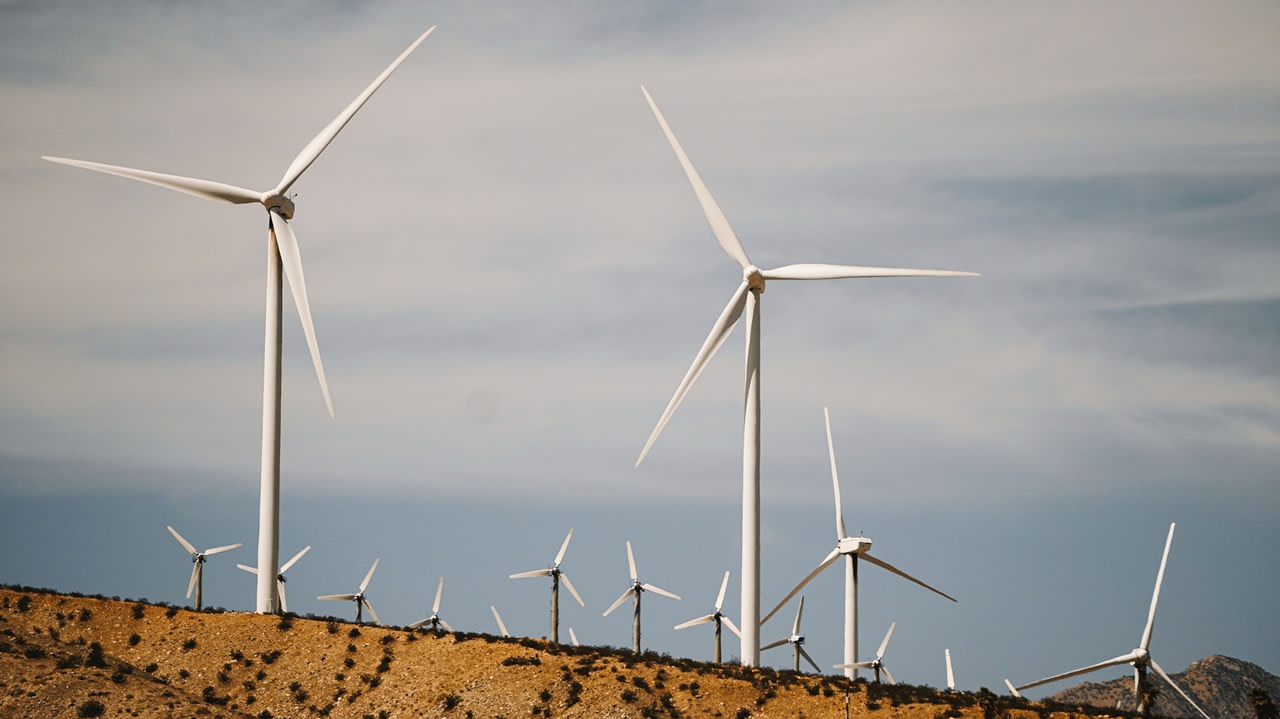
Wind energy is also among Elecnor's objectives for the Peruvian market. When asked about the progress they hope to showcase at the next Future Energy Summit (FES) in 2027, the Country Manager identified the development of their first wind energy project as an aspiration.
“I would love to tell you that we already have our first wind turbine,” said Fernández Delgado, who also mentions energy storage among the segments he intends to promote.
Thus, Elecnor's challenge for 2027 is not limited to reaching the Ready to Build stage for its solar project in Cajamarca. The company must decide whether to make a direct investment, secure contracts to support the financing of its developments, and position itself in a market that is preparing new contracting rules.
 By Matías Medinilla

 By Ailén Pedrotti
 By Energía Estratégica