

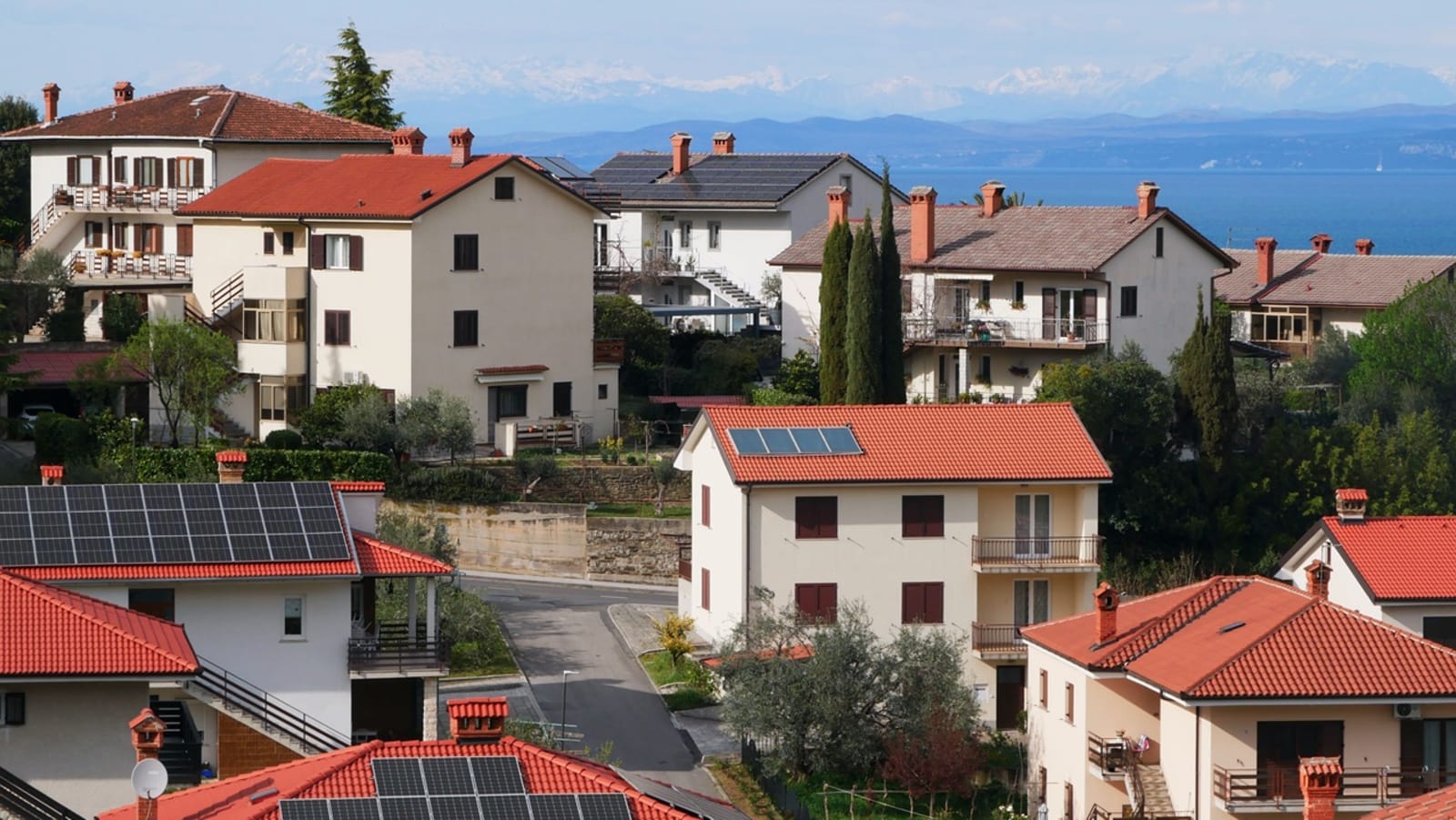
Spain approved the specific regulatory framework for energy communities , defining their participation requirements, rights and obligations and, at the same time, enabling mechanisms to facilitate the development of new projects.
The Royal Decree establishes that renewable energy communities (CERs) must have as their main purpose providing environmental, economic or social benefits to their members, rather than prioritizing financial gains.
In addition, they will be able to access the Renewable Energy Economic Regime (REER) and will have specific quotas within the calendar of support instruments, including renewable auctions .
The regulation also opens up an additional avenue for them to gain access to the electricity grid: for two years , 10% of the capacity of the nodes reserved for access competitions will be released for generation facilities promoted by these communities.
The new framework thus develops figures that had already been incorporated into the Spanish legal system based on European directives on renewables and the electricity market, but which still required more detailed regulation for their operation.
In the case of CERs, one of the central elements will be the proximity between community members and renewable energy facilities .
That criterion will depend on the population of the municipalities where the projects are located.
Conditions are also established regarding the number of participants and the content of the statutes. Among these, no partner or member may hold more than 40% of the votes , with the aim of maintaining distributed governance.
Citizen energy communities (CECs), for their part, will have a different scope: they will not be limited exclusively to renewable technologies nor subject to the same proximity criteria .
The Royal Decree also regulates cases in which these organizations carry out activities in more than one autonomous community.
Quotas, network capacity and support for new projects
Beyond establishing legal definitions, the regulation incorporates instruments designed to improve the viability of these initiatives.
One of them will be the possibility of reserving specific quotas for energy communities in future REER calls , preventing them from necessarily competing on equal terms with much larger-scale renewable projects.
This is in addition to the temporary release of part of the capacity previously reserved in the nodes subject to access competitions.
For two years, 10% of that capacity can be allocated to generation projects driven by renewable energy communities .
The regulation also formally recognizes the Community Transformation Offices , which are responsible for providing information, guidance, advice and operational support to the promoters.
Another key focus is facilitating the inclusion of vulnerable consumers.
This includes tools such as exemption or reduction of financial contributions, solidarity funds, advisory and training activities, and the signing of agreements.
The Government had already been supporting this segment through the CE Implementa program, managed through the Institute for Energy Diversification and Saving (IDAE).
Its six editions mobilized €108.4 million from the Recovery, Transformation and Resilience Plan to support 262 energy communities .
With the approval of the Royal Decree, Spain now moves from incentive programs to having specific operating rules, access to economic mechanisms and network availability for these entities, seeking to expand their participation in renewable deployment and local energy management.
 By Matías Medinilla
 By Energía Estratégica

 By Ailén Pedrotti

 By Emilia Lardizabal