

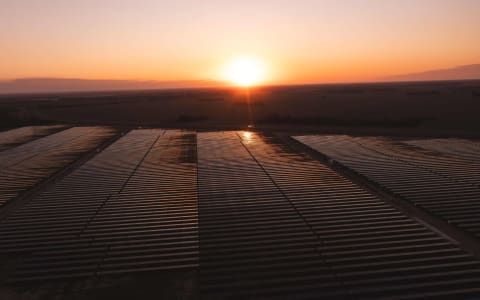
Mexico has an estimated photovoltaic potential of 42 GW on the roofs of industrial buildings and warehouses , according to a survey by Colliers that considers the use of 90% of the available surfaces to install 670 W modules.
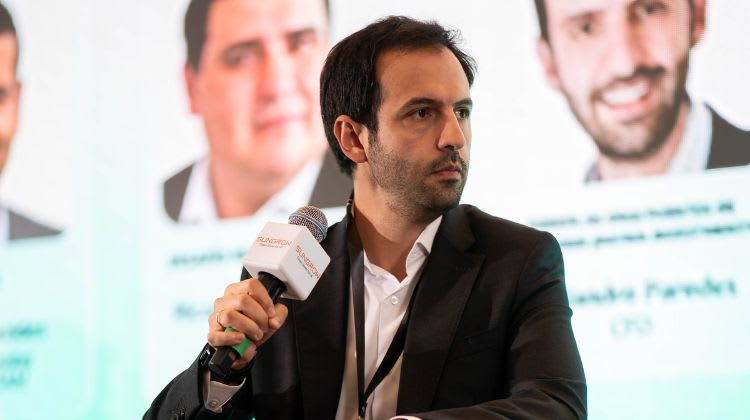
“We have monitored more than 18,750 industrial warehouses and storage facilities, totaling approximately 186 million square meters,” explained Víctor Gómez Aranzubia, Industrial Strategy Broker at Colliers Mexico , during the streaming of “It Had to Be Said and It Was Said ,” which is being carried out by Energía Estratégica.
The projection represents a development opportunity equivalent to approximately seven times the country's historical distributed generation capacity, which reached 5923.06 MW at the close of the first half of 2026 , including the records of the old Small and Medium Scale Interconnection Requests (SIPyME) scheme.
The historical investment estimated by the National Energy Commission (CNE) amounts to more than USD 14,582 million , of which around USD 14,456 million corresponds to photovoltaic systems.
The latest report on distributed generation in Mexico also records 53,087 interconnection requests processed between January and June , bringing the cumulative total to 655,417. If the old SIPyME scheme is considered, the historical total rises to 684,973 since 2007.
This data takes on relevance in light of the addition of 29 million square meters of industrial infrastructure between January 2023 and September 2026 , distributed across approximately 2,056 new buildings, according to the real estate company's monitoring.
The expansion represents a rate of close to 14,000 square meters per day of new production and logistics areas, with power requirements that depend on the processes developed in each establishment.
“For a traditional distribution center, storing dry goods, clothing, for example, of 10,000 square meters, you need about 500 kVA, but if it is used to store frozen products, you might need up to 5 MW,” Gómez Aranzubia explained.
Meanwhile, data centers and the automotive and aerospace industries are increasing the demands on Mexico's electrical infrastructure. Power availability, quality of supply, and connection feasibility are now among the factors companies consider before selecting a location.
“The transformation used to be about location. Today it’s becoming about energy, energy and location. Now they demand energy quality, the energy efficiency you can achieve, and grid connectivity,” stated the Colliers executive.
However, the development of new infrastructure does not depend solely on the profitability of solar projects. The availability of electricity becomes a determining factor for the installation and expansion of productive activities.
An outage can also generate costs exceeding the value of the unsupplied electricity. In the plastics industry, for example, the shutdown of injection molding equipment can cause blockages requiring cleaning and component recovery, with expenses that can reach or exceed $120,000 in large facilities .
This drives interest in configurations that integrate photovoltaic systems, batteries, grid supply and other backup sources to reduce production losses.
César Escobedo , Utility Key Account Manager at Sigenergy , and Andrés Azula , Solutions Manager at GoodWe , identified a recurring difficulty among commercial and industrial consumers: determining the real cost of power outages: “Having a well-measured KPI of how much a blackout costs you is not something every company has.”
Without that measurement, calculating the return on investment in storage becomes more complex, especially when operational continuity is more important than direct savings on the bill. However, resilience, environmental commitments and the need to have supply in certain nodes also condition the decisions.
Among the storage projects they are looking at, a configuration with 5 MW of power and 10 MWh of capacity stands out, equivalent to two hours of nominal discharge.
“The average return on investment that makes it attractive for customers to buy is 3-4 years, exclusively with solar panels. When there is a battery component, it lengthens, going to about five and a half or six years,” Gómez Aranzubia explained.
“I agree that the attractive return is around 4 years, it can even be up to 6 years. Perhaps it doesn't happen as much in Mexico, but for example in Chile, Argentina and Colombia, the client puts that data somewhat in the background and asks to solve the need,” added Andrés Azula.
The difference begins to be evaluated within 5, 10 or 20 year business strategies, where losses due to interruptions, the availability of electricity and future expansion needs are part of the economic calculation.
As for commercial schemes, the three specialists acknowledged a greater adoption of power purchase agreements (PPAs) of approximately 10 years in Mexico, through which companies pay for the supply without directly taking charge of the maintenance of the facilities.
This is without neglecting traditional financing models and "shared savings", which allows the distribution of economic benefits between the consumer and the solution provider.
Storage expands into new Latin American markets
Continuity of supply is gaining increasing importance in other countries in the region, so the Solutions Manager of GoodWe warned that the evaluation of commercial and industrial projects incorporates operating costs that were previously left out of traditional financial analyses.
“One example we have where the KPI has already been measured is that fifteen minutes of power outage is much more costly than several hours of consumption,” he emphasized.
In addition, the manufacturer mainly receives inquiries for 500 kW power and 1 MWh storage configurations in the commercial and industrial segment, while in Colombia the demand for batteries for mini solar farms is growing.
Azula identifies engineering, procurement and construction (EPC) companies among the actors interested in incorporating these technologies, driven by new requirements and incentives associated with projects.
The market is also expanding into Paraguay and Bolivia , where consumers are seeking backup power solutions, peak shaving , and load shifting . Meanwhile, in Ecuador, following the supply crisis, the residential battery market has gained prominence, and grid-connected commercial and industrial activity has begun to recover.
 By Emilia Lardizabal
 By Energía Estratégica