
Addressing bottlenecks, achieving a sufficient level of maturity, and mitigating delays that impact the entire system will be the three criteria guiding the prioritization of a portfolio of 20 energy projects in Chile. The strategy aims to expedite investments whose execution is currently hampered by, among other factors, administrative processing times.
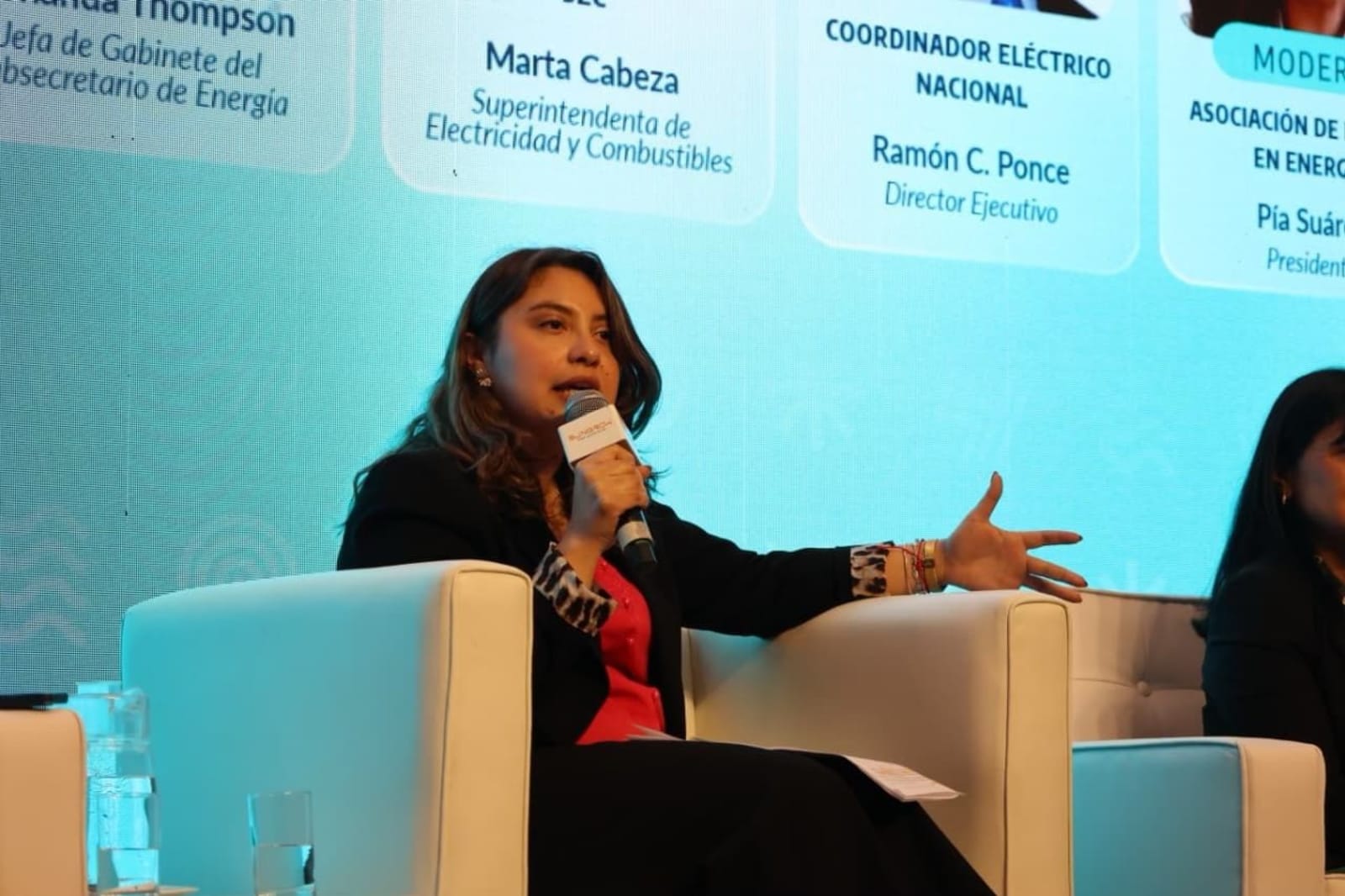
During the Future Energy Summit (FES) Chile 2026 , Fernanda Thompson , chief of staff to the Undersecretary of Energy, identified the areas where the Government intends to concentrate its efforts: “Mainly in transmission, storage and the lack of enabling infrastructure.”
However, it won't be enough for an initiative to simply belong to those segments. The Ministry representative clarified that its stage of development and the origin of the obstacles it faces will also be taken into account.
“We must see that the project is mature, but also that the delay is partly the responsibility of the State,” Thompson said, before adding a third factor: “That this delay has a cost for everyone.”
In this way, the Executive will seek to give administrative priority to projects capable of resolving relevant restrictions for the electricity sector, especially when state procedures have contributed to postponing their realization.
The measure is part of the 2026–2030 Energy Roadmap , which includes among its commitments reducing the processing times for 20 strategic initiatives. However, the official did not specify during the meeting which initiatives would be included in this portfolio, nor did she provide an individual implementation timeline.
The challenge becomes even more significant given the volume of infrastructure currently under development. According to the Ministry of Energy's report for September 2026, 48 transmission projects were under construction , with declared investments of USD 3.276 billion and a total extension of 2,143 kilometers of new lines.
These figures highlight the expansion needs of the electricity grids, one of the segments identified by Thompson as a top priority for unlocking capital and supporting the growth of renewable generation.
Three mechanisms to accelerate investments
In addition to defining which projects will receive priority attention, the Government is working on existing procedures to shorten approval times and facilitate the start of construction.
The strategy is developed through the Committee of Ministers, the Economic Committee and the Framework Law of Sectoral Authorizations , instruments that seek to expedite different stages without depending exclusively on new legislative modifications.
One of the main changes focuses on the functioning of the Committee of Ministers, which is responsible for resolving claims related to environmental assessment.
“At the instruction of the President of the Republic, this committee has been scheduled to meet every month,” Thompson explained.
Regarding the results, he stated that "resolution times have decreased by at least 40%."
As background, during the Public Account of June 2026, the Executive had already reported a 45% reduction in the time required to resolve claims and the unblocking of investments close to USD 7 billion nationwide.
Another critical point identified by the official is the period that elapses between obtaining an Environmental Qualification Resolution (RCA) and the effective start of construction.
The Economic Committee intervenes there, aimed at facilitating the progress of initiatives that, despite having passed certain authorization stages, still face obstacles to being realized.
Furthermore, Thompson highlighted the implementation of the Framework Law on Sectoral Authorizations, which aims to simplify procedures and reduce the costs associated with obtaining permits.
In particular, he explained that the Ministry is working with the Office of Sectoral Authorizations and Investment (OASI) to adapt the processing of electricity concessions and identify those that present lower levels of risk.
This mechanism would allow for differentiating administrative requirements according to the characteristics of each application, instead of applying the same procedures to initiatives with different degrees of complexity.
Looking ahead to 2027 , the Government expects to have indicators that will allow it to verify whether these measures effectively reduced management times and contributed to accelerating the execution of investments.
“We hope next year to be able to see how many days we were actually delayed and to be able to verify that this has been an inter-ministerial policy that has worked,” Thompson stated.
Monitoring these results will be key to determining whether the administrative prioritization translates into concrete progress, especially in transmission and storage, where delays can hinder the development of new electrical infrastructure.
 By Matías Medinilla

 By Energía Estratégica

 By Ailén Pedrotti