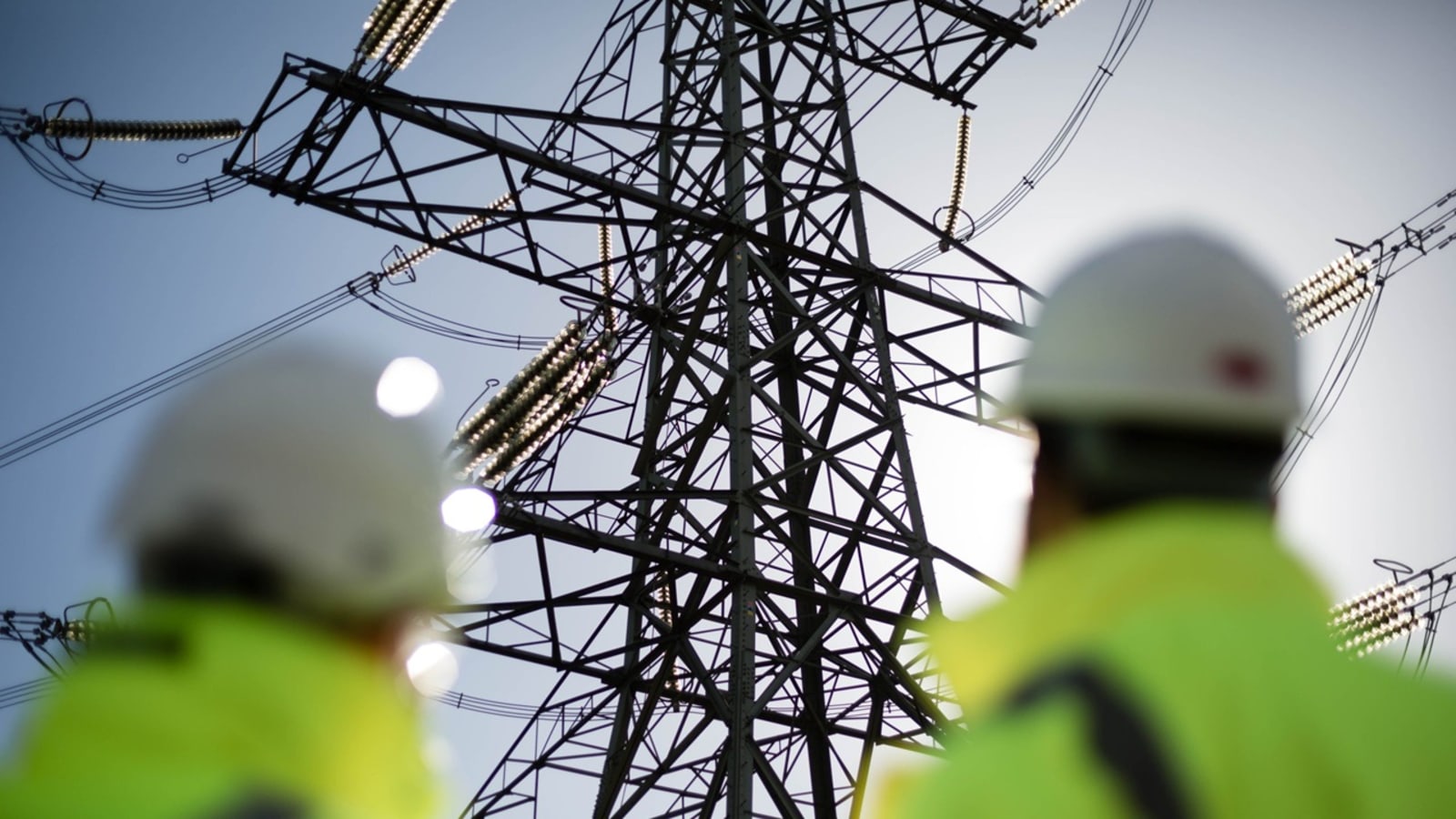
The Inter-American Development Bank (IDB) launched a call for proposals to hire a consulting firm, with an estimated budget of USD 150,000 , which will be in charge of reviewing and revalidating the expansion priorities of the Argentine Interconnection System (SADI), including the works defined by the national government in 2023 and 2025 .
The study will determine which projects maintain their priority, which require modifications, and which new expansions should be incorporated , based on technical and economic evaluations, scenario analysis, and network reliability and resilience. It will also consider new demands related to mining, data centers, and electromobility.
The call for proposals will remain open until November 13, 2026, at 5:00 p.m. Washington DC time , and expressions of interest must be submitted through the agency's BEO Procurement Portal, under references RG-T4905-P002 and B260316 .
According to the terms of reference, the evaluation must determine, for each work and the sets of complementary projects, "whether the need, convenience and relative priority defined in 2023 is maintained" or whether it should be modified based on the current conditions of the Argentine electrical system.
The process will start with Annexes I and II of Resolution 507/2023 , through which the Energy Secretariat approved the Expansion Plan of the High Voltage Electric Power Transmission System, and Resolution 715/2025 , which identified electric transport works of urgent and priority execution.
Among the projects that must be expressly considered in the baseline are AMBA I, Puerto Madryn–Choele Choel–Bahía Blanca and Vivoratá–Plomer , whose development conditions affect the evaluation of the rest of the expansions.
The consultant will have to update the SADI diagnosis, identify the main transport restrictions and survey the status of the works executed, in execution, awarded, committed or in different stages of development.
In addition, it will have to review regional demand projections, generation and electricity exchanges, incorporating scenarios associated with new industrial consumption, mining projects, data centers and electric mobility .
This update responds to the modifications recorded since the planning approved in 2023, particularly in the evolution of consumption, the composition and location of the generating fleet, the availability of fuels and the costs and deadlines for infrastructure execution.
As background, the original prioritization arose from a process initiated in 2022, when the Energy Secretariat asked TRANSENER and other actors in the sector to identify the main needs for expanding electric transport.
Subsequently, the Wholesale Electricity Market Management Company (CAMMESA) complemented the technical evaluations through an economic analysis of the 500 kV works, considering a 15-year horizon from its entry into service.
The methodology considered investment, operation and maintenance costs, unsupplied energy, emergency generation and the benefits associated with the incorporation of new conventional or competitive renewable generation.
However, TRANSENER had warned that some expansions lacked sufficient studies to justify their priority. CAMMESA also acknowledged uncertainties regarding future demand, the addition of generation capacity, and fuel prices.
Therefore, the new contracting will not be limited to updating the economic values of the previous planning, but must revalidate the need and opportunity for execution of each investment .
The IDB requests new cost-benefit assessments, sensitivity analyses, and specific simulations to determine how different assumptions regarding demand, generation, and network development modify the feasibility of the projects.
It also requires incorporating “aspects and criteria of resilience, adaptability and technological evolution” , along with the identification of relationships of dependence, complementarity, sequence or substitution between the works.
One of the expected results will be to determine the economically convenient time to execute each expansion, evaluating the possibility of "postponing, anticipating or sequencing the investments" .
The consultant must prepare an individual sheet for each project, with its function within the system, restrictions it solves, beneficiary agents, required date of entry into service, complementary works and relevant uncertainties.
The work will conclude with “a revalidated and updated list of expansion projects” , which may include new alternatives and will establish a technically sound order of priorities, accompanied by a roadmap for its progressive implementation.
A $6.6 billion plan and financial backing from the IDB
The call is part of the review of the infrastructure contemplated by the National Electric Transport Expansion Plan , presented in May 2025, which foresees 16 strategic initiatives, 5,610 kilometers of new lines and more than USD 6.6 billion of investment .
The program includes 500 kV expansions in different regions of the country, as well as transformer stations and international interconnections aimed at reducing transport restrictions, improving the reliability of supply and supporting the incorporation of new electricity generation.
Among the identified works are AMBA I and AMBA II , the Vivoratá–Plomer, Plomer–O'Higgins, Puerto Madryn–Choele Choel–Bahía Blanca, Río Diamante–Charlone–O'Higgins and Rodeo–Chaparro–La Rioja Sur lines.
It also includes projects related to Antofagasta de la Sierra, Lavalle-Chumbicha, Comodoro Rivadavia Oeste and El Espinillo , as well as Patagonian expansion alternatives and interconnections with Bolivia and Paraguay.
The planned scheme includes the participation of the private sector through public works concessions , with recovery of investments through tariff charges applied to the users benefiting from electric transport.
In parallel, the IDB Executive Board approved weeks ago an Investment Guarantee of USD 200 million, with a term of 25 years , to support the AMBA I and Puerto Madryn–Choele Choel / Choele Choel–Bahía Blanca projects.
The instrument aims to reduce risks for investors and mobilize long-term private financing. According to program estimates, the supported projects will contribute to improving the reliability of the supply for 16 million users , including households and businesses.
The operation constitutes the first individual intervention under a Conditional Credit Line for Investment Projects of the multilateral organization.
In particular, the AMBA I project, which has already been put out to tender, will require an estimated investment of USD 800 million and will incorporate approximately 270 kilometers of 500 kV, 220 kV and 132 kV lines, a new transformer station in Plomer and reactive compensation systems.
The infrastructure will increase the supply capacity of the Buenos Aires Metropolitan Area by approximately 2,000 MW . The reported timeline anticipates receiving bids in December 2026 and a potential award in early 2027.
In this context, the new consultancy will allow a comparison of the priorities established in the current resolutions with the current conditions of the SADI, considering both the projects that have progressed towards their execution and the needs that arise from new demand and generation scenarios.
The result will be an updated roadmap for the expansion of Argentine electric transport , with technical and economic criteria to define the sequence of investments and expansions that should be prioritized in the coming years.
 By Florencia Guglielmetti

 By Energía Estratégica

 By Ailén Pedrotti