
Spain heads into the general elections on November 29 with an energy transition that has gained speed in renewable generation, but is still finding it difficult to translate that growth to the economy as a whole.
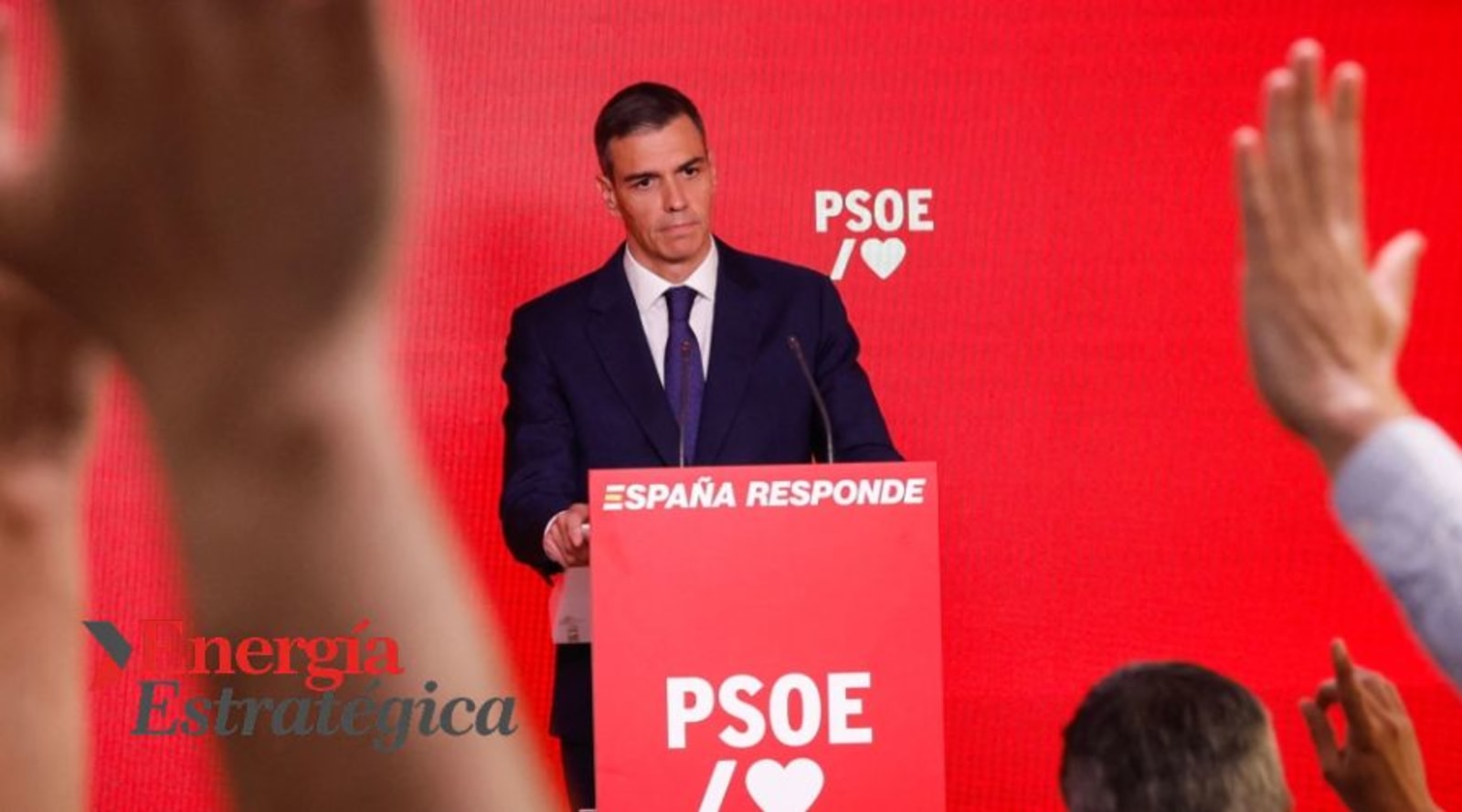
Against this backdrop, the Spanish Socialist Workers' Party (PSOE) presented its electoral program for 2026 , in which it proposes to deepen electrification, expand electrical infrastructure and consolidate clean technologies as drivers of industrial competitiveness.
Pedro Sánchez 's party defends the continuity of the energy policy developed since 2018, although it incorporates new commitments to respond to a market where the availability of connection capacity, demand management and security of supply are increasingly important.
But is it enough to keep installing renewables when grids and demand are not keeping pace?
This question runs through much of the socialist program. Its goal of achieving 81% renewable electricity generation by 2030 requires accelerating the deployment of new facilities while simultaneously addressing the limitations that hinder their integration into the system.
These difficulties also appear in the analysis of the specialists consulted by Energía Estratégica during November.
José Luis Bernal Albendín anticipated a two-speed renewable energy market, in which mature projects could maintain their schedules while those without defined connections or sufficiently predictable income would find it more difficult to reach the final investment decision.
For his part, Xavier López, of RMM Energy Advisors , identified three decisive issues for the next Executive: capacity market auctions, the cost of ancillary services and the continuity of the nuclear fleet.
The new socialist program addresses the three areas from different perspectives, although it does not offer the same level of detail for each one.
Renewables at 81%: accelerating generation without losing sight of demand
The most ambitious goal appears on the horizon of 2030, when it aims for 81% of the electricity generated in Spain to come from renewable sources .
To achieve this, the training proposes prioritizing Renewable Acceleration Zones, seeking to concentrate the development of projects in locations compatible with biodiversity, agricultural and livestock activities and territorial consensus.
The strategy attempts to address a challenge that accompanies the growth of the sector: having good solar or wind resources does not guarantee that a project can be developed without land use conflicts, administrative delays, or evacuation restrictions.
However, the new generating capacity is only one part of the equation.
The PSOE also proposes extending self-consumption and energy efficiency in homes, public buildings, small and medium-sized enterprises and industries, with the aim of increasing the use of renewable electricity within the Spanish economy.
The goal is to produce more clean energy, but also to ensure that there are more activities capable of consuming it.
A comparison with the 2023 election manifesto shows a continuity in the general objectives. At that time, the Socialists already advocated for identifying suitable areas for new projects, collective self-consumption, and reforming the European electricity market.
The novelty of the 2026 document lies in a greater link between renewable expansion, the electrification of consumption and industrial development.
In parallel, the group proposes a roadmap to gradually abandon fossil fuels, although without establishing a detailed sectoral timetable in this section that would allow anticipating how this substitution would take place.
Electrical networks: the key to unlocking new industrial investment
Infrastructure availability is one of the most relevant aspects of the program, especially for industries that need to expand their electricity consumption or set up in new locations.
The proposal aims to accelerate the expansion and digitization of transport and distribution networks , increase their capacity through new investments, and launch access tenders for projects considered strategic.
The initiative includes industrial, technological and energy facilities, as well as developments linked to housing construction.
The proposal reflects a shift in priorities in the Spanish electricity market. For years, much of the discussion focused on how to incorporate more renewable generation; now, it is also essential to determine where the new demand can be connected.
Having competitive electricity is of little use if a factory, data center, or industrial facility cannot access the power it needs.
In this sense, the party links the expansion of infrastructure with a future Law on Industry and Strategic Autonomy , intended to support national value chains and attract investments linked to electrification, batteries, hydrogen and other clean technologies.
It also proposes mobilizing €120 billion through the Spain Grows Fund to support economic and productive modernization. This is a general instrument, not a fund reserved exclusively for the energy sector.
However, the program does not establish specific deadlines for allocating new electrical capacity nor does it commit to specific dates for the execution of industrial connections.
The difference between having a capacity reserve and achieving an operational connection will continue to be crucial for the investment schedule.
Storage and pumping: more flexibility, but with what revenue?
Renewable growth requires paying attention to what happens when the wind decreases, solar production disappears, or generation temporarily exceeds demand.
To address these situations, the PSOE proposes accelerating the development of energy storage, promoting demand management, and approving a national hydroelectric pumping plan .
The document also contemplates expanding international interconnections, a tool that would strengthen electricity exchanges and make better use of available resources in different markets.
Continue reading
This is an evolution from 2023, when the socialist program already included storage, demand management and renewable hydrogen among the technologies needed to advance decarbonization.
The new proposal expressly incorporates a national pumping plan, although it does not specify its target capacity, priority projects, or financing mechanisms.
For batteries, the uncertainty is primarily economic.
Political support for technology does not, by itself, solve the need to build revenue models that allow for recouping the investment and ensuring the profitability of projects.
In that context, the capacity market is one of the main issues pending definition for the next legislature .
The mechanism was created by Order TED/966/2026, published in September, but its operational development and the calling of the first auctions remain relevant issues for the promoters.
In his statements prior to Energía Estratégica , José Luis Bernal Albendín considered a first call for bids possible during 2027, although he warned that the schedule was not guaranteed.
Xavier López had also pointed out the importance of specifying the economic and operational conditions of the auctions, especially to determine which technologies will be able to participate and under what obligations.
The PSOE's electoral program aims to accelerate storage, but does not set a timetable for capacity auctions or define new remuneration conditions for batteries or pumped storage.
That absence leaves an important question for investors: how will the political push for flexibility translate into economic signals capable of supporting new investment decisions?
Nuclear: continuity of the schedule and a fundamental difference with the PP
While energy storage seeks to gain space in the system, the continued operation of nuclear power plants is once again at the center of the energy debate.
The PSOE maintains its commitment to complete the progressive closure of the nuclear park by 2035 , accompanied by just transition projects for the affected regions and measures aimed at preserving the technological and professional capabilities of the sector.
This position contrasts with that of the People's Party , which proposes eliminating the schedule for closing the power plants and processing extensions of their useful life during the first hundred days of government, always subject to the corresponding authorizations.
The difference is especially relevant for system planning, as it affects the future availability of manageable generation and the rate at which new backup alternatives will need to be incorporated.
The debate doesn't start from scratch either.
In August, the Government authorized extending the operation of the two Almaraz units until June 8, 2030, introducing a specific modification to the operational horizon of that facility without abandoning the overall objective of closing the park.
The socialist program of 2023 already included the orderly and progressive dismantling of nuclear power plants, accompanied by planning for the management of radioactive waste.
Therefore, the policy orientation does not change substantially in 2026, although its implementation will have to coexist with greater renewable penetration, new flexibility needs and reinforced requirements in terms of security of supply.
Can Spain sustain this timetable without increasing the cost of the backup and adjustment services needed by the electricity system?
The answer will depend, among other factors, on the effective entry of storage, the expansion of interconnections, and the behavior of demand.
Hydrogen, industry and electricity bills: the other pieces of the program
The socialist strategy also seeks to strengthen Spain's position as a European center for the production and distribution of clean energy.
To achieve this, it proposes accelerating the expansion of a main network of gas pipelines prepared to transport green hydrogen and strengthening strategic interconnections with France.
The proposal is part of an industrial policy that aims to develop national manufacturing capabilities for renewable energy equipment, storage and green steel, relying on research, technology transfer and innovative public procurement.
This is complemented by a new Mining Law aimed at improving the management of mineral raw materials and a greater commitment to recycling solar panels, wind turbine blades and batteries to recover critical resources.
The economic component also reaches the end consumer.
The PSOE proposes to defend the reform of the European electricity market to transfer the benefits of renewables to households and businesses, as well as to reorient taxation to reduce costs and barriers to clean technologies.
However, the document does not specify which taxes it would modify or the economic scope of those measures.
Social protection complements this approach through the deployment of the Social Climate Plan, aimed at vulnerable households, micro-enterprises and transport users affected by the costs of the transition.
In contrast to the 2023 program, which already linked renewables with reducing energy bills and industrial opportunities, the 2026 program expands that strategy to include networks, supply chains, and technological autonomy.
The PSOE is thus proposing a continuation of its decarbonization policies, with new tools to strengthen industry and absorb greater renewable production.
For the energy sector, the next decisions will be in the execution: when the new connection capacity will be available, how flexibility will be remunerated, and what conditions will allow electrification objectives to be transformed into bankable projects .

 By Matías Medinilla
 By Energía Estratégica


 By Ailén Pedrotti