

The Dominican Electricity Transmission Company (ETED) presented new progress on its initiative to incorporate 600 MW of battery energy storage systems (BESS) , with a planned duration of four hours and a total energy capacity of 2400 MWh , distributed in three locations in the country.
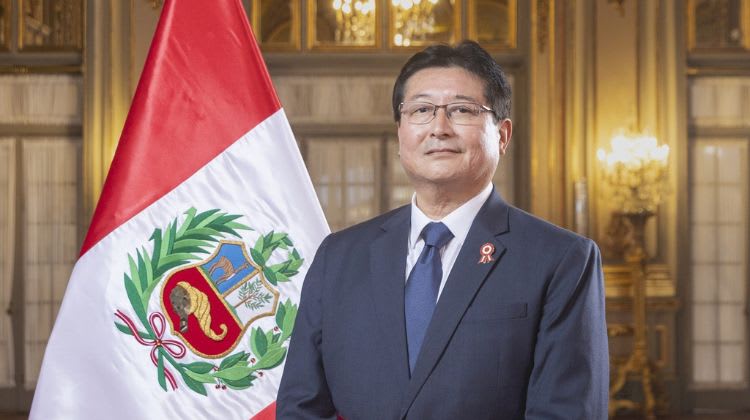
The announcement was made by Alfonso Rodríguez Tejada, executive vice president of ETED , during a session of the Energy Committee of the American Chamber of Commerce of the Dominican Republic (AMCHAMDR), where he also addressed the contracting mechanisms necessary to facilitate the participation of private investors.
The proposal is part of the efforts to increase the operational flexibility of the National Interconnected Electric System (SENI), in a context of greater renewable penetration and growing needs for frequency regulation, contingency response and use of generation surpluses.
The update also represents a significant change from the previously announced specifications. In May and July 2026, ETED had proposed a 600 MW / 1,200 MWh initiative, equivalent to two hours of storage . The new presentation increases the planned duration to four hours and, therefore, doubles the planned energy capacity, although it does not specify whether this modification corresponds to a final resizing of the contract.
Regarding the administrative progress, the company had previously reported that it received offers from interested parties following a call for expressions of interest made in March, while it was advancing in the contractual and regulatory review of the private investment scheme.
However, in its latest communication, it did not specify a new award date or identify the three locations where the systems would be distributed.
“The challenges facing the electrical system require solutions that combine technology, planning, and operational flexibility. Energy storage represents an opportunity to strengthen grid stability and respond more efficiently to the country’s needs,” said Rodríguez Tejada.
The executive also highlighted the importance of evaluating contractual mechanisms that take into account the technical and economic conditions of the projects, with the aim of facilitating their execution and private participation.
The initiative aims to give batteries a function that goes beyond simply shifting energy between schedules. Its applications include frequency regulation, rapid response to emergencies, and better utilization of renewable electricity, which currently faces operational constraints.
The need to incorporate these technologies stems from the transformation of the Dominican Republic's energy mix. During the first months of 2026, the renewable energy curtailment hovered around 14%, with some days when restrictions approached 40%, according to data presented by energy authorities during the 11th Energy Week.
Continue reading
New BESS tenders and up to 900 MW renewables: the Dominican Republic's contracting map
The progress presented by ETED coincides with a broader strategy for contracting generation and storage that the Dominican Government is preparing for the coming years.
As anticipated by Energía Estratégica , the Minister of Energy and Mines, Joel Santos Echavarría , confirmed during the XI Energy Week, held in Santo Domingo, a roadmap that includes four bidding processes to expand the electricity supply and ensure backup capacity for the next decade.
One of the first processes aims to incorporate 200 MW of batteries associated with existing renewable installations , while another call for tenders plans to contract between 600 and 900 MW of new renewable generation , with a storage component equivalent to 50% of the capacity.
“We are also going to add an auction of between 600 and 900 MW of renewable energy, also with 50% storage. That is new energy,” Santos explained in statements to this media outlet.
These calls for tenders are different from the 600 MW initiative promoted by ETED, which is mainly aimed at providing flexibility and auxiliary services to the transmission system.
The minister also anticipated a third tender for at least 900 MW of existing generation and a fourth process to contract new firm power with a 2030-2032 horizon.
According to the presented schedule, the first calls for proposals would be concentrated between the end of 2026 and the beginning of 2027, while the process corresponding to existing generation could be developed later during 2027.
The Government's goal is to reach at least 800 MW of storage by 2028 , accompanying a renewable expansion that projects to reach approximately 2,800 MW installed by that year.
In this scenario, batteries take on a central role in reducing solar and wind energy spillovers, managing generation variations, and responding to growing electricity demand.
The combination of projects promoted by ETED and new ministerial tenders opens up opportunities for manufacturers, developers, and investors. However, the realization of these investments will depend on the definition of contracting schemes, remuneration conditions, and the execution of the planned calls for proposals.
For the Dominican Republic, the challenge is no longer just about incorporating new renewable generation, but about developing the storage capacity and infrastructure necessary to use it efficiently and guarantee the stability of the electrical system .
 By Emilia Lardizabal

 By Ailén Pedrotti