
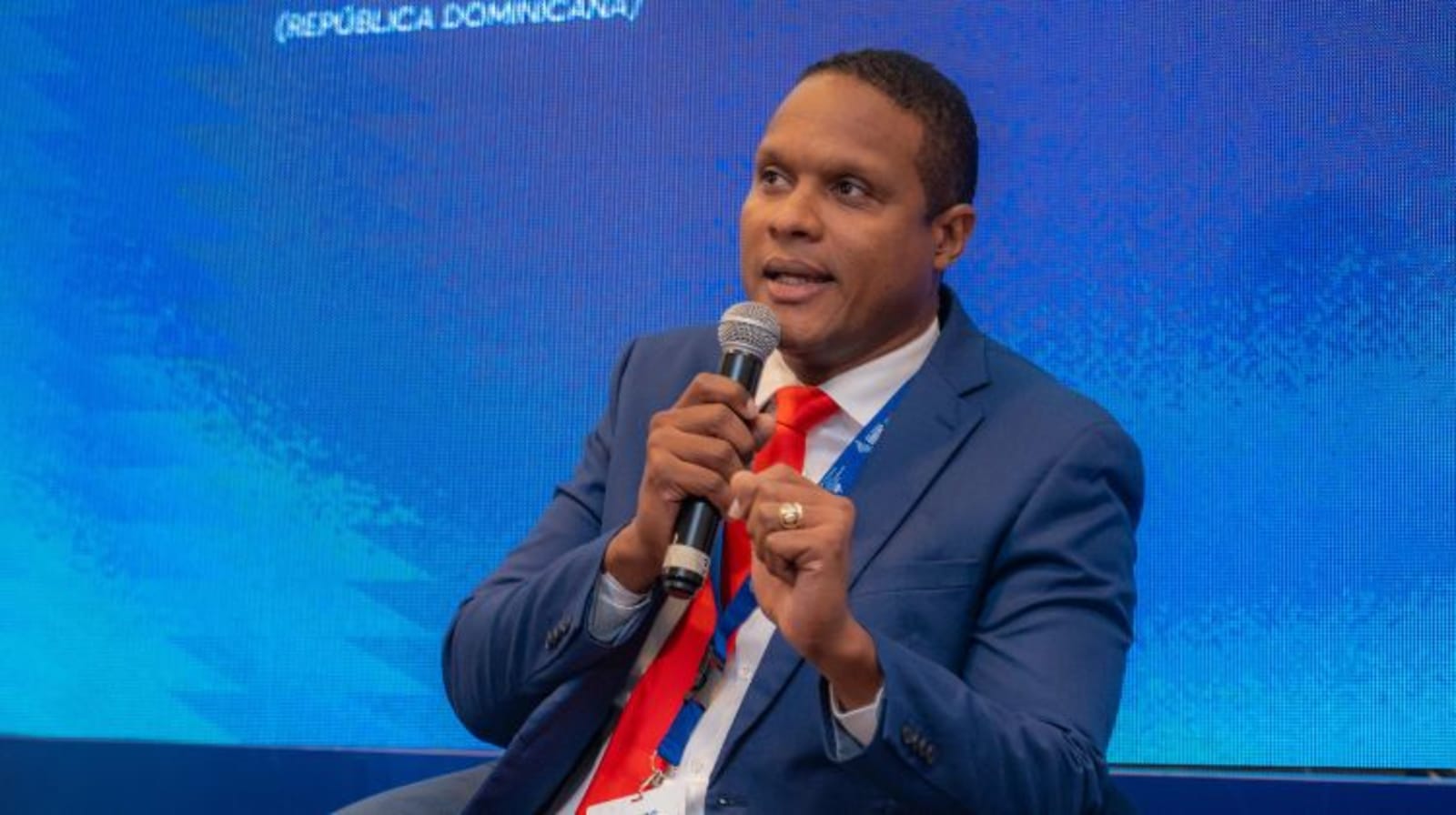
G&A Ingeniería is involved in advising and supporting what it identifies as the largest battery energy storage (BESS) project in the Dominican Republic , while seeking to realize new business opportunities in a market that is accelerating investments and projects to incorporate up to 1400 MW of capacity between the initiatives of the Dominican Electricity Transmission Company (ETED) and the additional needs announced by the Government.
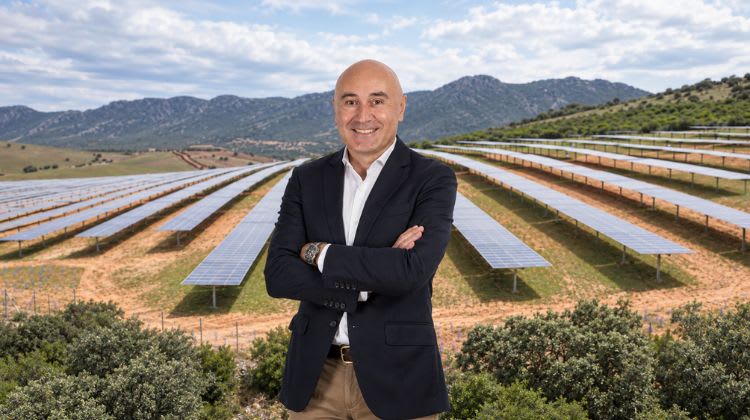
"One of the things that should happen next year is that we can complete on time a BESS project that we are advising and supporting, which is currently the largest in the country, and be able to close some additional projects that we have in the pipeline," said Wilfredo Rodríguez, CEO of G&A Ingeniería, during his participation in the Future Energy Summit (FES) Government & Investment, held during the XI Energy Week.
The company, which specializes in the engineering and construction of energy projects, aims to complete the development on schedule and expand its contract portfolio. However, the expansion of BESS systems also presents technical and financial challenges that could affect the performance of the new facilities.
"If you ask me if the Dominican Republic is prepared for the large-scale installation of BESS, I would say partially," Rodríguez said.
The assessment comes amid a surge in investment. The Minister of Energy and Mines, Joel Santos Echavarría, announced the need to incorporate an additional 600 to 800 MW of storage capacity by 2028, outside of the ETED program, which envisions a reference size of 600 MW/1200 MWh through private investment.
The government is also preparing four tenders to expand the country's electricity capacity. These include a call for bids for 200 MW of battery storage for existing renewable energy plants, along with another for between 600 and 900 MW of new clean energy generation, which will incorporate a 50% storage requirement.
These contracts are complemented by processes aimed at incorporating existing generation and new firm power towards 2030-2032, in response to supply needs and the growth of electricity demand.
This scenario presents an opportunity for engineering firms, developers, contractors, and technology providers. However, G&A Ingeniería believes that the ability to execute projects is not the primary factor driving the growth of the BESS market .
"In the Dominican market there are companies with a great capacity in what would be civil works, electromechanical assembly and also infrastructure works," Rodríguez explained.
Consequently, the manager identifies technical integration studies as one of the determining factors to support the simultaneous incorporation of new storage systems.
"What would be the challenge for us? The issue of regulatory studies," stated the CEO of G&A Ingeniería.
As he explains, the installation of multiple projects requires evaluating their behavior within the National Interconnected Electric System (SENI) in advance, especially through load flow and short-circuit studies , necessary to analyze the operating conditions of the network.
"Because if we try to inject many BESSs into the system simultaneously, then the challenge would be running all those flow and short-circuit studies, which is what gives the electrical system stability," he explained.
This observation is particularly relevant given the growth of renewable energy generation in the Dominican Republic. According to figures presented by Minister Santos during the 11th Energy Week, the country's installed capacity increased from 4,921 MW in 2020 to approximately 7,120 MW in 2025 , while solar and wind capacity exceeded 2,000 MW.
The official projection raised that volume to around 2,800 MW of renewables by 2028. “This process doesn't stop with the progress already achieved. Our focus is on the future,” Santos affirmed during his speech at the opening of the event.
The advancement of these technologies introduces new needs for flexibility, frequency control, and energy shifting to peak consumption times. In this context, batteries become important to support the expansion of the electricity grid.
However, Rodríguez differentiates between the construction of storage infrastructure and its effective integration into the system.
"Because we can install battery containers, but in the end, installing containers doesn't give you a robust system, which is what we're looking for when we install BESS," he emphasized.
Thus, the main challenge is to ensure that the new assets contribute to the operation and stability of the network through proper technical planning.
Continue reading
The profitability of BESS in the face of new projects
In addition to the electrical challenges, G&A Ingeniería identifies a strategic issue for developers: the need to consider the entry of future projects when evaluating the profitability of each investment .
Rodríguez believes that economic models should incorporate the expected evolution of the market and not be limited to the conditions existing at the time of structuring a facility.
"I believe an important opportunity is to be able to run models that include and have the visibility of other future projects that would enter the market," he stated.
The approach becomes relevant in light of the progressive incorporation of batteries intended for different services, such as frequency regulation, energy displacement, backup and participation in specific remuneration schemes.
According to statements made by Minister Santos during FES Government & Investment, storage has four potential remuneration modalities : payments for energy, auxiliary services, power and fixed payment schemes, depending on the characteristics of each initiative.
In particular, Resolution SIE-015-2026-MEM established base incentives of $22,129 per MWh for primary frequency regulation and $27,992 per MWh for secondary regulation through BESS systems.
These mechanisms offer alternatives for financially structuring developments. However, the incorporation of new participants also requires assessing how the demand for services and the economic conditions of each segment might evolve.
"Because we can install a BESS now that generates significant revenue for that project. But if you don't create a model that can include those future projects, then the profitability of that BESS wouldn't be the same as the first one," the executive warned.
In this regard, he argued that the profitability of a facility should not be analyzed in isolation , but rather by considering the future performance of all the projects that will enter the system. "So, in the end, that doesn't give you the total return on that project," he added.
Therefore, technical studies and profitability models appear as two complementary components for evaluating the viability of projects, especially in a market where different assets could begin to provide similar services.
Renewable growth and waste disposal open up new opportunities
The expansion of storage also responds to the constraints that the Dominican Republic faces in taking advantage of all of its available renewable generation.
According to records from the Coordinating Body, between January and April 2026 the daily average of available renewable generation that could not enter the system was around 14% , while on January 18th a day with 40% of the energy being dumped was reached.
During March, the volume of renewable energy injected reached approximately 107.83 GWh , while June recorded 58.42 GWh and July reached around 85 GWh.
These figures show the importance of incorporating tools capable of managing surplus generation and improving the utilization of solar and wind power plants.
Meanwhile, the Dominican market is exploring alternatives to financially compensate for the loss of renewable energy generation. One possibility mentioned by consultant Rafael Velazco involves valuing the energy that cannot be fed into the grid due to operational constraints at the spot price . However, this proposal has not yet received an official decision from the regulator.
The discussion becomes relevant for developers whose income is affected by system limitations, especially in projects structured on certain generation and dispatch forecasts.
In turn, ETED is promoting investments exceeding 22 billion Dominican pesos in transmission infrastructure , aimed at expanding and strengthening the national electricity grid.
In this way, the growth of the BESS market develops in parallel with investments in transmission, new generation contracts and mechanisms designed to economically recognize the services required by the system.
For G&A Ingeniería, this scenario opens up opportunities related to project execution and technical support for developers, although it also requires anticipating the effect that the simultaneous entry of new facilities will have.
The company seeks to capitalize on this context by completing the largest-scale storage project it is currently advising and closing new opportunities within its commercial portfolio .

 By Emilia Lardizabal
 By Florencia Guglielmetti