

New investments in power generation and storage led CFS to strengthen its presence in Panama, Guatemala, and the Dominican Republic , three markets with electricity procurement processes at various stages of development. The company sought to expand its participation in substation, protection, control, and interconnection projects, activities that have comprised much of its expertise over the past three decades.
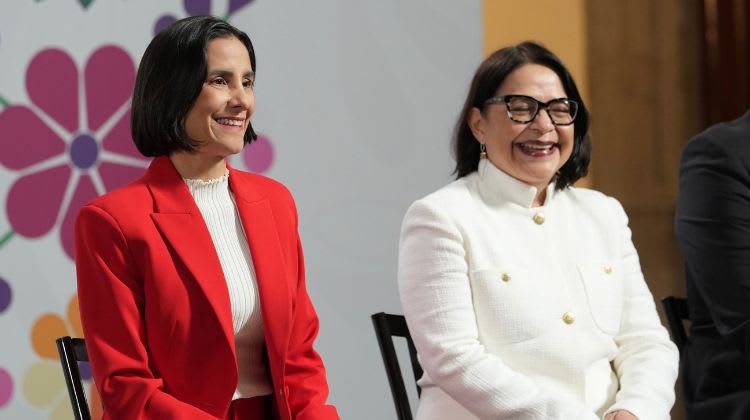
“We are hiring staff for all these markets,” confirmed Lorena Pérez, commercial manager of CFS in Panama, during the streaming event “ It had to be said and it was said,” organized by Energía Estratégica, in which Sergio Pacheco, international manager and head of regional expansion, also participated.
The decision coincided with Guatemala's launch of PEG-6-2026 , for 600 MW of power and energy, and with the Dominican Republic 's announcements of new tenders that included 200 MW of battery storage and between 600 and 900 MW of renewable generation with storage. Panama, for its part, completed two long-term tenders during 2026 and projected new opportunities to expand its electrical infrastructure.
For CFS, these prospects marked a new phase of growth after a history that began with the configuration of substation control systems .
From those initial parameterization efforts, the firm incorporated electrical protections, primary equipment testing, commissioning and equipment supply, eventually undertaking comprehensive electrical infrastructure projects.
With approximately 60 employees and experience in America, Europe, Africa and Asia, the company sought to transfer its technical capabilities to larger and more complex facilities.
“You can have all the power and generation infrastructure, but without an adequate control and protection system for the interconnection, the whole system can fail ,” the international manager stated in this regard.
Panama, Guatemala and the Dominican Republic: the opportunities that drove the expansion
In Panama , where CFS has been operating for approximately eight years, its business strategy has focused on developing new power plants and modernizing existing facilities. In 2026, the country awarded two long-term contracts managed by the Electric Transmission Company (ETESA), one for new hydroelectric and wind power generation, and the other for existing power plants.
The ETESA 01-26 Public Investment Program (LPI) , exclusively for existing plants, received 74 proposals, of which 70 initially met the requirements to proceed to evaluation. The call for proposals included hydroelectric, photovoltaic, wind, and thermal power plants, and ETESA estimated that the two processes carried out during the year would mobilize investments of between USD 400 and 500 million in new energy projects.
Pérez highlighted that the procurement program offered greater predictability for planning investments and strengthening the company's local presence. The executive also identified opportunities in solar projects, BESS systems, and conversions of bunker-fueled thermal power plants to natural gas, in addition to a growing demand for modernization among operators who already had assets in the country.
In Guatemala, the market moved forward with a new call for bids following PEG-5-2025 , which contemplated the incorporation of up to 1,400 MW. The next tender, PEG-6-2026, was launched on October 6 and distributed the required power between 450 MW of new plants and 150 MW of existing facilities, with contracts of up to 15 years and supply starting on May 1, 2032.
The Dominican Republic also presented an investment schedule during the 11th Energy Week, held in Santo Domingo. The Minister of Energy and Mines, Joel Santos Echavarría, announced four procurement processes that would begin between the end of 2026 and the beginning of 2027.
Although these processes did not result in direct awards for CFS, they created opportunities for suppliers specializing in electrical evacuation, protection, metering, and connection infrastructure. The company sought to position itself in both new developments and existing facilities that needed to expand or upgrade their equipment to support generation growth.
From parameterizing substations to competing in four segments of the electricity business
Long before participating in renewable energy projects and storage systems, CFS built its business around an often overlooked specialty: configuring the systems that control and protect electrical grids. The company took its name from Christian Ferraro Solheim and began by performing substation parameterization work, an activity that, over the years, paved the way for more complex services.
“The company started by parameterizing substations, that is, configuring their control systems. Later we incorporated electrical protections, testing of primary equipment and commissioning of installations,” recalled Sergio Pacheco , international manager of CFS.
The next step was to start supplying the equipment they used in those interventions, eventually taking on complete electrical infrastructure projects.
This evolution allowed the company to participate in renewable energy installations of varying scales, from 20 MW to 40 and 60 MW projects , and even to undertake certain contracts under EPC (Engineering, Procurement and Construction) schemes. However, its main strength remained concentrated in protection, control, and metering, capabilities it applied to both power generation plants and large industrial consumers.
One of the most striking examples shared by the executive was the migration of a brewery to a high-voltage connection, an intervention whose electrical infrastructure proved comparable to that of a 20 MW power generation project. The experience illustrated just how closely the needs of an industry could mirror those of a power plant.
“We handle the interconnection of any technology. Our work generally begins when we already have alternating current and extends to the connection with the transmission network,” explained the executive, who emphasized that this expertise can be applied to both electricity generating facilities and end users.
Continue reading
Based on that trajectory, CFS organized its activity into four business segments: generation, utilities, industry and construction.
Diversification broadened its portfolio of potential clients and allowed it to combine equipment supply, technical services and infrastructure integration without relying exclusively on the development of new power plants.
But the growth also coincided with a change in how energy projects were contracted. According to Pacheco, the arrival of new investors and the greater experience of some developers modified the traditional model in which a single contractor undertook the entire project.
“Large EPC projects are no longer always as attractive to developers. Now we see companies that prefer to hire specialized integrators for specific blocks: one for generation, another for substations, and another for interconnection,” he stated. In some cases, the developers themselves assumed overall coordination, a model that opened up opportunities for companies focused on specific stages of the project.
The transformation was not limited to hiring . The influx of private capital also introduced new economic demands on technical decisions, especially in projects whose promoters had to recoup investments and guarantee the performance of their assets over extended periods.
“Engineers tend to focus on how functional or efficient a piece of equipment is in the present, but we must also evaluate how much it will cost to maintain and operate it throughout its useful life,” said the international manager and head of regional expansion, referring to the total cost of ownership (TCO).
From BESS to electric mobility: CFS diversifies its business with international technology
Competition among manufacturers and the rapid evolution of storage led CFS to strengthen its multi-brand integration model , combining equipment from different suppliers with its own engineering. Sergio Pacheco highlighted that the technological improvements in the Asian industry coincided with longer delivery times from traditional manufacturers, a difference that began to alter investment decisions.
“We see developers who prefer certain European or North American technologies, but they can’t wait a year and a half or two years for a transformer. So they start considering other manufacturers that they might not have previously evaluated,” the international manager explained.
Faced with this situation, Lorena Pérez, commercial manager in Panama, pointed out that the firm was able to combine components from different brands and select alternatives according to the technical and economic needs of each client.
The strategy? It relied on relationships with international suppliers and direct evaluations of their production processes. In July 2026, CFS brought together specialists from Schneider Electric, ENGIE, Dynamox, BlueBox Technology , and Rugged Monitoring in Panama for its Reliability and Electrical Asset Management Forum, where its technology partner BlueBox presented monitoring applications to anticipate failures.
This adaptability was also reflected in their experience with batteries. In Costa Rica, the company participated in installations with 1.1 MWh containers and later with 3.3 MWh containers, the latter incorporated into a project that came online in 2025 and was considered at the time one of the largest in Central America.
“In a very short time, we went from 1.1 to 3.3 MWh and then to more than 5 MWh. This demonstrates the speed at which this industry is evolving,” the executive noted, referring to the arrival of commercial solutions of 5.2 and 5.5 MWh per unit. CFS's track record in energy storage took on particular relevance in light of upcoming Panamanian tenders , which could incorporate this technology.
Diversification also extended to electric mobility.
“We are currently quoting a vehicle manufacturer in Panama for the installation of ultra-fast charging stations that, according to the proposed technology, would allow compatible vehicles to be charged in five minutes,” Pacheco revealed. The initiative remained in the commercial stage, without a confirmed award.
Finally, the executive identified opportunities in industrial electrification and data centers, whose demand required new electrical transformation and connection capabilities. While noting that Central America is still in its early stages of development compared to markets like Mexico, Chile, and Brazil, he highlighted that inquiries related to this segment have already begun to be registered.
“We are in the best time in history to be an electrical engineer,” he concluded, referring to the increase in technical needs that accompanied the electrification of the economy.
Beyond the new power plants: modernization and specialized services
CFS's opportunities also extended to existing facilities . During visits to hydroelectric and wind power plants in Panama, the company identified equipment with technical issues that remained operational but required monitoring and preventative maintenance to avoid outages and potential contractual penalties.
“Services are the most profitable,” Pacheco stated, although he clarified that equipment supply generated higher revenues. The combination of both activities allowed them to expand their support to clients, from initial setup to the modernization of their assets.
This diversification also required strengthening internal capabilities. Pérez highlighted that technical training reached the commercial, financial, and administrative teams, while CFS focused on incorporating local talent and keeping its engineering knowledge up-to-date to handle increasingly complex projects.
Thus, the company sought to take advantage of new regional investments without relying exclusively on the construction of power plants, combining commercial expansion, technological upgrades, and services for existing infrastructure.
 By Emilia Lardizabal
 By Energía Estratégica
 By Ailén Pedrotti