


Erco Energía is preparing a new phase of expansion in Colombia , with storage as one of the cornerstones of its strategy to expand its photovoltaic portfolio, optimize electricity delivery and move towards larger-scale projects.
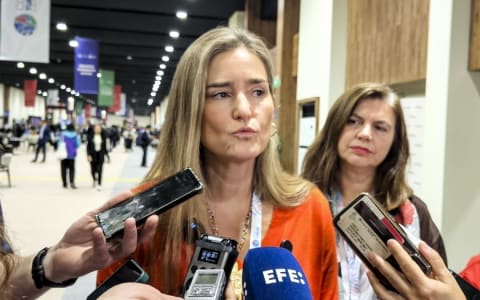
“By 2027, we should already have more than 100 MW of battery storage capacity installed, and by 2030 I believe that storage in the country will be something above 1 GW,” predicted Adriana Asencio, Generation Manager of Erco Energía , during the Future Energy Summit (FES Colombia) 2026 .
The commitment is part of a plan that also includes reaching 1 GW of solar projects in operation by 2030 and starting to incorporate, from 2027, the company's first centrally dispatched power plants.
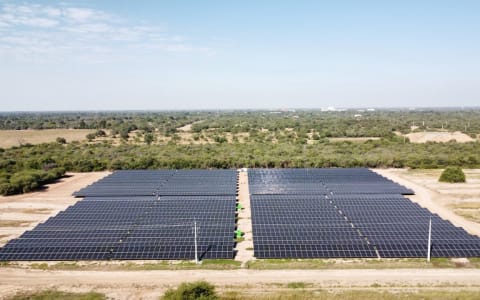
“Today we have 100 MWP in operation that are delivering energy to the grid, and two of them are already hybrid plants that have BESS systems that add up to approximately 11 MW,” Asencio stated.

Erco's strategy also includes oversizing direct current photovoltaic capacity to take advantage of existing connection limits and store part of the production that cannot be injected directly into the grid.
“It has become obvious to everyone because our connection points have a limit, but in DC we can do other things and deliver that energy during peak hours,” Asencio noted.
This strategy is structured through three lines of business: construction of its own and third-party solar parks through EPC contracts, electricity generation and marketing, and operation and maintenance of photovoltaic installations .
From the generation business, Andes is positioned as the largest project that Erco currently has under development and construction in Colombia together with Empresas Públicas de Medellín (EPM) .
The project will have 400 MWp and its construction and commissioning will require up to 400 million dollars.
The expansion will also mark a change in its participation in the electricity market. “Today we are in a segment where we have 100 MW in plants not centrally dispatched, but starting in 2027 our first centrally dispatched plants will come online,” Asencio explained, and emphasized that their main focus is on hybrid plants.
The executive links this transition to the need to shift the solar generation curve to adapt electricity delivery to system conditions , through the incorporation of storage in its facilities.
The expansion has financial backing. Erco announced a $129 million Series C funding round to accelerate the development of energy infrastructure. According to previous statements the company made to Energía Estratégica , between 80% and 90% of its projected growth would be concentrated in utility-scale projects .
In parallel, its commercial and industrial activity offers another application for solar systems with storage: reducing the economic impact of power outages on production processes .
Continue reading
“For example, for a customer in the food sector in Colombia, a single blackout costs USD 120,000,” says Felipe Sánchez Gómez, manager of the Solar Line at Erco Energía , during the “It had to be said and it was said” streaming event by Energía Estratégica .
In that segment, the company identifies investment recovery periods of between three and five years with its own resources , which can be reduced to two through financial leasing and tax incentives, depending on the characteristics of the project.
Why did Erco decide not to participate in the Colombian auction?
Erco ruled out submitting bids in Colombia's long-term contract auction after evaluating products three and four, which included attributes related to storage.
“From our perspective at Erco, we were validating how to participate, but that revenue stack wasn't clear, so we didn't participate,” Asencio revealed.
The call awarded 995 MW of solar and 100 MW of storage , with 15-year supply contracts and a planned start date of January 2030. However, Product 1 was suspended and Product 4 was left without awards despite registering valid bids, due to restrictions derived from competition rules.
The Colombian Mercantile Exchange raised the need to review the conditions of future tenders . In Product 3, for example, bids were submitted for 747 MWh per day, but only 390 MWh per day were awarded . For independent projects, the uncertainty extends beyond the outcome of an auction.
“The massive deployment of this is not yet so evident, especially in standalone solutions, precisely because the revenue stack you need for those investments in the medium and long term is not so clear,” the executive warned.
The contrast is evident in the technology costs. According to data from BloombergNEF and Ember, cited in an Erco report, the global levelized cost of four-hour BESS systems fell 27% year-on-year to $78 per MWh , while the investment cost decreased by 31%.
However, cost reduction does not guarantee sufficient revenue to finance independent projects.
“In hybrid plants it’s much simpler in the end because you have an energy sale that allows you to recover your investment in the medium and long term. But in the case of standalone plants, you need to focus on complementary services and the attributes you can provide to the grid,” Asencio explained.
In regulatory matters, Resolution 113 of the Energy and Gas Regulatory Commission (CREG) constitutes, according to the company, a first step towards recognizing the attributes of storage, including grid-forming services.
“For me, the focus remains on solar energy complemented by storage: hybrid plants with well-compensated attributes and recognized firm energy, which can be an enabler in reliability charge auctions,” said the Generation Manager.
Erco maintains among its objectives the eventual development of a standalone project and participates in regulatory discussions through various trade associations to promote capacity payments, ancillary services and reliability remuneration .
“I think there will be capacity auctions like what happened in Chile, and we will start to have differentiated remuneration during peak hours,” Asencio estimated.
With an expanding solar portfolio and new batteries planned for 2027, the main question is no longer limited to the cost of storage, but rather the revenue that the Colombian market will be able to capture for its services . This definition will be crucial for independent projects to keep pace with the growth of hybrid power plants.

 By Emilia Lardizabal
 By Energía Estratégica
 By Matías Medinilla
 By Ailén Pedrotti
 By Florencia Guglielmetti