


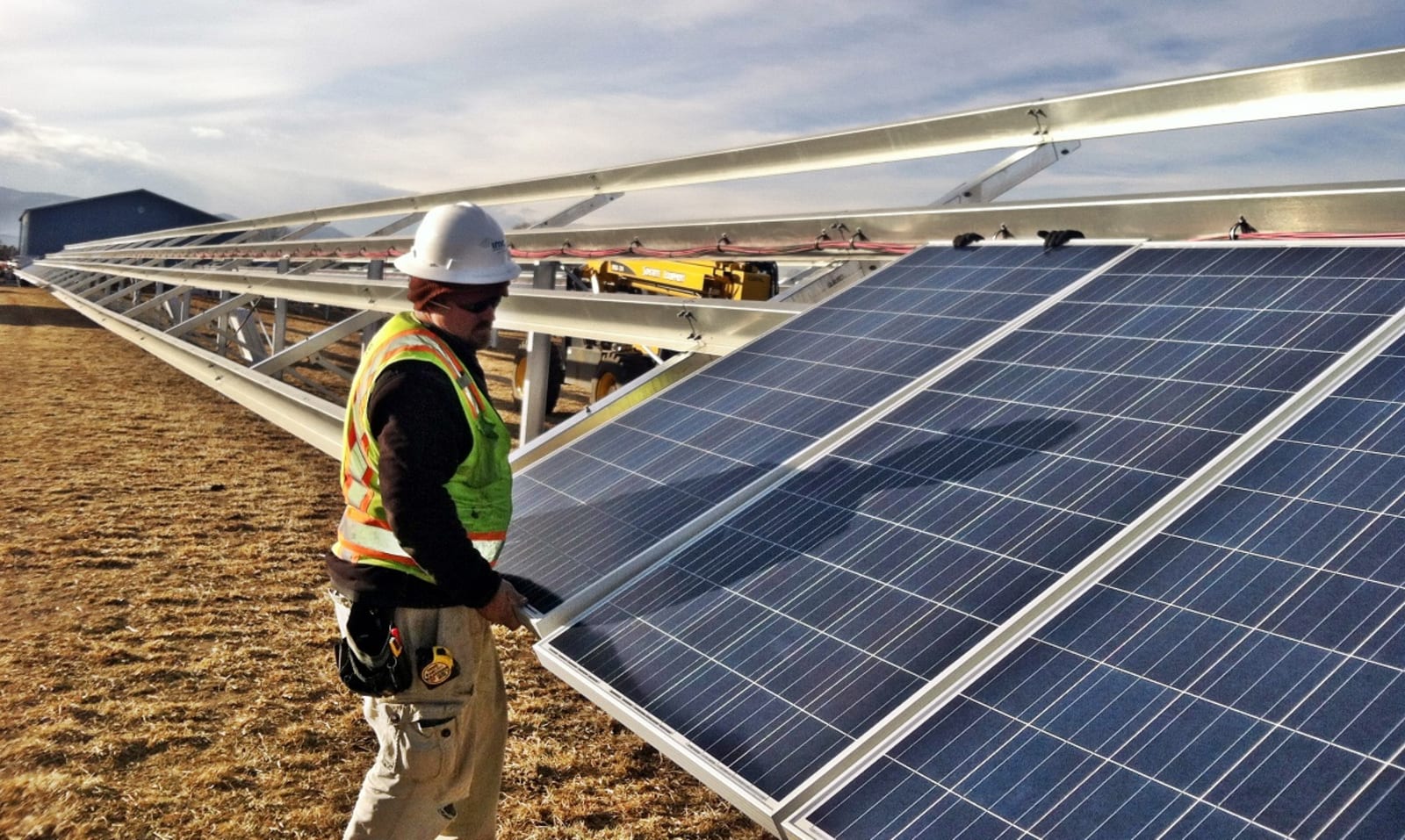
Independent Energy Generators (GIE) denounced the National Electric Coordinator (CEN) of Chile before the Superintendency of Electricity and Fuels (SEC) for a possible violation of article 102 of Supreme Decree No. 88, after restricting the injection of certain Small Distributed Generation Means (PMGD) to 15% of their installed capacity.
The presentation, dated November 16 and signed by Mauricio Utreras Sandoval, executive director of GIE , questions the calculation of the percentage, the selection criteria for the power plants and the absence of verifiable conditions to lift the measure, applied since November 10.
“Each period in which available generation exceeds the limit translates into uninjected energy and lost revenue for the affected power plants, which justifies an expedited review,” GIE warns in the document.
According to sector data, PMGDs already total 3877 MW installed in Chile, of which 3300 MW correspond to solar power plants , which concentrate 85.1% of the power of the segment.
The park also includes 294 MW of diesel fuel, 172 MW of run-of-river mini-hydroelectric plants, 53 MW of wind power, 26 MW of biogas, and 21 MW of natural gas. The complaint does not quantify the total power affected by the restriction.
The CEN instruction responds to a failure recorded on November 8 in 220 kV transmission facilities between the Chena and Cerro Navia substations , cleared in approximately 75 milliseconds and during which a significant number of PMGDs were disconnected.
“The disconnection of a group of PMGDs during a failure is a relevant precedent, and does not by itself explain why the maximum safe capacity should be equivalent to 15% of the installed capacity of each selected power plant,” the association argues.
GIE acknowledges the Coordinator's authority to act in the face of systemic risks, even without verifying non-compliance by the generators. However, it questions the "potential lack of correspondence between that risk and the magnitude, scope, and duration of the restriction."
“A uniform percentage of installed capacity does not allow this to be verified, since the injection capacity recorded in the ICC may differ from that,” the document states.
The analysis also extends to articles 45 bis and 126 of Supreme Decree No. 125 and to the transitional regime introduced by Supreme Decree No. 32, published on June 17, 2026.
The latter contemplates a pro rata on maximum power for 24 months from July 1, 2026 for the generation and storage facilities included in the amendment, and defers the application of specific rules for assets connected to distribution.
The union requests a determination of whether these assumptions were applicable, as well as verification of relevant deviations between the actual and planned operation and any special temporary security conditions.
The alternatives that GIE puts on the table to lift the restrictions
The association is submitting six requests to the SEC , including the opening of an investigation, the preservation of operating records, and access to the studies that support the Coordinator's decision.
Specifically, it demands to know the risk scenarios assessed, the aggregate reduction expected in MW, the procedures applied and the conditions for recovering generation levels.
Among the operational alternatives whose evaluation is requested to be verified are reserve management, differentiation by groups of power plants, and the phased lifting of limitations.
GIE also requires access to fault reports and comparing them with voltage and frequency records from distributors, relay and inverter operations, and background information on protection upgrade plans.
If technical non-compliance is identified, it requests verification of whether the CEN informed the authority in accordance with article 72°-15 of the General Law of Electrical Services.
If the directive remains in effect, it requests that the Superintendency establish a short period to re-evaluate it and consider provisional measures under Article 32 of Law No. 19,880.
“If the risk no longer exists or can be controlled with a less restrictive measure,” the complaint states, it is appropriate to order its modification or lifting, either in full or by groups of facilities.
The union ultimately demands a reasoned decision on the adoption and application of the 15% limit, regardless of whether the instruction has been revoked , and requests that the sanctioning powers be exercised if violations are found.

 By Florencia Guglielmetti

 By Energía Estratégica

 By Matías Medinilla
 By Ailén Pedrotti