

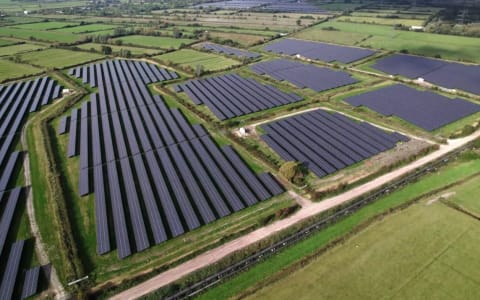
In the La Joya desert in southern Peru, the conditions that favor the development of large photovoltaic plants also pose challenges for their construction and operation. The high solar radiation makes this region of Arequipa an attractive location for renewable energy investments, but the extreme aridity, the accumulation of particulate matter, and the terrain's characteristics require special attention to the equipment that will remain exposed for decades.
There, Chemik participated in supplying electrical equipment for a photovoltaic project of over 460 MW , one of the largest installations of its kind in the country. The Spanish company provided all the solutions for its segment, in a project that also tested the ease of assembly of the systems and the availability of skilled labor.
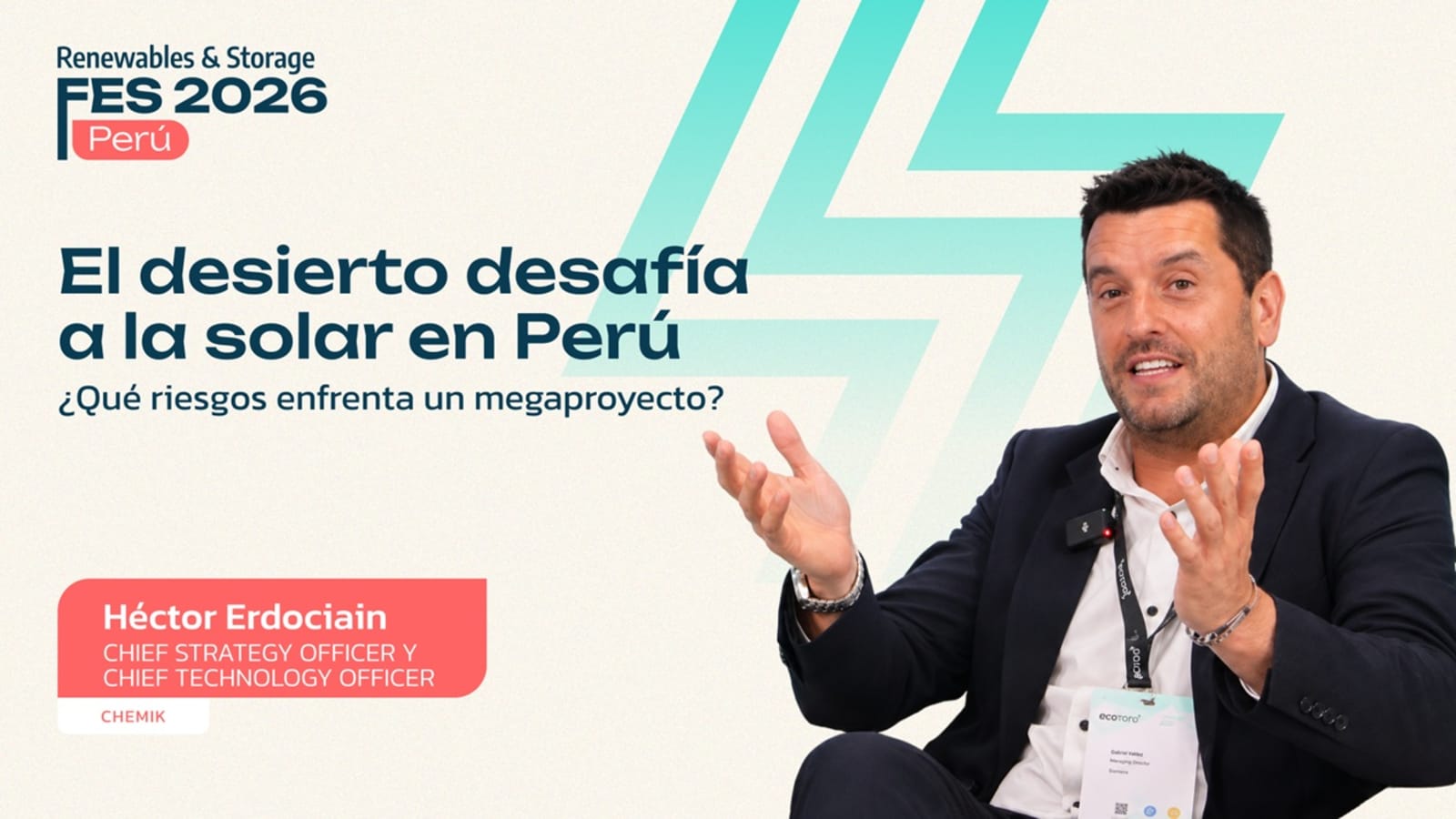
“ For us, this is an important milestone because in the end it is made 100% with our product and the project has gone very well ,” highlighted Héctor Erdociain, Chief Strategy Officer and Chief Technology Officer of Chemik , in dialogue with Energía Estratégica during Future Energy Summit (FES) Peru 2026.
However, the experience left a warning that transcends the scale of development: an extremely dry environment does not necessarily imply lower risks of deterioration for the components of a solar plant .
“ The environment can be even more corrosive than in places with water, because water often helps by naturally washing away dirt. In such dry places, there is no such washing away ,” Erdociain explained.
According to the executive, the technical requirements of an installation depend not only on its power output but also on the specific conditions of the site where it is built. Therefore, environmental assessment and material selection become especially important from the earliest engineering stages.
The environmental risk that can compromise the lifespan of solar projects
The challenges identified by Chemik coincide with the warnings of the International Energy Agency through its IEA PVPS program.
In its report Optimisation of Photovoltaic Systems for Different Climates , published in 2025, the organization points out that photovoltaic installations in hot and dry regions face conditions that can accelerate the deterioration of different components, due to the combination of high temperatures, radiation and dust accumulation.
Furthermore, in its operating and maintenance recommendations for different climates, the IEA warns that the presence of salts and condensation moisture can promote corrosion processes in metal structures, even in desert regions.
The report draws on experiences from the Atacama Desert, where structures affected by corrosion and deterioration of electrical components were identified. Among the components requiring special monitoring, it mentions cables, junction boxes, and support structures.
This phenomenon raises an important consideration for developers: the absence of rainfall does not eliminate the risks associated with environmental deterioration , while soil composition, the presence of salts, and humidity conditions can modify the protection requirements of each facility.
Erdociain emphasized that these types of particularities require reviewing the technical specifications of the equipment before deciding on its incorporation.
“It’s important to sit down with clients and thoroughly analyze the environment where the project is located and look for products that are appropriate for that environment,” he said.
The problem also has economic implications. According to another study by IEA PVPS, the accumulation of dirt in photovoltaic installations causes estimated losses of between 3% and 5% of annual energy production worldwide.
The agency warns that these effects can be especially relevant in large parks located in arid areas, where the need for cleaning can increase operating costs and compromise some of the expected revenue.
Although dirt and corrosion are different phenomena, both reinforce the importance of adapting design and maintenance criteria to the environmental characteristics of each site.
The execution of large projects and the challenge of the workforce
In addition to environmental requirements, Chemik's experience in La Joya allowed them to identify difficulties related to the availability of specialized personnel to carry out large-scale electrical installations.
“ In remote project situations, such as this one in the La Joya desert, the resource of skilled labor is not abundant ,” he said.
According to the executive, the project was successfully executed, both in the assembly tasks and in the implementation of the solutions provided.
This experience is relevant given the anticipated expansion of the Peruvian solar market, where numerous large-scale projects are progressing through various stages of development.
Chemik adds another 150 MW to its supply portfolio in Peru
In parallel with the technical challenges posed by the construction of new power plants, Chemik continues to expand its participation in the Peruvian market.
During the interview, Erdociain confirmed that the company recently closed a new supply agreement for 150 MW , which adds to the accumulated capacity in the country.
“ We have already supplied almost one gigabyte in the country, so it is a strategic market for us. Just last week we closed another 150 megabytes ,” he assured.
The executive believes that Peru is among the Latin American markets with the greatest potential for photovoltaic development, along with Central America.
In contrast, he noted that Chile continues to incorporate projects, although he observes a greater orientation towards energy storage.
Finally, he highlighted that Chemik has not faced significant problems in its logistics operations in Peru, although occasional delays related to customs procedures may occur.
“ So far, the supply side has gone well for us. We haven't had any problems so far, and it's been going well ,” he concluded.
 By Florencia Guglielmetti
 By Energía Estratégica

 By Matías Medinilla
 By Ailén Pedrotti