
Curtailment has begun to compromise the bankability of renewable energy projects in the Dominican Republic , in a scenario marked by grid injection restrictions and the need to incorporate energy storage. Faced with this situation, Grupo Pais, a regional group that manages two investment funds , is moving forward with an investment of nearly $40 million in batteries , while seeking to adapt its strategy to the new conditions of the electricity market.
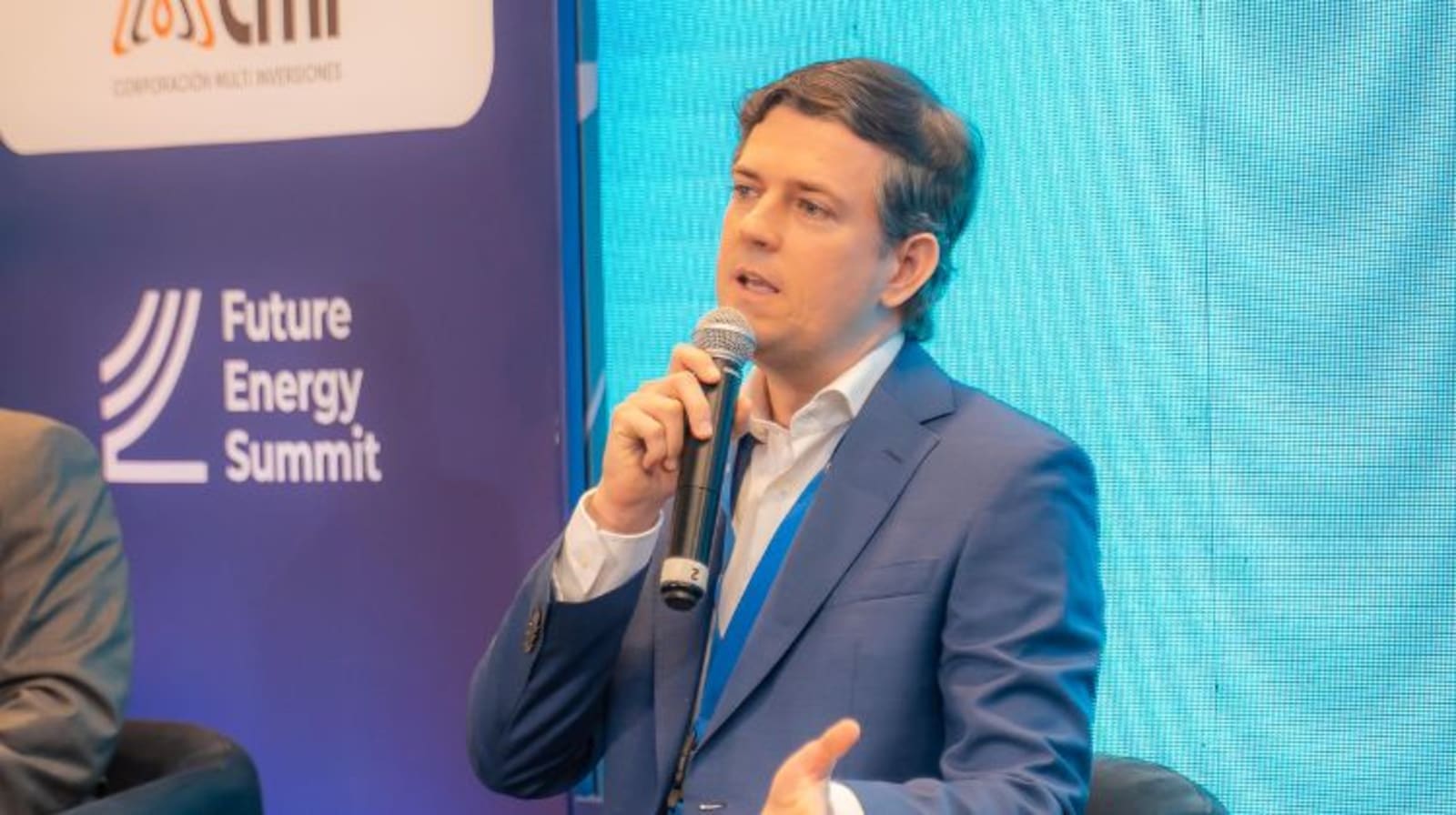
“ We, as local financiers, have had to refinance practically all of our renewable energy projects due to the problem of landfilling ,” revealed Juan Carlos Pais, CEO of Grupo Pais, during FES Government and Investment.
However, he highlighted the response from financial institutions, which approved the extension of amortization periods in anticipation that new regulatory and technological solutions will allow for the recovery of marketable generation capacity.
The scale of the problem is reflected in the records of the Coordinating Body (OC). Between January and April 2026 , renewable energy curtailment was around 14%, with critical days when the proportion of available energy that failed to enter the system reached 40%, as happened on January 18, and 35.5% on March 15.
In March, the volume of wasted renewable energy reached approximately 107.83 GWh , while June saw another 58.42 GWh. The trend intensified again in July, with around 85 GWh wasted , more than eight times the 10.52 GWh recorded during the same month in 2025.
In this context, Pais identifies a change in the conditions under which the power purchase agreements (PPAs) were structured, whose bankability had allowed the main Dominican financial entities to be progressively attracted.
The executive recalls that the first financial closings of 2020 were achieved through syndicated loans with several local banks , before evolving towards transactions backed by a single entity. In 2024, Grupo Pais reached this milestone with the Cotoperí project, whose financing received recognition at the Caribbean Renewable Energy Forum (CREF).
“ Due to market factors, in 2025 a regulatory issue arose that allows for the restriction of renewable energy projects through limitations, and we began to see for the first time something that no bank, nor we as investors, ever understood would exist: wastewater discharges ,” Pais explained.
The impact is especially relevant due to the participation of pension savings in the financing of Dominican energy infrastructure.
Currently, Grupo Pais channels some 300 million dollars from Dominican pension funds towards energy investments , with an impact of more than 800 million dollars on CAPEX , considering both financing and the projects' own capital.
The exposure of these resources reinforces the need to find operational solutions that allow for the recovery of income predictability and sustain the capacity of the assets to meet their financial commitments.
Grupo Pais accelerates storage and the Government prepares new tenders
The company's strategy initially focuses on incorporating batteries for primary and secondary frequency regulation , a segment that already has a remuneration scheme established by the Superintendency of Electricity.
According to Pais, the framework contemplates a five-year period with defined payment conditions for storage systems equivalent to 5% of the capacity of the projects.
“ This will have a double effect: the battery itself will be remunerated, but it will also help with the issue of landfilling as a temporary solution until more systemic solutions arrive ,” the CEO noted.
One of the factors that explains this decision is the need to keep approximately 400 MW of conventional generation operating during peak photovoltaic production hours to meet frequency regulation requirements.
This condition limits the space available for solar injection, even when there is sufficient renewable capacity to supply a larger proportion of the demand.
The addition of storage for complementary services would allow for a partial modification of this dynamic, although the executive acknowledges that the structural solution requires larger-scale investments and an evolution of regulatory conditions .
Continue reading
In parallel, the Dominican Government is moving forward with a roadmap that includes between 600 MW and 800 MW of storage systems by 2028 , with the purpose of increasing the flexibility and stability of the National Interconnected Electric System.
During FES Government and Investment, the Minister of Energy and Mines, Joel Santos , acknowledged that the growth of solar and wind power generation requires accelerating investments in transmission infrastructure, particularly in areas where new developments are concentrated.
“The challenge is no longer just about installing more generation capacity; we need to ensure that this energy is reliable, flexible, and available when our system requires it,” the official said.
The official strategy comprises four procurement processes that combine storage, renewable generation and firm power to respond to both current constraints and the growth in electricity demand.
Among them is a tender for 200 MW of battery storage for existing renewable energy parks , aimed at adding storage capacity to plants that are already operational. The government recently published the official tender documents for this process.
Another process involves contracting between 600 MW and 900 MW of new renewable generation with mandatory storage equivalent to 50% of the installed power and a minimum autonomy of four hours.
The package also includes the re-contracting of 800 MW of existing firm generation , planned for the end of 2027, and the addition of another 200 MW of new firm capacity to meet the system's needs in the medium term.
For Pais, these calls represent a change in the renewable contracting model, since the new projects will have to consider not only the installed capacity, but also the times at which they will deliver their production.
In that sense, he explains that one of the planned schemes: “ There will no longer be just a payment for power, but in the energy price formula you have to consider that 45% of your energy will be discharged in a specific time slot and 55% will be discharged by obligation in the night time slot .”
This modification introduces a new economic variable for developers, who will have to incorporate storage costs and time-based supply commitments into their bids.
In turn, the executive highlights the progress of a systemic solution promoted by the Dominican Electricity Transmission Company (ETED) , through a competitive process in which 39 generators interested in submitting proposals for the installation of battery blocks registered.
The combination of these mechanisms seeks to reduce dispatch limitations and facilitate greater participation of renewables in the Dominican electricity matrix.
For Grupo Pais, the deployment of storage also involves explaining to institutional investors the technological evolution of the sector and the new conditions under which the projects will be structured.
According to the executive, the funds managed by the company have already begun to approve investments linked to batteries, in a scenario where the ability to manage production is becoming increasingly important for the profitability of assets.
“At current prices, renewable energy continues to prove to be the most cost-effective technology to supply local demand,” he said.
Finally, Pais believes that the expansion of artificial intelligence and the accelerated growth of electricity demand require a reconsideration of the timeframes for incorporating new capacity, especially compared to conventional technologies that require longer construction periods.
Along these lines, the businessman suggests that the Dominican Republic should review its renewable energy penetration targets based on the possibilities offered by storage , taking into account its island status and dependence on imported fuels.
“ I would like to say that the future is not renewables, the present is renewables ,” Pais concluded.
Thus, the evolution of the Dominican market is conditioned by two simultaneous challenges: recovering the financial predictability of existing projects and accelerating investments in storage and transmission to accompany the growth of renewable generation.
 By Ailén Pedrotti

 By Florencia Guglielmetti
 By Emilia Lardizabal
 By Energía Estratégica