

Brazil's National Electric Energy Agency (ANEEL) has finally unanimously approved the notices for the country's first two battery storage auctions and has already set price references.
The LRCAP Armazenamento Nacional call for bids, scheduled for December 2nd and which will require compliance with the nationalization criteria of the National Bank for Economic and Social Development (BNDES), will have an initial price of R$ 1.76 million / MW per year (approximately USD 334,400/MW per year according to the official exchange rate).
Whereas for the tender without obligation of minimum local content, scheduled for December 4 , the initial value will be R$ 1.58 million / MW per year (approx. USD 300200 / MW per year).
This means that the values, presented by the Ministry of Mines and Energy (MME) on October 26 and approved the following day, show a difference of R$ 180000 (USD 34200 USD) per MW/year , equivalent to an additional 11.4% for projects subject to national content.
The decision concludes the analysis of the tender documents, which received nearly 2,500 contributions during the public consultations, and reactivates a process initially planned for April 2026, postponed due to the review of the contracting conditions.
The magnitude of this decision becomes relevant when one considers that the Energy Research Company (EPE) registered more than 6000 stand-alone BESS projects interested in competing, which add up to more than 296.8 GW.
While not all projects will ultimately be eligible to participate in the auction, industry forecasts indicate a possible allocation of 2 to 5 GW , equivalent to 8 to 20 GWh . Therefore, the difference between the registered capacity and the estimated demand anticipates significant competition among developers.
Regarding operation, the facilities must ensure four hours of availability per cycle , with a maximum of two cycles per day and a limit of 366 cycles per year . A full recharge, from 0% to 100% of the committed capacity, cannot exceed six hours.
The dispatch will be centralized in the National Electric System Operator (ONS) , while the remuneration will consist of a fixed annual income, distributed in twelve monthly installments and subject to performance adjustments.
Among the approved modifications, the most notable is the 38.8% reduction in the reference investment , which goes from R$ 9.8 million (USD 1.862 billion) to R$ 6 million (USD 1.14 million) per MW , in accordance with the Ten-Year Energy Expansion Plan 2035.
The update reduces the bid bond from R$ 98,000 (USD 18,620) to R$ 60,000 (USD 11,400) per MW, and therefore, the correlation with the performance bond decreases from R$ 980,000 (USD 186,200) to R$ 600,000 (USD 114,000) per MW. Meanwhile, the minimum required net worth is also reduced from R$ 980,000 to R$ 600,000 per MW .
Furthermore, the financial requirements will be calculated on the power offered or contracted , instead of the total installed capacity, reducing the capital commitments of the participants.
ANEEL also made the participation of consortia belonging to the same economic group more flexible, and now the asset accreditation can be done through the parent company, without duplicating the assets of its subsidiaries.
The participation of batteries associated with power plants that have existing contracts in the regulated market will also be permitted, provided that it does not affect their existing obligations. Projects may share physical infrastructure under separate contracts and meters.
Another determining factor will be connection capacity. In early October, the ONS , together with ANEEL and the Energy Research Company, published the remaining margins of the National Interconnected System (SIN) , which will serve as a reference for the bids.
Among the nodes with the highest individual availability is Arinos 2, in Minas Gerais, with 2960 MW at 500 kV , followed by Janaúba 3, with 2,920 MW, and Jaíba, with 2,575 MW .
Continue reading
However, the margins are subject to restrictions by electrical sub-areas and areas that limit the effectively usable power.
In northern Minas Gerais and western Bahia , 22 busbars have an individual capacity of approximately 22 GW , although the combined limit is only 3200 MW . The situation is repeated in a region encompassing Bahia, Piauí, and Ceará, where 41 busbars exceed 28 GW , compared to an aggregate ceiling of 3670 MW .
Therefore, the viability of the projects will depend on the available capacity at each node, regional restrictions, and technical connection conditions. The published individual capacity does not necessarily equate to usable power , a relevant factor given the 296 GW registered.
Financing for storage remains in dispute
The approval of the tender documents does not resolve the controversy over who will assume the costs of contracting the batteries , given that ANEEL is keeping Public Consultation No. 37/2026 open until November 6 , aimed at regulating the distribution of these payments.
Currently, Law No. 15.269/2025 assigns that responsibility exclusively to energy generators, a provision questioned by renewable energy companies that requested a review of the scheme before the tenders.
In parallel, Bill No. 3716/2026 , promoted by Deputy Arnaldo Jardim , proposes to transfer the cost to all end users of the electricity system, including consumers, as occurs in other capacity reservation contracts.
In fact, the Chamber of Deputies approved an emergency request in October, enabling the initiative to be debated directly in plenary session. In anticipation of a potential legislative amendment, the regulator replaced references to generators in the bidding documents with the concept of capacity reserve users , without altering existing obligations.
During the extraordinary session, the general director of ANEEL, Sandoval Feitosa , pointed out that the "organization must incorporate with agility the changes that Congress may eventually approve."
Thus, Brazil enters December with two authorized calls for tenders, differentiated initial prices and lower participation guarantees, although the allocation of costs and connection restrictions continue to condition the contracting scenario.
FES Brazil will take place in the lead-up to the country's first BESS auctions.
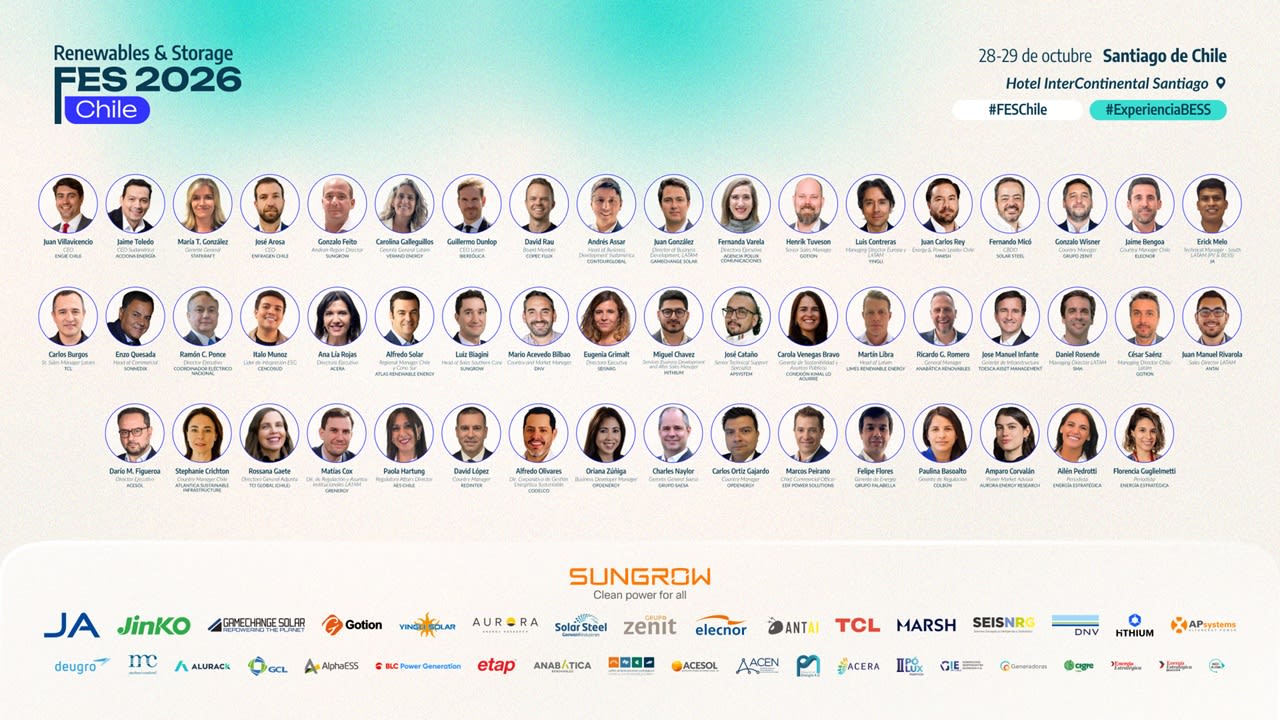
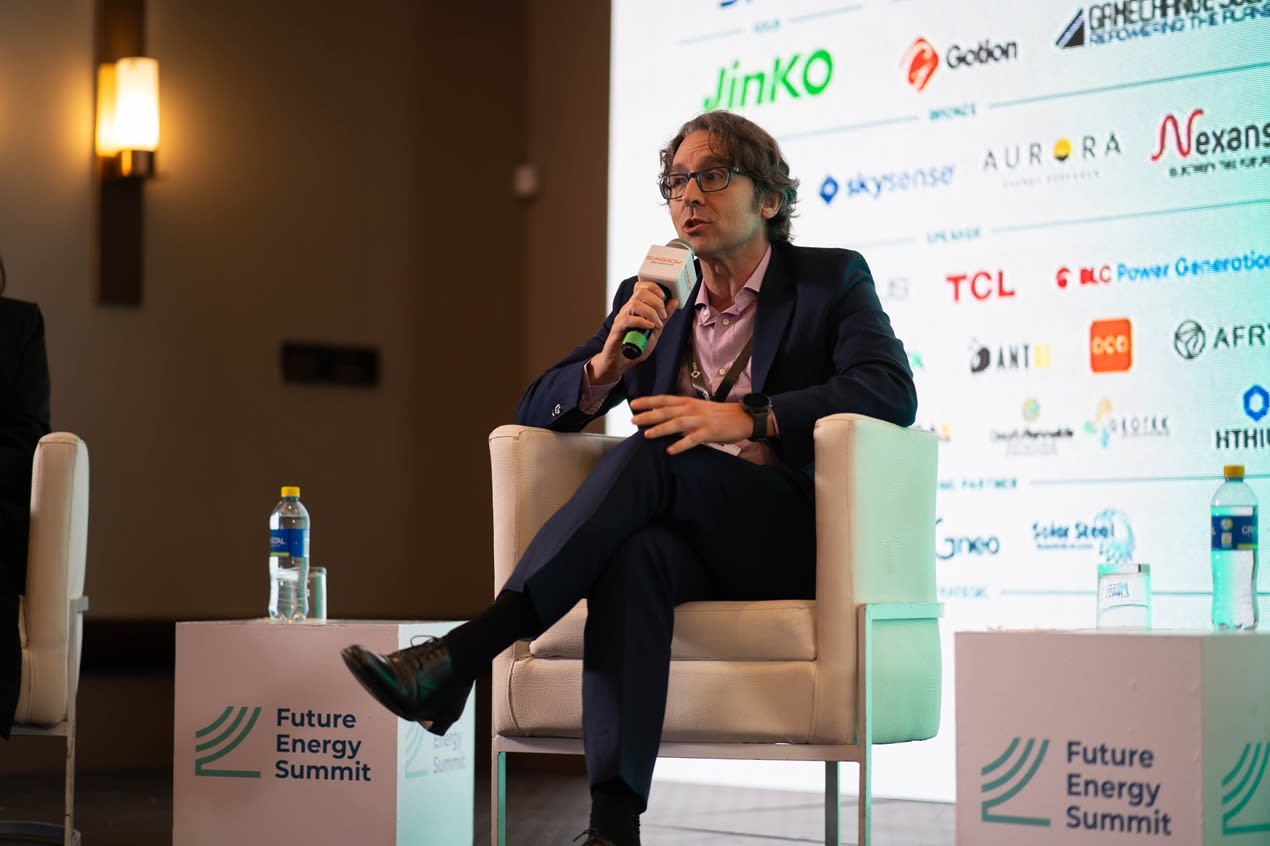
Future Energy Summit (FES) Brazil will bring together CEOs, investors, developers and technology providers on November 5 at the InterContinental São Paulo hotel to analyze the opportunities in the Brazilian electricity market.
With more than 20 confirmed speakers , the meeting will mark the closing of FES's 2026 international tour, in the lead-up to a storage tender that registered unprecedented interest in the country.
Access the tickets and learn more about FES Brazil 2026 .
Among the participants of FES Brazil are Elbia Gannoum, CEO of ABEEólica; Fábio Lima, executive director of ABSAE; Eduardo Azevedo, vice president of centralized generation at ABSOLAR; and Alexei Macorin Vivan, president director of ABCE , who will be part of a meeting that includes the main associations of the sector and representatives of the business field.
Also attending will be Aurelio Bustilho de Oliveira, CEO of Órigo Energia; Luiz Fernando Leone Vianna, Vice President of Grupo Delta Energia; André Moreira, CEO of Argo Energía; Guilherme Melo, Construction Director of Statkraft Brasil; Lucas Sanchez, Renewables Director of CTG Brasil; Mayara Miqueletti, Head of Business Development at Acciona Energia; and Itamar Lessa, Marketing Director of Casa dos Ventos .
The agenda will include the public sector and energy partnerships landscape, the vision of business leaders, the perspectives of investors and developers, the operation and maintenance of renewable assets, hybrid projects, and sustainable finance.
 By Energía Estratégica
 By Matías Medinilla

 By Ailén Pedrotti
 By Florencia Guglielmetti