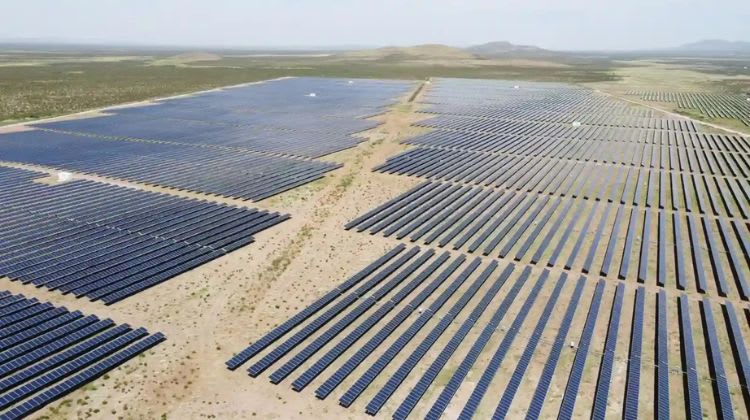


The Colombian Mercantile Exchange (BMC) raises the need to review the competition rules applied in Colombia's last long-term auction, after identifying restrictions that limited the awarding of contracts despite the availability of supply.
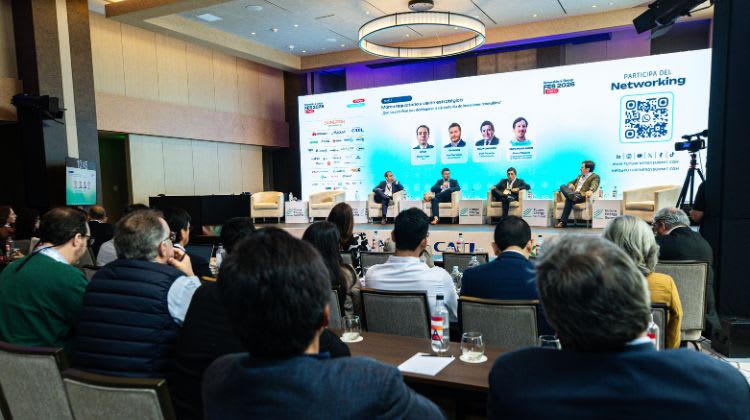
“For a country with such a large need for increased energy supply, the competition rules set by CREG for these expansion auctions actually limited participation, and two products were excluded due to the competition rule. These rules create restrictions that shouldn't exist,” noted BMC President María Inés Agudelo Valencia during her participation in the Future Energy Summit (FES) Colombia 2026.
The executive's observation gains relevance in light of the results of the call for bids, which allowed the awarding of 995 MW of photovoltaic solar generation and 100 MW of battery storage , through 15-year supply contracts, with a planned start date of January 2030.
"In the two products that were awarded, there was more potential supply than was ultimately awarded," revealed the president of the BMC.
However, beyond the products that remained unassigned, Agudelo Valencia warns that in the awarded segments there was also a higher volume of potential supply than was ultimately contracted.
Specifically, Product 2 received sales offers for 5,047 MWh/day, but only awarded 4,174 MWh/day, leaving 873 MWh/day unawarded. Meanwhile, Product 3 registered 747 MWh/day offers and allocated just 390 MWh/day, with another 357.7 MWh/day remaining unawarded.
Thus, more than 1,230 MWh-day of seller's offer remained uncontracted between both segments, a result that allows us to understand the observations of the president of the BMC on the conditions of the auctions and the need to evaluate adjustments for the next calls.
What happened to products 1 and 4?
Products 1 and 4 ended without awards , although for different reasons. The first was not executed due to a lack of multiple bidders, while the second registered valid purchase and sale offers, but its result exceeded the regulatory concentration limit of 40%, established by CREG Resolution 101 109 of 2026.
In this last segment, intended for energy supply through storage systems, nine buyers and four sellers had initially been authorized , with a declared maximum availability of 655 MWh/day. However, competitive conditions prevented the allocation from being finalized.
The difficulties were also highlighted by Enel Green Power Colombia , which was preparing an industrial-scale battery whose energy was equivalent to five times the total volume offered in the auction, but was unable to incorporate it into the process due to participation restrictions.
"In the last auction we wanted to go with a new battery of truly industrial scale and we couldn't. We couldn't because of the competition rules that limited it," revealed Antonio Crisol , Head of Colombia for the company, at FES.
Celsia faced a similar situation, securing contracts for Product 3, although the contracted volume represented only 25% of the hybrid portfolio it had prepared for the tender . The company retains the remaining 75% to market through bilateral contracts or other auctions.
In the case of Product 4, Celsia had also prepared a storage offer to supply the 6:00 PM to 10:00 PM time slot. However, as the company explained, the volume adjustment required by the competition indicator reduced the effective participation of the sellers and conditioned the development of the process.
These precedents reinforce Agudelo Valencia's argument about the need to evaluate rules that allow for greater participation of developers , particularly in segments such as storage, where the number of mature projects is still limited.
Regarding the possibility of reactivating Products 1 and 4 , Celsia points out that during the presentation of the mechanism, the Ministry of Mines and Energy considered holding up to three additional rounds , although without defined dates.
It should be remembered that the last auction was carried out under the administration of the previous Government , so the eventual reopening of the unawarded segments will depend on the decisions of the new Executive and the conditions it establishes for future calls.
What changes do Colombia's upcoming auctions need?
Faced with this scenario, the president of the Mercantile Exchange considers it a priority to accelerate new calls for energy expansion, in a context of growing hiring needs and new projects awaiting commercial opportunities.
Continue reading
“We need the Government to quickly send the signal that it will be more agile than all previous governments in terms of engaging that market,” Agudelo Valencia stated.
The request aims to prevent contracting mechanisms from becoming an additional limitation to incorporating new supply into the electricity system, especially when the latest awards showed a demand higher than the availability finally contracted .
In that sense, the developers' interest is also reflected in Celsia's expectations, which proposes to evaluate differentiated competitive indicators for emerging technologies, such as storage systems, and move towards new calls that allow the commercialization of pending projects.
However, Agudelo Valencia warns that the awarding of contracts does not in itself guarantee the entry into operation of the projects , so he considers it necessary to address obstacles associated with licensing, communities and connection conditions.
The directive agrees with the need to avoid an accumulation of new regulations and to prioritize that the existing framework effectively facilitates the execution of committed investments.
"I am convinced that a market with a mechanism of long-term contracts or standardized contracts can give significant dynamism to the buying and selling of energy in the country in all its forms of origination, not only for water, but for all non-conventional renewable energies," she stated.
The president of the BMC recalls that the entity expressed its interest in implementing this mechanism in 2018, but only obtained its approval in 2026 , after an eight-year process that, she argues, demonstrates the need for greater institutional agility.
The system contemplates operations through an anonymous trading market, in which commercial conditions and guarantees acquire special importance to generate trust between buyers and sellers.
"Blind markets are the best way to establish transparent prices and rules of the game," the executive stated.
One of the main features of the model is the flexibility to design supply products without requiring specific regulatory approval for each modality , through Conexión Energética, a subsidiary of the Bolsa Mercantil.
In this way, the entity can structure differentiated contracts by time slots, such as daytime products, nighttime products or four-hour blocks, allowing it to set prices for different times of the day.
Furthermore, the mechanism allows contracts associated with various generation sources , including hydroelectric, solar, wind, gas and coal, with the aim of expanding marketing possibilities and responding to different supply profiles.
However, Agudelo Valencia points out that the development of these instruments requires the participation of agents in the sector and progress in alternative financial guarantees , since the costs of traditional bank backings represent a barrier to boosting contracting.
"Bank guarantees are terribly expensive and create enormous friction for the development of this type of market," he warns.
Alternatively, the executive proposes studying shared support schemes among participants, similar to collective guarantee mechanisms, which would help reduce financial obstacles to operations.
"There are several options: we can copy what happens in Europe, where the government itself is almost like a guarantor of last resort for that type of operation, or what the financial system has, which is a Fogafín; that is, a 'Fogafín for the energy sector' where all the participants, almost like a cooperative, guarantee each other with very clear rules of the game," he proposes.
Thus, the agenda proposed by the BMC combines the need to convene new auctions with more flexible contracting mechanisms and alternative financial support , with the aim of facilitating energy marketing and supporting the development of new projects in Colombia.
Revive FES Colombia
 By Emilia Lardizabal
 By Energía Estratégica
 By Ailén Pedrotti