
The Spanish company Diverxia is progressing in its transformation from a renewable energy project developer to an integrated model that incorporates development, construction, operation and maintenance, and investment in its own assets. With 5.3 GW of projects globally, it is consolidating its presence in Europe, the Americas, and Asia, while reinforcing its commitment to energy storage.
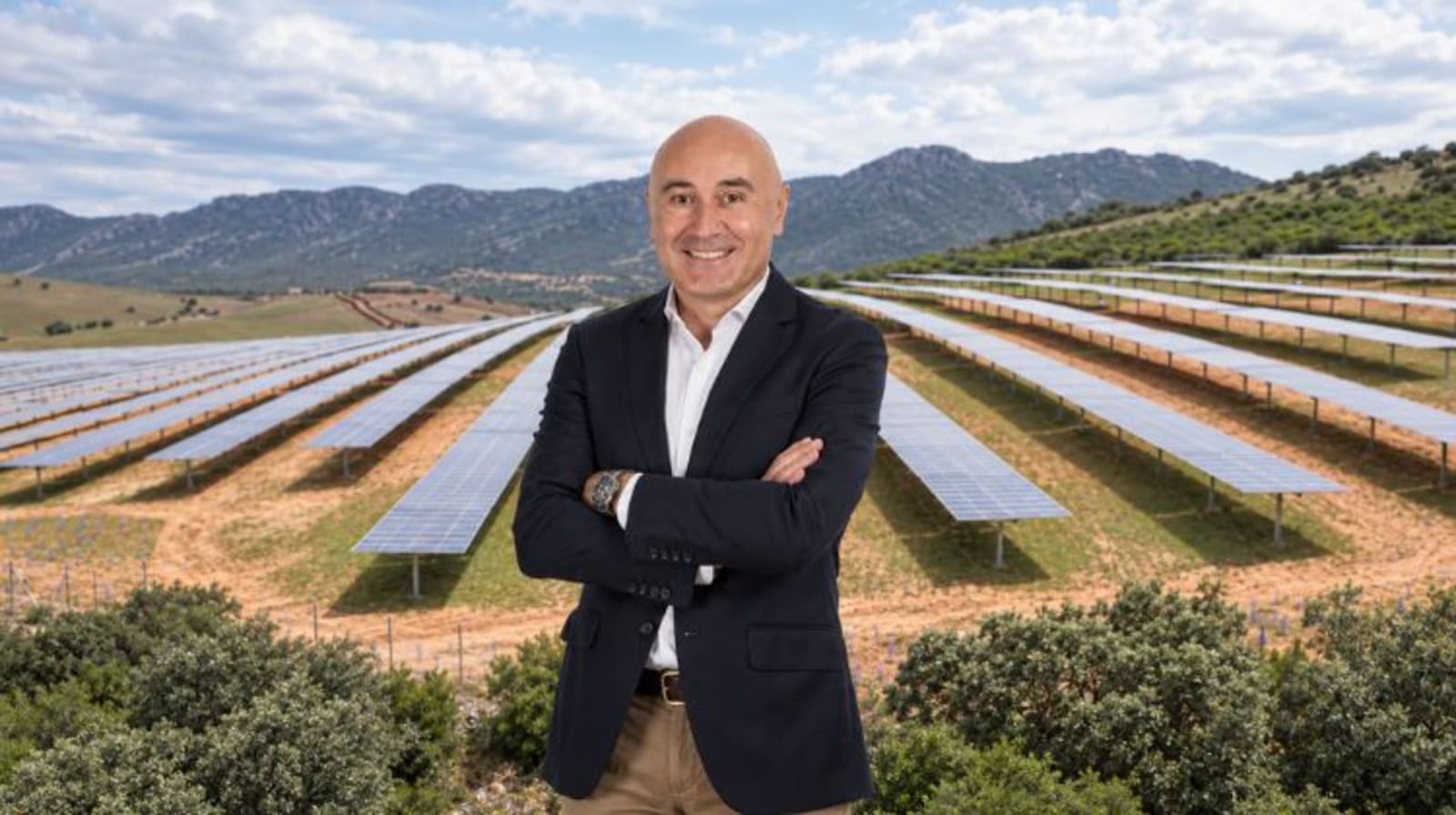
“Our big bet is on the American continent, analyzing short-term opportunities in Argentina and Panama,” said José Luis Martínez Rivero, Head of Global Business Development at Diverxia, in dialogue with Energía Estratégica.
The company has 5.3 GW of projects in the Americas, with the United States as one of its main markets and a growing presence in Latin America. Mexico accounts for 600 MW of utility-scale projects, Brazil for around 1 GW of photovoltaic and 21 of its own BESS projects, while Colombia remains on its regional map, with Argentina and Panama among the markets under analysis.
“For many years our main strength has been in identifying, developing and bringing projects to a high level of maturity. We have gone from being a photovoltaic development company focused on Spain to a global company where we do utility scale, distributed generation, C&I, battery hybridization and stand-alone storage,” added Martinez Rivero.
Mexico: 600 MW and the next step towards EPC
Mexico is one of Diverxia's main growth markets in Latin America. The company currently has a utility-scale portfolio of approximately 600 MW, offices, and a growing local team.
“We are beginning to develop our EPC division in Mexico to be prepared when our projects reach the Ready to Build (RTB) phase,” explained Martínez Rivero. It's worth noting that the country is progressing with the development and construction of projects awarded in the latest public-private partnership tenders, which are slated for commercial operation around 2028 or 2029.
This process will allow Diverxia to progressively transfer to Mexico the EPC capabilities it already develops in other markets such as Spain and the United States. At the same time, the company is boosting its C&I activity, with its own sales team and projects associated with PPAs and self-consumption that can reach capacities of up to 20 MW.
Brazil: Development and Storage in a Transforming Market
With offices in São Paulo, Diverxia maintains approximately 1 GW of photovoltaic capacity in different stages of development.
“Brazil is going through a period of greater uncertainty, especially due to the impact of curtailment. Our strategy has been to position ourselves from the beginning in less saturated areas with competitive connection and network usage costs,” explained Martínez Rivero.
The company also participates in Brazilian storage auction processes with 21 of its own storage projects.
This initiative takes place against an unprecedented backdrop. The Energy Research Company (EPE) has registered 6,091 energy storage projects totaling 296,807 MW for the 2026 capacity reservation process, a record number of participants in Brazilian electricity sector tenders. The selected systems aim to provide power, flexibility, and security to the National Interconnected System.
For Diverxia, Brazil continues to be a market in which to maintain and mature positions while the regulatory, network and investment context evolves.
As part of its Latin American strategy, Colombia represents a market the company has been familiar with for approximately a decade. Diverxia successfully developed around 250 MW there and maintains a local presence to capitalize on new opportunities as market conditions evolve.
According to Martínez Rivero, the strategy consists of maintaining local capacity to reactivate growth when favorable financial conditions return.
And the next frontier is still open. Within its regional analysis, the company considers Argentina and Central American markets like Panama among potential short-term opportunities. These are currently countries under evaluation, not confirmed launches.
The United States as a strategic market and the Philippines as a growth platform in Asia
The United States remains one of Diverxia's main international markets. Here, the company develops and implements utility-scale solar and battery storage (BESS) projects and distributed generation projects for applications such as data centers, commercial and industrial use, and power purchase agreements (PPAs) for large consumers.
Its activity covers the entire value chain, from development to EPC construction and operation and maintenance, with a portfolio of 1.2 GW in various states, primarily in the eastern part of the country. Headquartered in North Carolina and with a strong local team, Diverxia operates in a market that added more than 11 GW of new solar capacity in the second quarter of 2026 alone, 45% more than a year earlier.
Asia is another area of expansion for the company.
Continue reading
Diverxia began its operations in the Philippines a little over a year ago and has since made progress in establishing a permanent structure in the country.
The company has offices in Makati, Manila's financial district, a local team, and a portfolio of approximately 400 MW distributed across various projects under development.
The Philippines represents a strategic platform for Diverxia from which to build a long-term presence in the Asian market.
The specific characteristics of the Philippine market — an electricity system distributed across numerous islands, growing generation needs and regulations favorable to private investment — make the country one of the markets where Diverxia plans to continue strengthening its presence.
From developer to operator: in Spain the shift towards storage and owned assets is accelerating
The evolution of the model does not imply abandoning development, which continues to be one of Diverxia's main capabilities, but rather using it as a starting point to expand the company's participation in projects.
The strategy considers different alternatives depending on the market and the asset. The company's participation may extend to advanced stages of development in some cases, while in others, the projects will be financed and taken through to construction and operation.
Diverxia thus aims to progressively combine four major capabilities: development, construction, operation and maintenance, and investment in its own assets.
In Spain, where the company has developed approximately 1 GW throughout its history, Diverxia has provided long-term financing for an 85 MW photovoltaic plant, which is currently under construction while simultaneously managing the battery hybridization process. The accumulated experience in development and construction also allows the company to strengthen its EPC (Engineering, Procurement, and Construction) activity, both for its own projects and for third parties, as well as progressively expand its presence in O&M (Operations and Maintenance), where it already manages more than 500 MW.
In the Spanish market, where the company has developed approximately 1 GW during its history , practically all of it built except for two projects, Diverxia financed a long-term 85 MW photovoltaic plant currently under construction , while it advances in its hybridization process with batteries.
The experience gained in the country also serves to strengthen its EPC activity, both in its own projects and those of third parties, and to progressively expand its operation and maintenance business . In this way, the company seeks to evolve from its origins as a developer towards a model capable of developing, financing, building, operating, and maintaining certain assets.
Energy storage is becoming a central part of this transformation. Diverxia has integrated batteries across its development strategy and is exploring hybridization in its new projects, in addition to promoting standalone systems in various markets.
“ 100% of our projects worldwide are hybridized with storage. Photovoltaics alone no longer makes sense ,” the executive pointed out.
The strategy also extends to standalone BESS projects in the Baltic countries and other international markets. In Spain, in addition to advancing the hybridization of its assets, Diverxia plans to participate in the capacity market when it launches , incorporating a new business line for storage.
This positioning also responds to a scenario where low electricity prices at certain times and generation constraints are forcing a review of the design and operation of renewable energy projects. For Diverxia, generation, storage, grid connection, and system needs are thus beginning to be analyzed as parts of the same strategy.
With 5.3 GW of projects globally and a presence on three continents, Diverxia seeks to combine this vertical integration with an increasingly demanding selection of the markets and projects in which it participates.
“We will continue to incorporate projects, but without a race to accumulate MW. We want to develop good assets, reduce risks and maximize their value,” Martínez Rivero stated.
After 21 years working in the sector, the executive believes that this ability to adapt will continue to be crucial in the company's next growth phase.
“What attracts me to this sector is that it never stops moving and forces you to continually adapt your strategy,” he concluded.

 By Emilia Lardizabal


 By Energía Estratégica
 By Florencia Guglielmetti