


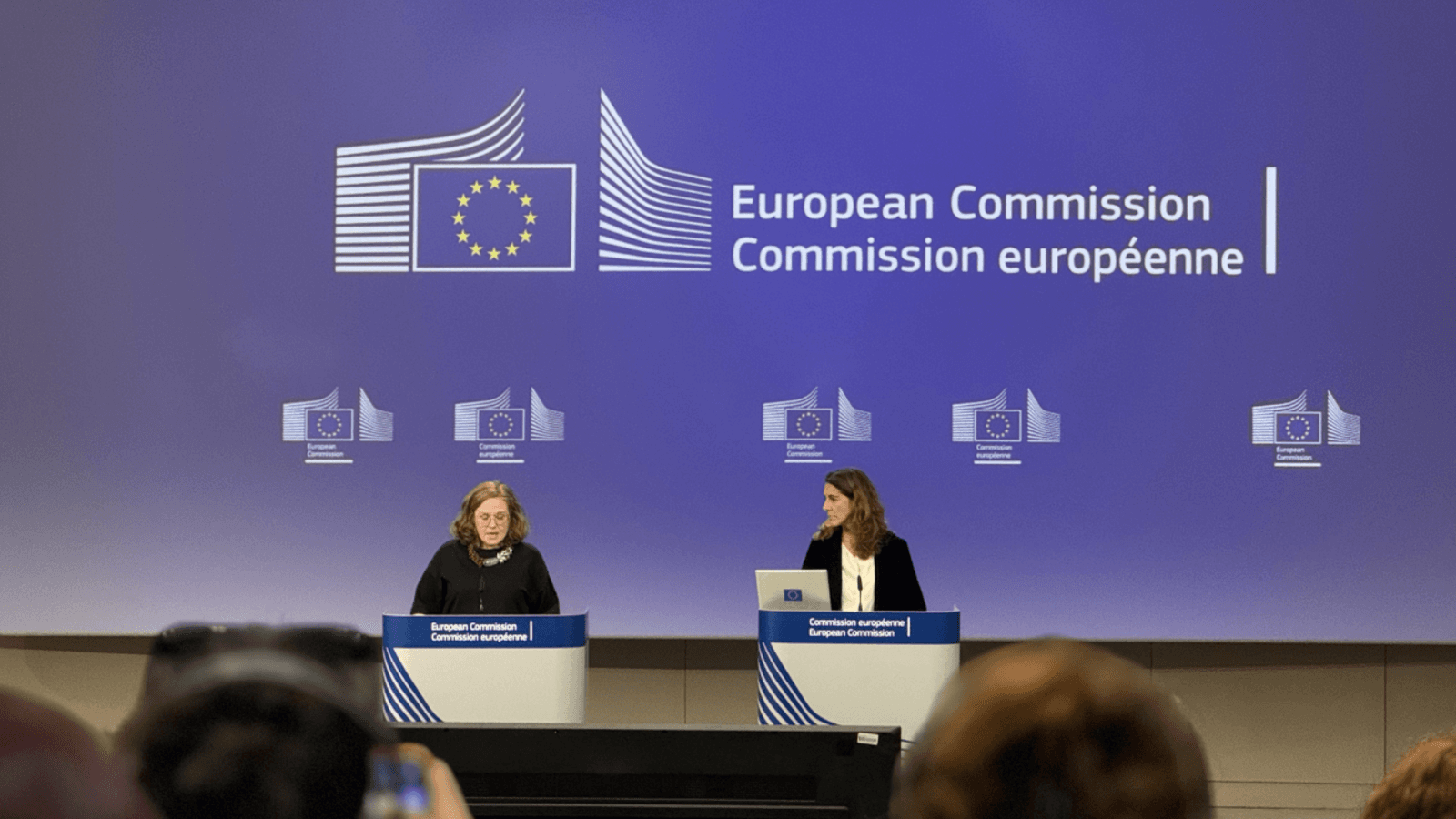

Electrification, carbon markets, green hydrogen, new energy alliances, and multi-million euro investments. During a week of conferences, meetings, and debates in Brussels, these topics were the common thread in conversations with European officials, regulators, companies, and experts. Behind every exchange, the same idea emerged: the European Union is redefining its energy strategy for a new era marked by security of supply, industrial competitiveness, and the search for strategic partners beyond its borders.
These were some of the signs that emerged during a week of meetings in Brussels, where Energía Estratégica participated in the EU Climate Dialogues 2 (EUCDs2) program along with specialized journalists from Latin America and the Caribbean.
The initiative, promoted by the European Union together with GIZ and developed in cooperation with OLACDE , coincided with the European Sustainable Energy Week (EUSEW) , the bloc's main annual energy event. Between meetings at the European Commission, debates in the European Parliament, technical panels, meetings with multilateral organizations, and a visit to Antwerp, it was possible to observe how Europe is beginning to redefine some of the foundations on which it will build its energy transition over the next decade.
Throughout the various meetings, it became clear that the crises stemming from the Russian invasion of Ukraine and the instability in the Middle East have profoundly altered the bloc's energy priorities. Reducing emissions remains a central objective, but it now shares the spotlight with other concepts that emerged repeatedly throughout the week: energy security, industrial resilience, competitiveness, and strategic autonomy.
The new priority: producing more technology in Europe
This change of focus was present in much of the debate at the European Sustainable Energy Week ( EUSEW) , which this year brought together policymakers, regulators, companies, research centers, development banks and international organizations to analyze the future of the European energy system.
One of the exchanges that best reflected this new vision occurred during a panel dedicated to REPowerEU , the plan with which the European Union seeks to reduce its dependence on imported fossil fuels and strengthen its energy independence.
There, Martin Vladimirov , director of the Energy and Climate and Geoeconomics programs at the Center for the Study of Democracy, warned that Europe has already begun to lose ground in an industry where it had historically been a leader: “ In wind energy, we had an advantage as Europeans, and I say 'had' because we are already losing it. We need to incentivize the manufacturing of these supply chains here in Europe .”
The expert also questioned the growing dependence on technologies imported from Asia and argued that many storage projects financed with European funds end up fueling Chinese industrial surpluses. In this context, he defended the need to strengthen local production and deepen cooperation with regions considered strategic.
He explained that Europe needs to raise its industrial level and work with partners in its region, including North Africa and Latin America .
This reflection encapsulated much of the spirit that dominated the day's discussions. The EU seeks to strengthen its industrial and energy capacity, but understands that the transition cannot be built in isolation.
Throughout the week, the agenda organized by EUCDs2 provided access to the main areas involved in the European energy transformation.
The activities included meetings with representatives from DG ENER , DG CLIMA , DG GROW and DG MOVE , responsible for the European Commission's energy, climate action, industry and transport policies.
There were also meetings at the European Parliament, sessions on regional energy integration, green hydrogen and carbon markets, as well as spaces dedicated to the Global Gateway investment strategy and the Euroclima cooperation program.
Despite the diversity of topics, virtually all the conversations revolved around the same question: how to accelerate the energy transition without compromising the bloc's economic competitiveness.
The answers began to take shape through several announcements that will shape the European energy agenda in the coming months.
Electrification will be the major focus of the next decade
Among the definitions that aroused the most interest during the meetings with European officials was the future electrification roadmap that the European Commission will present during July.
European officials indicated that the initiative will seek to accelerate the use of electricity in various sectors of the economy and increase the share of renewable energy in final consumption.
The proposal seeks to support the expansion of electric mobility, data centers, heat pumps, and new industries linked to the energy transition.
Behind this strategy lies a growing conviction in Brussels: electrification means reducing dependence on imported fossil fuels, making better use of renewable generation, and strengthening energy security.
The discussion also focuses on infrastructure. The European network is one of the most interconnected in the world, but it requires significant investment to meet growing demand and an increasingly electrified system.
Another announcement that emerged during the week was linked to the future of the European emissions trading system.
Commission representatives confirmed that a new stage of discussion on the EU Emissions Trading System (ETS), one of the central instruments of the Community's climate policy, will begin in mid-July .
The review is part of the path towards the goal of reducing emissions by 90% by 2040 and will allow the post-2030 regulatory framework to begin to be outlined.
The discussion is especially relevant for Latin America, where several countries are making progress on similar mechanisms. Brazil is working on developing its national emissions trading system, while Chile, Colombia, and Mexico continue to strengthen their various carbon pricing tools.
Everything indicates that these instruments will continue to gain prominence in the coming years.
Continue reading
T-MED: a new regional energy alliance
EUSEW was also the chosen venue to present T-MED (Trans-Mediterranean Renewable Energy and Clean Tech Cooperation) .
The initiative seeks to strengthen energy cooperation between Europe and North African countries through investments in renewable energy, infrastructure and clean technologies.
The program includes more than EUR 5 billion in guarantees and aims to mobilize up to EUR 25 billion in investments, as well as incorporating around 15 GW of new renewable capacity by 2035.
Beyond the figures, the announcement reflected an increasingly visible trend in European energy policy: the building of regional alliances capable of strengthening energy security and accelerating industrial development.
That same approach appears in the relationship with Latin America.
Global Gateway and the growing interest in the region
The Global Gateway strategy was a central theme in several of the meetings held during the week.
Representatives of the initiative explained that there are already 24 strategic energy projects identified in Latin America and the Caribbean , linked to electrical interconnection, transmission, storage, renewable energies and green hydrogen.
The goal is to mobilize up to EUR 45 billion in the region by 2027.
European interest in Latin America is not limited to energy. During several meetings, expectations arose regarding the future of the agreement between the European Union and Mercosur , considered by various stakeholders as a key tool for strengthening trade, diversifying supply chains, and deepening economic ties between the two regions in a context marked by geopolitical tensions and global competition for strategic technologies.
Behind these numbers lies a broader goal: to strengthen regional energy integration and develop projects capable of attracting large-scale private investment.
Interconnections such as Colombia-Panama, Bolivia-Brazil or Chile-Peru were mentioned as examples of an agenda aimed at building more resilient and better connected energy systems.
Green hydrogen maintains a privileged position

Beyond the differences between the agendas of industry, transport, financing or regional integration, there was one theme that appeared repeatedly throughout the week: green hydrogen.
Unlike previous years, where the conversation focused on the potential of technology, today the focus is on how to turn projects into concrete markets.
Fertilizer production, green steel, sustainable aviation fuels, and maritime transport emerged as some of the sectors where hydrogen will play a decisive role.
And in that scenario, Latin America occupies a prominent position.
Argentina, Chile, and Brazil were repeatedly mentioned in various discussions related to the development of the hydrogen economy. The quality of their renewable resources, the availability of land, and their export potential continue to position the region as a leading candidate for integration into future global supply chains.
At the same time, experts acknowledge that significant challenges remain related to regulation, demand, and cost reduction.
The agenda concluded in Antwerp , one of Europe's main logistics hubs, where a visit to the CMB.Tech facilities allowed participants to observe how several of the technologies discussed during the week are beginning to be transferred to the industrial level.
The company develops hydrogen applications for transport and port logistics, a concrete example of how Europe is seeking to advance the decarbonization of sectors that are difficult to electrify.
The tour also served as a synthesis of everything discussed in Brussels: the energy transition is no longer measured solely in terms of climate targets or installed renewable capacity. Increasingly, the discussion revolves around infrastructure, industrial supply chains, technological innovation, and the capacity for implementation.
A debate that will continue in the Dominican Republic
As Brussels wrapped up another edition of EUSEW, many of the conversations that dominated the European agenda began to shift towards Latin America.
Electrification, carbon markets, green hydrogen, regional interconnections and new energy value chains will also be featured at the upcoming OLACDE Energy Week , which will bring together governments, companies, multilateral organizations and specialists from across the region in the Dominican Republic.
The difference is that Latin America no longer appears only as an observer of these debates.
From the agenda developed in Belgium, Energía Estratégica was able to confirm that Europe is increasingly looking to the region as a strategic partner for the next stage of the energy transition. This is not only due to its natural resources, but also to its capacity to integrate into new industrial chains linked to renewable energies, green hydrogen, clean fuels, and critical minerals.
By the end of the week, one idea was clearly emerging from many of the conversations held in Brussels: while Europe redefines its energy strategy after two geopolitical crises that changed the rules of the game, Latin America is beginning to occupy an increasingly relevant place within that vision.
The region is no longer seen solely as a supplier of natural resources or renewable energy. Increasingly, it is emerging as a strategic partner for the development of new industrial chains linked to green hydrogen, clean fuels, electrification, and the critical minerals that the global energy transition will demand.