


The Colombia-Panama Electrical Interconnection took a decisive step in its community relations : the Kuna de Wargandi region formally initiated the process of Free, Prior and Informed Consent (FPIC), becoming the first of the three areas of influence to reach this stage.
In dialogue with Energía Estratégica , the National Energy Secretariat (SNE) of Panama outlined the scope of the decision: “This step provides certainty and organizes the community relations component in one of the three areas of influence of the Electrical Interconnection, which constitutes a fundamental condition for the project to move forward with full social legitimacy.”

This progress provides certainty to the social component necessary for the development of the binational infrastructure , while the technical and environmental aspects continue to move forward. Now, attention shifts to the Guna Yala region and the Alto Bayano Collective Lands, where Panama is holding talks to initiate its respective consultations.

The process was enabled after the General Assembly meeting in the community of Morti approved, on August 18, 2026 , a resolution formalizing the commitment to develop the consultation under national and international standards and with full, informed and voluntary participation.
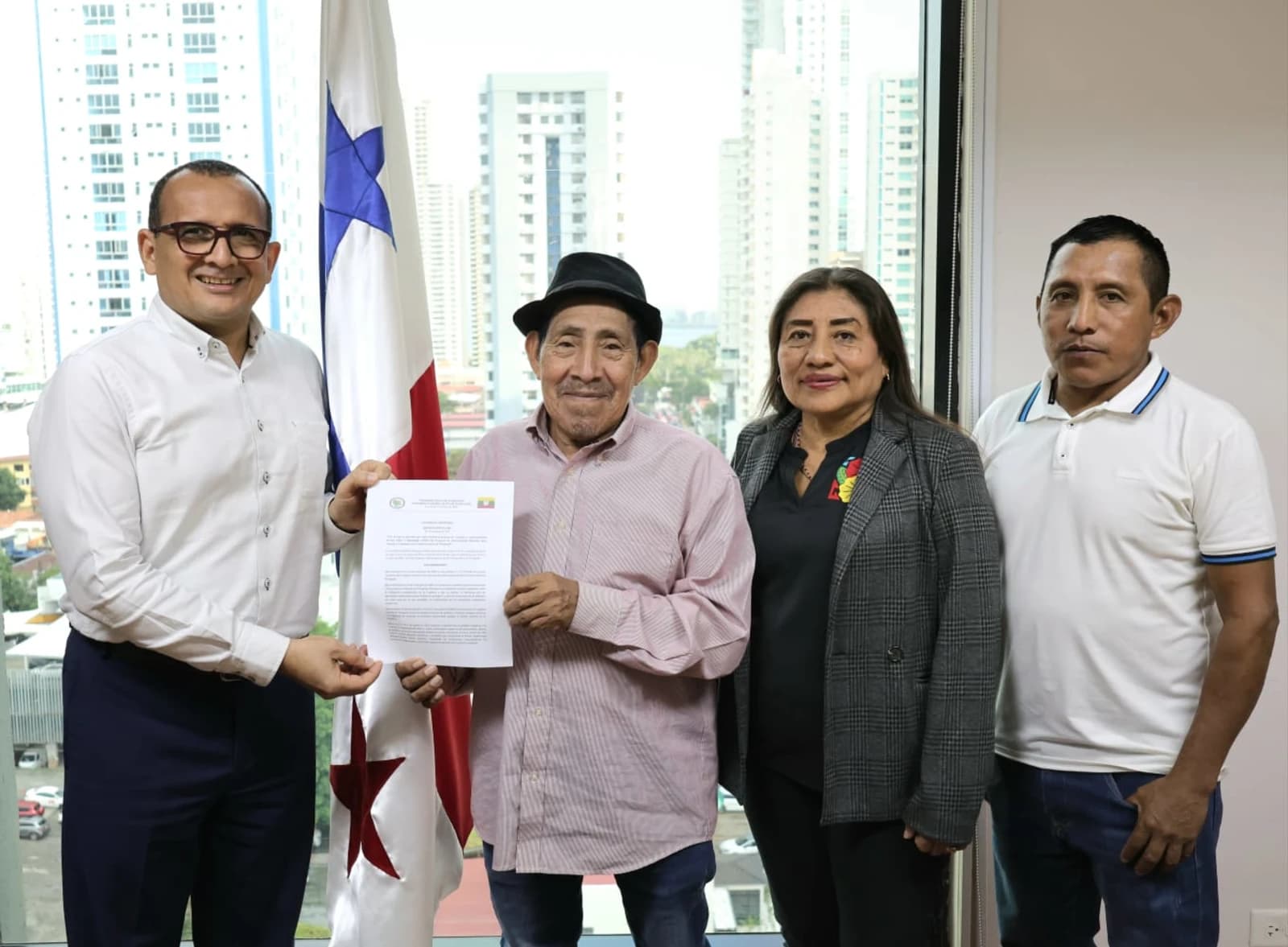
A delegation of traditional authorities then traveled to Panama City to formally deliver the document to the SNE and the Vice Ministry of Indigenous Affairs of the Ministry of Government.
Wargandi thus became the first of the three territories involved to formalize the start of the procedure , after prior coordination work between the Panamanian authorities and the representatives of the region.
The Secretariat attributed the result to the relationship process developed so far and to the willingness of the traditional authorities to address the project.
“It is the result of sustained work in coordination and trust, and reflects the willingness of the traditional authorities to enter into an open dialogue about the project,” the institution explained.
The start of the consultation process does not halt the other components of the electricity initiative . While engagement with the affected territories is underway, the tasks related to technical and environmental aspects continue as planned.
“The project continues its course in its technical and environmental components, always hand in hand with the communities,” the SNE pointed out.
With Wargandi now part of the formal process, the next community stage will focus on Guna Yala and the Collective Lands of Alto Bayano , although the Executive will not unilaterally set a date for the start of those consultations.
The National Energy Secretariat maintains an active approach with the traditional authorities of both territories , accompanied by the Vice Ministry of Indigenous Affairs and the other state entities that make up the Inter-institutional Roundtable.
The official strategy proposes that each instance should advance according to the internal mechanisms, autonomy and decision times of the communities , so the experience achieved in Wargandi does not imply the automatic application of an equivalent timeline in the other territories.
“The progress is driven by the pace of dialogue and the building of trust with each region, and not by an imposed schedule,” the SNE stated.
This criterion places community relations as one of the factors that will determine the next milestones of the project , in parallel with the evolution of its technical and environmental components.
The Secretariat assured that it will continue working with Guna Yala and Alto Bayano until the conditions exist to formally activate each procedure, maintaining the scheme applied with the first region.
Continue reading
“Our commitment is to continue this relationship in a respectful and sustained manner, so that each community can begin its process when the conditions are right, with the same seriousness and openness with which we have worked in Wargandi,” the institution added.
The procedure must guarantee full, informed and voluntary participation in each territory, as well as respect for the decision-making processes of indigenous communities.
In that regard, the Executive maintained that autonomy will be one of the central principles for the two pending consultations , without establishing deadlines that condition internal deliberations.
“The Government reaffirms that each process will be developed respecting the autonomy of the communities and their own decision-making timelines,” the Secretariat emphasized.
A corridor with rural electrification and road development
The process initiated in Wargandi also incorporates a territorial dimension that goes beyond the transmission infrastructure between Colombia and Panama , as the Government links the initiative with a sustainable environmental corridor that includes rural electrification and road development.
Panama's National Energy Secretary, Rodrigo Rodríguez J. , linked these actions to direct benefits for the populations involved and to a coordination strategy that respects the decisions of each territory.
“This process not only encompasses the Electrical Interconnection, but is also part of a sustainable environmental corridor that integrates rural electrification and road development, directly benefiting the communities,” said Rodríguez.
This perspective also appears among the traditional authorities of Wargandi, who linked their participation with the possibility of addressing specific infrastructure needs , mainly access to electricity and roads.
The chief of Wargandi, Arnulfo López , emphasized at the same time that the decision stems from the autonomy of the region and the participation of its population.
“We are taking this step autonomously, openly, and with the participation of our people. What we seek is for this process to bring real benefits to our communities, such as electrification and the roads we need,” López stated.
The scheme involves participation from various areas of the Panamanian government . Present at the resolution's delivery were the National Energy Secretariat; the Vice Minister of Indigenous Affairs, Doris Bill ; representatives from the Rural Electrification Office (OER); and from the Electric Transmission Company, SA (ETESA).
The relationship for the Electrical Interconnection is accompanied, in turn, by an Interinstitutional Table coordinated by the Ministry of the Presidency through the SNE , responsible for articulating the agencies with energy, environmental, territorial and indigenous competencies.
The structure includes the Ministry of Government, Ministry of Economy and Finance (MEF), Ministry of Public Works (MOP), Ministry of Environment, National Land Administration Authority (ANATI), National Authority of Public Services (ASEP), Rural Electrification Office and ETESA.
With the process now underway in Wargandi, the community component of the Colombia-Panama Electrical Interconnection project is entering a new phase . Of the three areas of influence identified, one has formally begun the consultation process, while the other two remain in the outreach phase.
Further progress will depend on dialogue with Guna Yala and the Collective Lands of Alto Bayano, while the technical and environmental components continue to be developed in parallel .
The official roadmap does not set a date for completing these steps. Instead, Panama conditions its progress on reaching agreements with each territory once the conditions exist to formally begin the procedures.
In this way, Wargandi establishes the first concrete precedent for the territorial approach to binational infrastructure , while Guna Yala and Alto Bayano now concentrate the next steps of the Government to complete the process in the three areas of influence.