


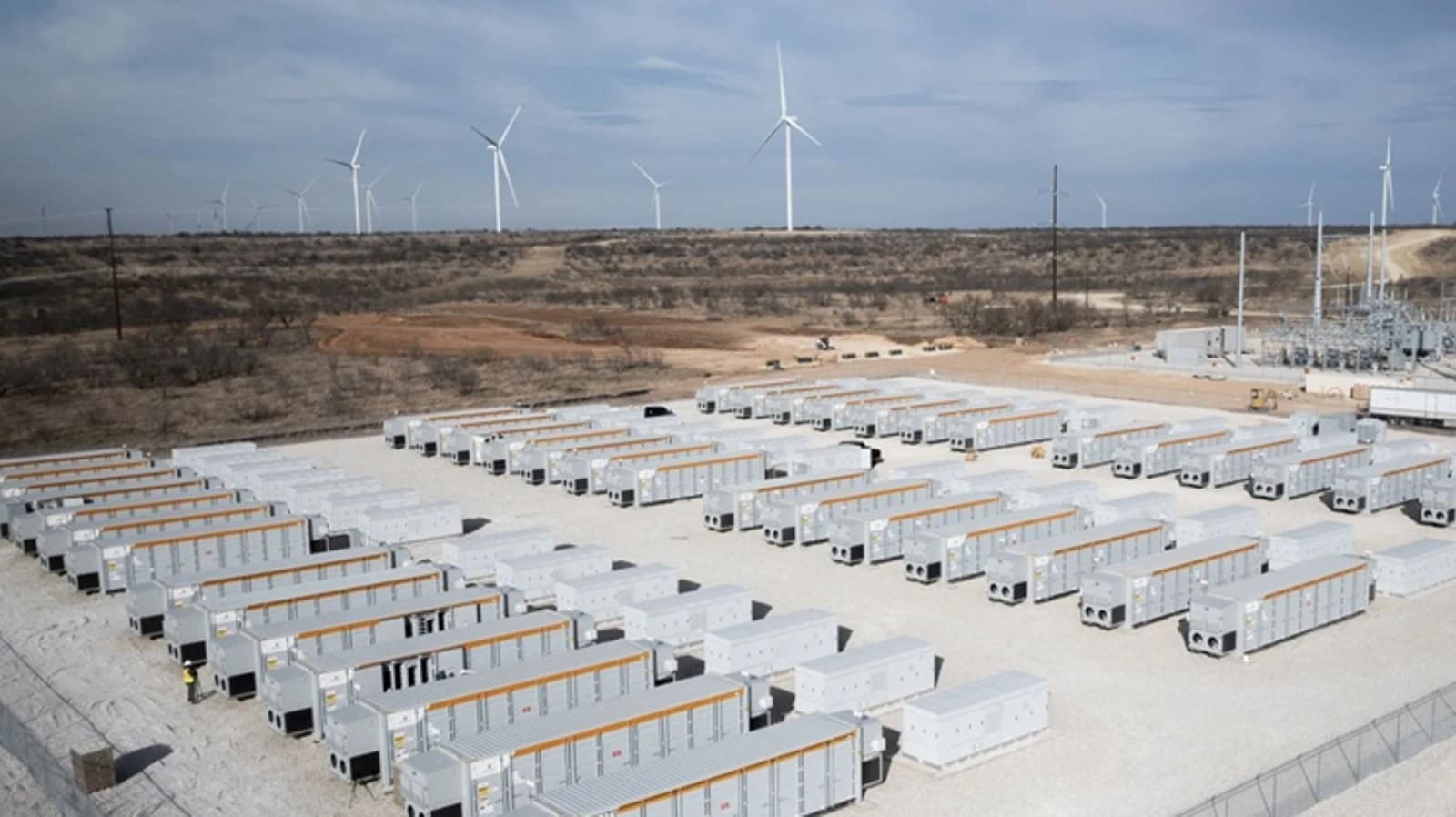
The final resolution of the FEDER program introduces significant adjustments compared to the previous proposal: the number of awarded projects is reduced from 133 to 126, the total volume of aid is adjusted to 818 million euros , the final awarded capacity is 9.4 GWh , and the territorial distribution between awardees and autonomous communities is modified.
Among the most significant losses is the withdrawal of Aquila Capital Energy from six projects totaling 170 MWh: four of them in Catalonia ( Bellissens 2, 3, 4 and 5 , of 17.91 MWh each), and two in Castilla-La Mancha ( BESS Manztierra 1 , of 31 MWh, and El Cuco BESS , of 66.8 MWh).
Several hybrid storage projects were also removed from the final list, such as Cillamayor (190 MWh) by the company Solaer in Castilla y León, Valdezorita (8.8 MWh) by AboWind in Castilla-La Mancha, Llanos de Aldea I (16 MWh) in the Canary Islands, as well as La Rubia (15.12 MWh) by the company R.Power Renewables and Guadarrama (80 MWh) by Moeve (a Cepsa company) in the Community of Madrid.
The La Farga project, a 296 MWh stand-alone system in Catalonia, was also ruled out.
On the other hand, three Iberdrola power-to-heat thermal storage projects focused on industrial self-consumption were withdrawn: one of 60 MWh in Andalusia (beverage sector), another of 30 MWh in the Valencian Community (ceramic sector) and a third of 100 MWh in Galicia (canning sector).
In contrast, the regional map is being reconfigured as new stand-alone projects were incorporated in Catalonia such as EDP's Coll de Moro , the Portuguese company Finerge's Torre Madrina and RWE Renewables' Mateu , each of 28 MWh , along with Penedés and Castellet , both of 19.9 MWh, from the company with the fictitious name Renew Green Energy belonging to the Oside Investments group .
Two hybrid projects were also added: Trevago I by Our New Energy , of 120 MWh , in Castilla y León, and Cáceres 2023 , by Alter Enersun for 46 MWh , in Extremadura.
The 9.4 GWh of storage capacity finally awarded will be distributed across 126 projects using various technologies. As reported by Energía Estratégica , the leading position in terms of awarded volume is held by three operators, who together account for more than 50% of the total capacity: Iberdrola , with 2,333.7 MWh in 12 projects; Atlantica Sustainable Infrastructure Ltd , with more than 1,500 MWh in 8 proposals; and Rolwind Renovables , with only 2 large-scale projects totaling 1,225 MWh.
Among the secondary awardees is Naturgy , with seven projects totaling 359.3 MWh , primarily located in the Canary Islands and Murcia. BenBros , meanwhile, was awarded a single 225.7 MWh project in Galicia.
Also included are Ecoener , with approximately 32 MWh distributed across projects in the islands; and firms such as Sermatec Energy , Viridi RE Group , Celso Solar , Abengoa , CTG Europe , Ignis , Helios and Dcoop , which received aid for specific initiatives.
Territorial distribution of the budget: key adjustments in the regional map of awards Of the total of 818.3 million euros awarded by the IDAE in the final call of the FEDER program, the most benefited community was Andalusia , with 354.5 million euros , concentrating more than 43% of the total budget .It remains the region with the highest number of projects and accumulated volume, although it registers a reduction of 20 million euros compared to the previous list.
Galicia follows with 97.2 million and Castilla-La Mancha with 98 million. The only region that sees its budget increase in this final version is Extremadura , which goes from 73 to 91 million euros , boosted by the inclusion of the Cáceres 2023 project by Alter Enersun.
Castilla y León comes in fourth place with €53.6 million , followed by the Valencian Community with €44.5 million in aid, and the Canary Islands with €26.1 million , notable for its strong presence in hybrid projects. Catalonia received €21.4 million and is the region with the greatest reconfiguration: five projects are leaving and five are entering.
In Madrid, the La Rubia and Guadarrama projects were cancelled, but the region maintains its presence in the final distribution with other initiatives that obtained funding ( 7.9M ), so it is not left out of the program , unlike Ceuta, Melilla, Navarra and La Rioja , which did not receive funds in this call.
Next are Asturias ( 8.6M ), Murcia ( 6.1M ) and Aragon ( 4M ).
From a technological point of view, the official data from MITECO confirm that hybrid storage projects with renewables predominate (69 initiatives), followed by standalone batteries (39 projects), thermal storage (15) and pumped hydroelectricity (3).
Within hybrid systems, photovoltaics is the most common source, followed by wind and mixed combinations, reflecting the national strategy of coupling storage to renewable generation to guarantee grid flexibility and firmness in delivery.
Regarding the prices awarded for stand- alone storage systems, Spain is positioned below the estimated cost in other European tenders .
According to Energía Estratégica , the country allocated storage at an average price of 64,933 /MWh/year , a figure lower than that observed in similar processes such as the Italian one.
In an interview with the media outlet, Raúl García Posada , director of ASEALEN, stated that these values are "very competitive for the European market, even below the cost of capital in some cases," which demonstrates the interest of the private sector and the efficiency of the allocation model applied.
In total, the 818 million euros in non-refundable public aid will allow the incorporation of 2.2 GW of power and 9.4 GWh of capacity into the Spanish electricity system, in a deployment that must be carried out no later than September 30, 2029 .
With this package, the Spanish State reinforces the backbone of its decarbonization strategy, enabling key storage services for renewable backup, system stability and compliance with the objectives of the PNIEC and REPowerEU.