



Peru's Ministry of Energy and Mines (MINEM) presented the scope of the new Electricity Procurement Regulations for the Supply of Regulated Users, a reform that includes tenders of up to 15 years, contracts by time blocks and greater competition among generation technologies , while the sector warns about the need to accelerate the calls for tenders to guarantee future supply.
The initiative, developed under Law No. 32249 , comes at a time of contract expirations between 2026 and 2030, growing demand, and warnings about shrinking efficient reserve margins. It also sparks debate among power generators and distributors regarding contracting terms and financing for new renewable energy projects.
The Deputy Minister of Electricity, Luis Enrique Santillán Cervantes , presented the proposal during an event held at the College of Engineers of Peru, through its Electrical Engineering Chapter, where he highlighted the importance of updating the rules to support investments and guarantee the continuity of service.
"We are presenting one of the fundamental pillars for the economic and social development of Peru: the modernization of our electricity subsector and the strengthening of the regulations that allow us to guarantee a safe, reliable, efficient electricity supply at competitive prices," the official stated.
It is worth recalling that this initiative is part of the reform introduced by Law No. 32249, published on January 19, 2025, which amends Law No. 28832 to ensure the efficient development of power generation and promote the diversification of Peru's energy matrix. The private sector has long been demanding the regulations implementing this law.
However, one of the main challenges is the time required to bring new generation capacity online. Long-term tenders require waiting periods of between three and six years , so the awarded projects will not necessarily be available to meet the next contract expirations.
In that regard, Roberto Tamayo Pereira, the new Director General of Electricity at MINEM , warned: "There is no more time to wait, especially for the results of the long-term tenders, because we know we are facing problems with the depletion of efficient reserve margins and also because there is a high rate of demand growth."
Data from the Economic Operation Committee of the National Interconnected System (COES) reflects this pressure. In February 2026, peak demand reached 8,236,920 MW , compared to 7,899,508 MW recorded in the same month of 2025, representing a year-on-year increase of 4.27% .
This growth becomes relevant in light of the risks of insufficient incorporation of efficient generation, which could increase the use of backup technologies with higher operating costs, such as diesel-powered plants.
That is why the director general insists on the need to move forward with the regulatory framework. "The regulation is a mandatory requirement within the articles of Law 32249 and must be approved immediately," Tamayo Pereira maintains.
During the presentation, Santillán also emphasized that the process is part of a broader strategy to strengthen the Peruvian electrical system.
"In this administration we have been working on four pillars: ensuring generation capacity, strengthening transmission and distribution, promoting complementary services and flexible resources, and improving the operation and quality of the national interconnected system," the deputy minister points out.
Under this approach, the modernization of tenders seeks to expand supply alternatives and establish contractual conditions that accompany the growth of consumption without compromising the continuity or economic efficiency of the supply.
Contracts of up to 15 years and new conditions for renewable energies
According to Energía Estratégica, on October 7, the draft regulation received a favorable evaluation from the Multisectoral Commission for Regulatory Quality, as part of the procedure prior to its approval as a supreme decree. One of the main changes introduced by the proposed regulation is the possibility of contracting energy and power separately , in addition to structuring tenders by time blocks.
This approach seeks to allow different technologies to compete according to their generation profiles, instead of requiring all projects to offer electrical products with identical operating characteristics.
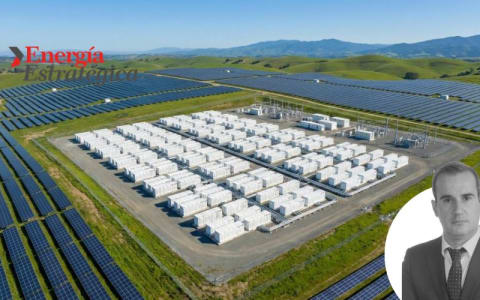
In particular, photovoltaic solar power plants could participate in blocks associated with radiation hours, while storage systems would allow electricity to be shifted towards periods of higher consumption.
The scheme includes three contracting options: power only, energy only, and power with associated energy. This way, distributors would have the tools to design their supply according to the needs of the regulated market.
Regarding the timeframes, the long-term tenders would allow for contracts of between 10 and 15 years , with grace periods of three to six years and a maximum coverage equivalent to 65% of the demand of each distributor .
Likewise, medium-term contracts of four to five years are contemplated, with a limit of 40% of the demand, and short-term agreements of one month to three years, which could represent up to 35%.
Distribution companies will play a central role in planning the new scheme, as they will have to prepare an annual Tenders Program with a ten-year horizon , identifying the required volumes, the products to be contracted and the dates planned for each call.
For its part, the Supervisory Body for Investment in Energy and Mining (Osinergmin) will be responsible for approving the bases of the processes and establishing the maximum prices applicable to the different blocks.
Another relevant aspect is the incorporation of an incentive of up to 3% intended to promote long-term calls for proposals made well in advance, with the aim of reducing the risks associated with late hiring.
The proposal also establishes mechanisms to address unsuccessful tenders, including new calls for tenders, reallocation of surpluses between distributors and exceptional bilateral contracts, subject to regulatory requirements.
These provisions become important in light of the anticipated maturity dates in the coming years and the need to prevent part of the demand from being left without contractual coverage.
According to the sectoral background provided, the country also has 109 generation plants owned by distribution companies , whose contribution to supply constitutes another component that must be considered when sizing the requirements of future auctions.
However, the reform does not automatically guarantee the awarding of new renewable projects, since the conditions for participation of existing power plants and future facilities constitute one of the central points of the business debate.
Continue reading
In this regard, Francisco Ísmodes, representative of the Peruvian Renewable Energy Society (SPR) , questions the absence of specific treatment for new power plants.
"Why not take advantage of this regulation to allow participation in long-term contracts exclusively for new plants?... If there are no long-term contracts, how will new plants materialize if they don't have PPAs or bank financing?" asked the industry representative.
Energy companies are demanding adjustments before the next tenders.
The regulatory progress also coincides with a process of participation by generating, distributing and developing companies seeking to introduce modifications to the contracting conditions.
The proposals include contracts of up to 20 years, greater flexibility to market renewable energy by time blocks, modifications to the award mechanisms and specific requirements for new generation projects.
Business positions, however, are not uniform. While some developers believe it is necessary to establish contractual conditions that facilitate the financing of new power plants, others prioritize competition between existing facilities and future projects. Differences also exist regarding maximum prices, the guarantees required of participants, bilateral contracts, and the powers of the regulatory body.
From the General Directorate of Electricity, the position expressed by the authorities is that Law No. 32249 does not establish a differentiation that allows reserving the auctions exclusively for new power plants, so the regulatory priority must remain in obtaining competitive prices for the regulated user.
The challenge, therefore, lies in reconciling lower contracting costs with conditions that allow for the financing of new generation capacity and guarantee coverage of future demand.
Distributors warn of financial risks and potential failed auctions
The concerns are not limited to power generation companies. Distributors also warn that contracting by time blocks could create difficulties in covering certain periods, especially those associated with peak demand.
One of the main observations relates to the possibility that the bids submitted for certain blocks may exceed the maximum prices set by Osinergmin, leaving part of the required supply unawarded.
Luis Miguel Quiroz, representative of Luz del Sur , expresses this concern and warns about the commercial consequences faced by the companies responsible for supplying electricity.
"We believe that there will most likely be a peak hour block that will be difficult to cover because the supply is lower and the prices will be high... Being exposed to such high risks is fatal for distributors, because we are even exposed to having our concession taken away," he said.
The situation could force companies to meet energy needs through short-term market operations or face obligations arising from supplies without sufficient contractual backing.
In this scenario, distributors are demanding greater clarity on risk allocation, partial award mechanisms, and available alternatives when tenders do not receive bids for all blocks.
Magali Salazar, from Hidrandina, a company in the Distriluz Group , warns that this problem is already having consequences on the balance sheets of some companies.
"Currently, we have a significant portion of demand without contractual backing... We have been assuming significant amounts derived from 'undeclared withdrawals' that directly impact the financial statements of companies," he stated.
The authorities, for their part, maintain that certain operational risks, including the submission of linked bids between blocks, can be addressed through the bases and procedures approved by Osinergmin.
According to the information presented on the regulatory development process, MINEM evaluated and addressed 562 comments made by 35 companies and associations during 45 days of technical consultation , in which commercial, operational and regulatory aspects were discussed.
The debate also comes amid an expansion of Peru's renewable energy portfolio. According to data compiled by Energía Estratégica, the country had 2.7 GW of solar and wind projects with definitive concessions by 2025, in addition to a portfolio exceeding 25 GW in various stages of development .
These figures reflect the volume of initiatives that could seek contracting opportunities in the new scheme, although their realization will depend on permits, access to transmission infrastructure, commercial conditions and available financing.
In parallel, the need to expand the electrical infrastructure is linked to the country's economic growth prospects. During sectoral discussions, it was suggested that a 3% annual GDP growth rate would only allow for closing 75% of the socioeconomic gaps by 2050 , while 5% growth would postpone closing them until 2068. The Peruvian College of Engineers indicated that an economic growth rate of 7% to 8% per year would be desirable.
"Peru is going to grow a lot... With the existing facilities, we won't even reach 50% [to meet the demand by 2030]. That concern should be put aside, and we should be prepared," stated Tamayo Pereyra.
Finally, Santillán emphasizes that the update of the regulatory framework must consider both the current needs of the system and the technological changes that the industry will face in the coming years.
"Electrical regulations are not static and, on the contrary, must respond to the needs of the population, support investment, promote innovation and anticipate technological and environmental challenges," the deputy minister stated.
Thus, the presentation of the new Electricity Procurement Regulations marks an advance in the reform of the Peruvian regulated market , although definitions regarding competition conditions, commercial risks, and mechanisms for incorporating new generation remain undefined.
With contract expirations concentrated between 2026 and 2030 and an expanding electricity demand, the approval and implementation deadlines of the regulations and future calls for tenders will be crucial in determining which projects will be able to access long-term contracts and under what conditions the supply to regulated users will be guaranteed.

 By Matías Medinilla

 By Ailén Pedrotti
 By Emilia Lardizabal


